About 60% of the Prize Money Concentrated Within the Top 20
Need for Alternatives Such as Prize Rate Adjustment and Cutoff Criteria Relaxation
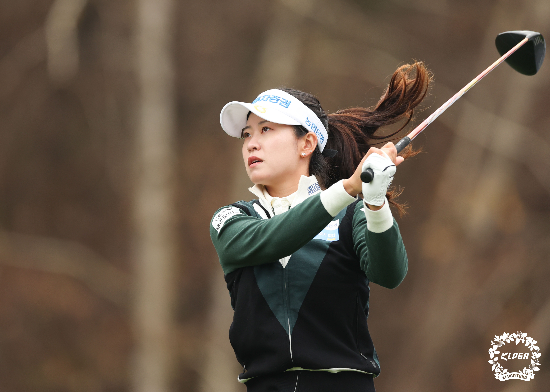
[Asia Economy Reporter Lee Seohee] As the season, in which the domestic golf association poured in record-breaking prize money, has come to a splendid close, the 'prize money polarization' between top-ranking and lower-ranking players remains evident. Some voices suggest that alternatives such as adjusting the prize money distribution rate concentrated on winners and easing the cut-off criteria should be prepared.
Despite This Year's 'Record-Breaking' Prize Money... Deepening Polarization
According to the Korea Ladies Professional Golf Association (KLPGA) on the 7th, the total prize money for this year's KLPGA regular tour exceeded 30 billion KRW for the first time. The KLPGA increased the number of tournaments from 29 to 33 this year and set the prize money per tournament at nearly 900 million KRW.
According to Asia Economy's own investigation, the average prize money of players who ranked in the prize money standings this season was approximately 230.25 million KRW. This is significantly higher compared to the average annual salary of domestic professional baseball (KBO) players in 2022 (excluding rookies and foreign players), which was 152.59 million KRW. Considering various sponsors and endorsements, the annual income of popular players is expected to be much higher.
However, despite the unprecedented increase in prize money, the monopolization of prize money by top-ranking players remains unchanged.
Looking at the prize money rankings provided by the KLPGA for this season, among the 119 players who made the prize money list, only 37 players, or 31% of the total, earned more than the average amount (230.25 million KRW). Players who earned less than the average accounted for 69%, well over half. Considering that last year, among 118 players who made the prize money list, 80 players (67%) earned less than the average prize money (206.4 million KRW), this represents a slight increase. Additionally, there were 9 players who earned less than 30 million KRW in prize money in a year.
Players who are cut during the tournament generally do not receive any prize money. The structure is such that lower-ranking players, who find it difficult to expect additional income from personal sponsors and advertisements, receive less prize money.
The problem is that participating in tour tournaments requires quite a large expense. Industry insiders say it is difficult to continue activities if tournament expenses cannot be covered by prize money. Golfer A, who has experience in the second-tier tour, said, "Each time I participate in a tournament, at least 3 million KRW is spent on entry fees, caddie fees, accommodation, etc. For players without good results and sponsors, it is impossible to stay active on the tour for long."

"Prize Money Distribution Rate Should Be Adjusted and Cut-Off Criteria Eased"
There are also criticisms that the background of this polarization lies in the prize money distribution rates of domestic golf tournaments.
Although it varies by tournament, the current KLPGA regular tour tournaments award 18% of the total prize money to the winner. Additionally, the Doosan Match Play Championship, classified as a special/limited tournament, awards 25% of the total prize money to the winner, and the season finale SK Shieldus·SK Telecom Championship awards 20% to the winner.
Considering the previous distribution rate, where winners received up to 25% depending on the tournament's prize money scale, the 'prize money concentration' on winners has indeed been alleviated. However, the situation where most of the total prize money is awarded to top-ranking players has not changed.
Currently, according to the prize money distribution rate, players ranked 1st to 5th receive 46% of the total prize money. Furthermore, players ranked 1st to 20th are allocated 70% of the total prize money. This means that most of the total prize money is concentrated on the top 20 players.
This is relatively high compared to the United States and Japan. On the U.S. Ladies Professional Golf Association (LPGA) Tour, the top 5 players receive about 40% of the total prize money. The Japan Ladies Professional Golf Association (JLPGA) Tour is at an intermediate level between the KLPGA and LPGA Tours, with players ranked 1st to 5th receiving 44.8% of the total prize money.
Some argue that alternatives such as adjusting the prize money distribution rate concentrated on winners and easing the cut criteria are necessary.
Former KPGA Chairman Kim Jaegun said, "Due to the nature of sports, it is practically unavoidable to follow the principle of favoring winners. The larger the winner's prize money, the greater the promotional effect of the tournament," adding, "However, at least players who are not cut should be able to cover their tournament expenses. I think more generous prize money should be given to lower-ranking players than now."
© The Asia Business Daily(www.asiae.co.kr). All rights reserved.
![Clutching a Stolen Dior Bag, Saying "I Hate Being Poor but Real"... The Grotesque Con of a "Human Knockoff" [Slate]](https://cwcontent.asiae.co.kr/asiaresize/183/2026021902243444107_1771435474.jpg)

















