Vice Ministers' Meeting on Financial Execution
[Asia Economy Sejong=Reporter Kim Hyewon] The government anticipates significant difficulties in the livelihood economy until early next year and plans to manage the central fiscal 'first half rapid execution policy' at an all-time high level, raising it above this year's standard. Projects related to price and livelihood stabilization, which have reached an execution rate of 80-90% as of the end of November, are planned to be completed by the end of the year.
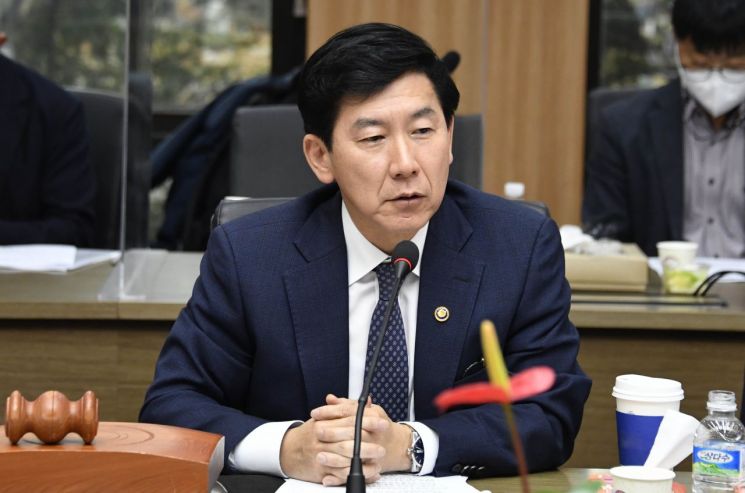
On the 6th, the Ministry of Economy and Finance announced that Vice Minister Choi Sang-dae presided over the 'Fiscal Execution Vice Ministers' Meeting' at the Export-Import Bank of Korea, reviewing the preparation status for the execution of the 2023 budget currently under discussion in the National Assembly and the fiscal execution performance by quarter.
The target for rapid execution of central fiscal funds in the first half will be set and managed slightly higher than this year's 63%. Although 63% was the highest ever, the government intends to increase the intensity next year. The problem is that if the budget review and approval in the National Assembly are delayed, subsequent procedures such as finalizing and announcing project plans for budget execution will inevitably be delayed as well.
In his opening remarks, Vice Minister Choi pointed out, "To proactively respond to the difficult livelihood economy early next year and ensure timely support for low-income and socially vulnerable groups, prompt review and approval of next year's budget by the National Assembly is necessary." The Ministry of Economy and Finance urged each ministry to expedite the establishment of detailed project plans by ministry and project within this month as soon as next year's budget is finalized by the National Assembly, and to thoroughly prepare so that execution can begin from January 2, next year (the start of the fiscal year).
Additionally, to prepare for the Lunar New Year holiday, which comes earlier than usual, the government plans to designate fiscal projects contributing to price stabilization, focusing on agricultural, livestock, and fishery products, as separate management targets and manage their execution accordingly next year.
As a result of reviewing the execution of price and livelihood stabilization projects prepared by the government so far, it was found that they are being executed timely according to the original plan. Projects directly or indirectly contributing to price stabilization (44 projects, 5.3 trillion KRW) had an execution rate of 80.6% as of the end of November. Livelihood stabilization projects requiring execution management such as budget transfers among high-price burden relief measures (24 projects, 19.3 trillion KRW) showed an execution rate of 92.3% as of the end of November. Vice Minister Choi stated, "To alleviate the burden on vulnerable groups, which is worsening due to the recent cold wave and rising heating costs, we plan to closely monitor the winter energy voucher and heating cost support projects for senior centers and child facilities to ensure smooth execution."
Vice Minister Choi diagnosed, "Unfortunately, the outlook for next year is not very bright either," adding, "Due to high-intensity monetary tightening by major countries and increased volatility in financial markets, a slowdown in growth compared to this year is inevitable, and especially difficulties are expected to be significant until the first half of next year." He continued, "For policies aimed at stabilizing livelihoods to succeed in the current severe economic situation, close cooperation between ministries and between central and local governments, along with cooperation from the National Assembly, is essential." He emphasized, "In the case of most national subsidy projects, including welfare projects, central ministries and local governments should communicate and consult sufficiently on the direction, targets, and timing of project execution to ensure timely implementation." He also urged once again, "The statutory deadline for budget review and approval (December 2) has passed, reducing the time available to prepare for next year's execution," requesting the National Assembly to promptly finalize next year's budget.
© The Asia Business Daily(www.asiae.co.kr). All rights reserved.
![Clutching a Stolen Dior Bag, Saying "I Hate Being Poor but Real"... The Grotesque Con of a "Human Knockoff" [Slate]](https://cwcontent.asiae.co.kr/asiaresize/183/2026021902243444107_1771435474.jpg)
















