[Seoul District News] Seocho-gu installs rainwater pumping station in Yangjae 2-dong to resolve flooding, promotes construction of new sewer culverts between Naebang Station and Bangbae Station to enhance drainage capacity during heavy rain... Gwangjin-gu supports up to 200,000 KRW monthly for up to 2 years for relocating semi-basement households to ground floors
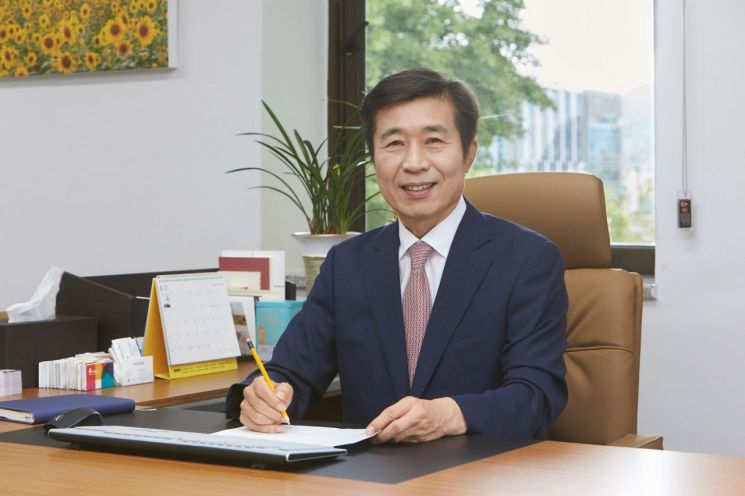
[Asia Economy Reporter Park Jong-il] Seocho-gu (District Mayor Jeon Seong-su) is set to actively implement permanent flood relief measures in the frequently flooded areas of Yangjae 2-dong and Bangbae-dong within the district.
To resolve flooding in the Yangjae 2-dong area, a rainwater pumping station will be installed, and a new underground sewer culvert will be constructed along the Naebang Station to Bangbae Station section to enhance drainage capacity during heavy rainfall.
The district announced on the 6th that it has finalized its own comprehensive study, initiated in September, to develop fundamental flood relief measures for the entire 570,000㎡ area of the frequently flooded Bangbae and Yangjae neighborhoods.
This initiative follows the record-breaking heavy rainfall in the Gangnam area in August, which reached 123mm per hour?the highest ever recorded by meteorological observations?prompting the district to devise its own fundamental flood relief plan.
While key flood relief measures have been established for low-lying areas such as Gangnam Station and Sadang Station through Seoul City's expedited 'Deep Underground Rainwater Drainage Tunnel' project, the district has also been considering flood relief solutions for the frequently flooded Yangjae 2-dong and Bangbae-dong areas.
Accordingly, the district has demonstrated strong commitment by formulating this flood safety enhancement plan to establish permanent flood relief measures independently.
First, the district plans to install a 'rainwater pumping station' to alleviate flooding in Yangjae 2-dong. Despite the installation of rainwater storage tanks during the heavy rains in August, many buildings and roads in the area were flooded.
The study concluded that the flooding was caused by the rise in the Yangjae Stream water level, which prevented natural discharge of rainwater and caused backflow.
By constructing a rainwater pumping station here, even if the Yangjae Stream water level rises during heavy rainfall, rainwater can be forcibly discharged into the stream, effectively preventing flood damage. The district plans to actively coordinate with Seoul City to complete the basic and detailed design study for the Yangjae 2-dong rainwater pumping station by 2023 and commence construction in 2024.
As a flood relief measure for Bangbae-dong, a new underground sewer culvert will be constructed along Bangbae-ro from Naebang Station to Bangbae Station. An underground sewer culvert refers to an artificial waterway buried underground. The study found that flooding in the Bangbae-ro area was caused by poor drainage due to the basin-like terrain around Bangbae-ro and the exceeding capacity of existing sewer pipes. The district plans to install the sewer culvert to collect rainwater in Bangbae-dong and channel it into Banpo Stream.
Currently, an underground sewer culvert exists between Naebang Station and Banpo Stream, but it was insufficient during the heavy rains in August. The district plans to conduct a detailed design study for the new sewer culvert along Bangbae-ro (Naebang Station to Bangbae Station) in the first half of 2023 and begin construction in the second half.
Meanwhile, since immediately after the flood, the district has completed the installation of 854 'manhole fall prevention devices' in low-lying areas with high pedestrian traffic such as Gangnam Station by October to prevent recurrence of manhole accidents, with plans to install a total of 1,200 devices by the end of the year.
Additionally, in September, Seocho-gu strengthened its 'Mandatory Installation Guidelines for Flood Barriers in Buildings,' requiring not only large general buildings but also apartment complexes and other multi-family housing to install flood barriers upon building permit issuance, with installation details to be indicated on the plans.
Jeon Seong-su, Mayor of Seocho-gu, stated, "We will closely coordinate with Seoul City to promptly carry out construction so that residents do not suffer further anxiety, inconvenience, or loss due to flooding," adding, "We will continuously communicate with residents and do our utmost to safely and confidently complete the flood relief projects."
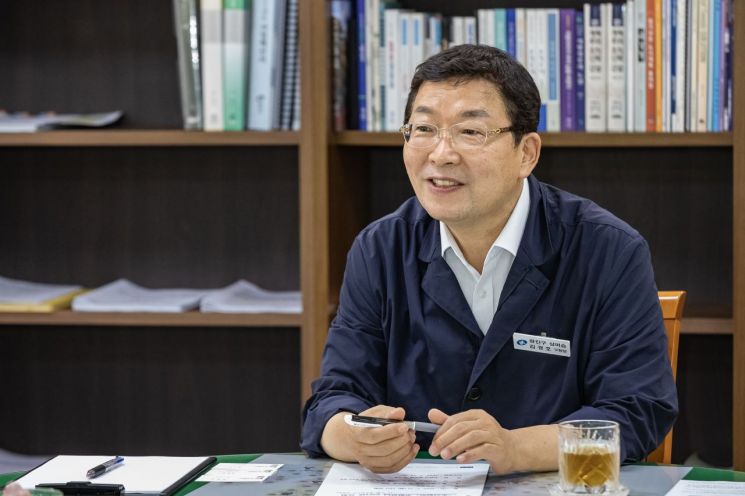
Gwangjin-gu (District Mayor Kim Kyung-ho) is operating an application center for the 'Semi-basement Specific Voucher' support program to protect semi-basement households vulnerable to heavy rain.
This is part of Seoul City's 'Support Measures for Semi-basement Residents' announced after the record-breaking heavy rains in August, providing up to 200,000 KRW monthly for up to two years to households relocating from semi-basements to above-ground floors.
The initial target households in Gwangjin-gu are 3,245 semi-basement residences (4.5% of Seoul's total). Upon application for the semi-basement specific voucher, the responsible department will review eligibility and begin issuing vouchers to qualified recipients starting from the 25th of this month.
Eligibility can be checked at the local community service centers or via the Seoul Housing Portal.
Priority support is given to semi-basement households that have experienced past flood damage or have residents with severe disabilities who face difficulties evacuating quickly in emergencies. This support cannot be combined with the general Seoul-type housing voucher (which targets private monthly rental households and provides 80,000 to 105,000 KRW monthly depending on household size).
Notably, the income and asset criteria are more relaxed than those for the general voucher. Eligible households must have a monthly income at or below 100% of the urban worker average monthly income, which for a three-person household is 6.41 million KRW.
Even if a dependent under health insurance is not separated from the household but lives alone in a semi-basement, the one-person household income standard applies, expanding eligibility to university students and young workers. However, the following are excluded: ▲owners of the property ▲public rental housing tenants ▲households receiving housing benefits or youth monthly rent support ▲households moving into goshiwon (small dormitory rooms), neighborhood living facilities, rooftop rooms, or jjokbang (tiny rooms) ▲households that moved into semi-basements after the announcement of the specific voucher plan (August 10). Moving outside Seoul also disqualifies eligibility.
Kim Kyung-ho, Mayor of Gwangjin-gu, said, "We hope this support program, which alleviates monthly rent burdens, will help residents relocate from semi-basements to above-ground floors," adding, "We will do our best to protect residents from property and life damage caused by flooding."
© The Asia Business Daily(www.asiae.co.kr). All rights reserved.
![Clutching a Stolen Dior Bag, Saying "I Hate Being Poor but Real"... The Grotesque Con of a "Human Knockoff" [Slate]](https://cwcontent.asiae.co.kr/asiaresize/183/2026021902243444107_1771435474.jpg)

















