Discovery of Over 10 Pathogens Buried About 48,500 Years Ago in Siberian Permafrost
Only Amoebae Are Infectious...Potential Threat to Humans and Animals
[Asia Economy Reporter Hwang Sumi] Viruses that had been trapped frozen underground for tens of thousands of years have been discovered while still retaining their infectivity. This is an effect of the thawing of Siberia's permafrost due to global warming.
According to the Washington Post (WP) on the 4th, a research team composed of scientists from France, Russia, and Germany discovered 13 types of viruses, including one estimated to have been buried under a lake in the permafrost of the Yakutsk region of Siberia about 48,500 years ago, viruses never before seen by humanity.
Permafrost refers to underground soil that remains below freezing point for at least two years and up to tens of thousands of years without melting, even in summer. It is mainly distributed in Alaska, northern Canada, Siberia, the Alps, and the Tibetan Plateau. Some of the permafrost's upper layers thaw during summer, forming an active layer where plants can grow.
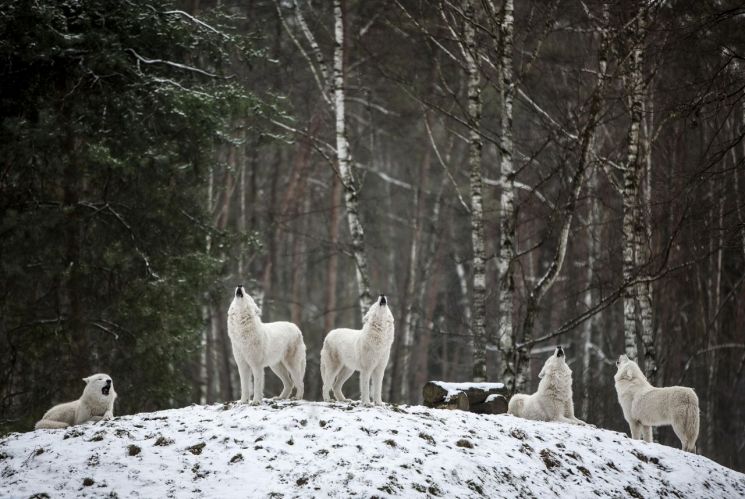
Most of the viruses were found in soil or rivers. Some were also discovered in the intestines of a Siberian wolf that died 27,000 years ago. The viruses retained sufficient infectivity. Due to this reactivation property, researchers sometimes refer to these viruses as "zombie viruses."
The viruses discovered this time are known to infect only amoebas. However, the researchers do not completely rule out the possibility that viruses capable of infecting humans and other animals could emerge from the ground. They explain that viruses dormant in frozen animals could be exposed and pose a threat to plants and animals on Earth.
In particular, concerns are growing as the ice in permafrost rapidly melts due to global warming. Earlier, in October, a research team from the University of Ottawa in Canada published a paper in the Proceedings of the Royal Society B, reporting that genetic analysis of soil and sediments collected from Arctic lakes showed that the more glaciers melt, the greater the risk that viruses and bacteria trapped in ice could flow into new animal hosts.
In fact, in 2016, during a heatwave in northern Siberia, Russia, permafrost melted, exposing a reindeer carcass. One child who came into contact with it died of anthrax, and seven adults were infected. This was the first anthrax outbreak in the region since 1941.
© The Asia Business Daily(www.asiae.co.kr). All rights reserved.

















