'2022 Korea Wealth Report'
[Asia Economy Reporter Bu Aeri] Emerging wealthy individuals in Korea believe that a minimum seed money of 700 million KRW is necessary to accumulate wealth. After securing seed money through earned income, inheritance, and other means, these emerging wealthy individuals have grown their assets through stock investments, real estate, and savings deposits.
Emerging Wealthy Increase Assets through Stock Investments and Savings Deposits
On the 4th, KB Financial Group released the '2022 Korea Wealth Report,' analyzing the status, investment behaviors, and future investment directions of wealthy Koreans. This year's report particularly compared 'emerging wealthy' and 'traditional wealthy' individuals to analyze how they became wealthy. Emerging wealthy are defined as individuals aged 30 to 49 holding financial assets between 1 billion KRW and less than 2 billion KRW.
As of the end of last year, there were 78,000 emerging wealthy individuals in Korea, accounting for about 18.4% of the wealthy population. The total financial assets they held amounted to 99.5 trillion KRW, representing 3.5% of the total financial assets of the wealthy.
The main methods by which emerging wealthy accumulated seed money were relatively more through earned income, support, gifts, and inheritance from parents compared to traditional wealthy. Regarding the size of seed money, emerging wealthy considered a minimum of 700 million KRW, while traditional wealthy considered a minimum of 900 million KRW.
The primary method for emerging wealthy to secure seed money was 'profits from self-operated businesses' at 55.2%, followed by investments in real estate assets (46%), earned income such as salaries (43.7%), support and inheritance from parents (40.2%), financial product investments (31%), and compensation from land development (13.8%).
After securing seed money and building current wealth, the most common investment method among emerging wealthy was 'stock investment' (54%). Next were 'non-residential apartments' (36.8%), 'savings deposits' (31%), 'residential real estate' (24.1%), and 'land and forests' (17.2%). The financial asset portfolio of emerging wealthy consisted mostly of stocks at 25.7%, followed by savings deposits (21%), cash (17.2%), and demand deposits (16.3%).
Additionally, emerging wealthy were more likely than traditional wealthy to use financial products such as stocks and savings deposits or to grow assets through 'other assets' like gold, jewelry, and digital assets after securing seed money.
Regarding asset growth through real estate investment, emerging wealthy invested more in multi-family houses, row houses, and villas compared to traditional wealthy. Traditional wealthy had higher investment rates in reconstruction apartments, commercial buildings, and land than emerging wealthy.
Emerging wealthy showed a higher proportion of real estate assets (64.7%) in their total asset portfolio compared to traditional wealthy (51.9%). The target total asset composition for emerging wealthy was surveyed as 52% real estate assets and 36% financial assets.
Furthermore, while 66.2% of traditional wealthy considered themselves wealthy, only 26.4% of emerging wealthy saw themselves as wealthy. In terms of the future image of the wealthy they aspire to be, emerging wealthy most frequently chose 'wealthy individuals who grow their assets' (19.5%), differing from the traditional wealthy's most selected image of 'wealthy individuals who strive for self-development' (24.6%).
'Korean Wealthy' Account for 0.82% of Total Population
Last year, the number of wealthy Koreans holding financial assets of 1 billion KRW or more reached 424,000, an 8% increase from the previous year. The proportion of wealthy Koreans in the total population was 0.82% last year, up 0.06 percentage points from 2020.
The scale of financial assets was 2,883 trillion KRW, accounting for 58.5% of the total household financial assets (4,924 trillion KRW) announced by the Bank of Korea. This was a 10.1% increase from the previous year.
Among wealthy Koreans, over 90% were asset holders with financial assets between 1 billion KRW and less than 10 billion KRW, and 7.3% were high-net-worth individuals holding between 10 billion KRW and less than 30 billion KRW. Ultra-high-net-worth individuals holding 30 billion KRW or more numbered 8,600, accounting for 2% of the wealthy and 0.02% of the total population.
The average financial assets per wealthy individual in Korea was 6.79 billion KRW as of the end of last year, an increase of 13 million KRW compared to 2020.
Looking at regional distribution, 70.3% were concentrated in the Seoul metropolitan area, including Seoul. In Seoul, as of last year, 45.3% of wealthy Koreans were concentrated in the Gangnam 3 districts (Seocho, Gangnam, Songpa).
More than Half of Korean Wealthy’s Total Assets Are Real Estate
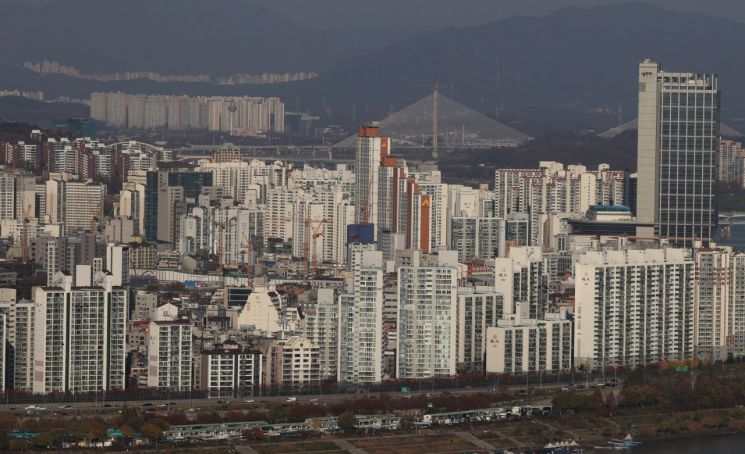
As of the end of last year, wealthy Koreans held a total of 2,361 trillion KRW in real estate assets, a 14.7% increase compared to 2,058 trillion KRW at the end of 2020.
The total assets of wealthy Korean households consisted of 56.5% real estate assets and 38.5% financial assets. Other assets included memberships and artworks.
Examining the detailed asset composition, 'residential real estate' accounted for the largest share at 27.5%, followed by 'liquid financial assets' (14.2%), 'buildings and commercial properties' (10.8%), 'non-residential houses' (10.8%), 'savings deposits' (9.5%), and 'stocks, REITs, ETFs' (7.9%).
The ownership rates by asset type showed that both savings deposits and maturity refund-type insurance were held by 84.5%, meaning more than four out of five wealthy individuals owned these. Stock ownership surged from 67.5% in 2020 to 81.5% in 2021 but decreased to 77.3% this year due to the stock market downturn.
Asset Management of the Wealthy During the Pandemic
During the difficult COVID-19 pandemic period, wealthy individuals with financial assets of 1 billion KRW or more reduced the proportion of financial assets and increased the proportion of real estate assets.
In 2020, about 42% of wealthy individuals responded that 'profits were generated through financial asset management,' roughly double the 19.3% in 2019 before the pandemic. However, in 2021, as losses from financial asset investments increased, the proportion responding that 'profits were generated' fell to 17.0%, returning to the 2019 level.
Conversely, during the pandemic years 2020 and 2021, wealthy individuals expanded their real estate asset proportions and experienced profits in both 'residential real estate' and 'non-residential real estate.'
Additionally, during the pandemic, wealthy individuals managed their debt levels more conservatively than before COVID-19. In 2020 and 2021, 43.8% of wealthy Koreans held financial debts such as mortgage loans, credit loans, and overdraft accounts, down from 56.5% in 2019 before the pandemic.
"You Need at Least 10 Billion KRW to Be Considered Wealthy"
Korean wealthy individuals consider total assets of 10 billion KRW or more, including financial and real estate assets, as the standard for being wealthy. The most frequently cited amount by wealthy Koreans was 'total assets of 10 billion KRW' at 27%, followed by total assets of 5 billion KRW at 17.5%.
The largest source of current asset accumulation for wealthy Koreans was 'business income' at 37.5%, followed by real estate investment (25.3%), inheritance and gifts (15.8%), earned income (11%), and financial investment (10.5%).
This report was prepared based on a survey conducted over seven weeks starting June 1, targeting 400 'Korean wealthy' individuals holding financial assets of 1 billion KRW or more, along with in-depth one-on-one interviews with a separate panel.
© The Asia Business Daily(www.asiae.co.kr). All rights reserved.
![Clutching a Stolen Dior Bag, Saying "I Hate Being Poor but Real"... The Grotesque Con of a "Human Knockoff" [Slate]](https://cwcontent.asiae.co.kr/asiaresize/183/2026021902243444107_1771435474.jpg)

















