[Asia Economy Reporter Kim Young-won] The government has launched a second antibody positivity rate survey to monitor changes in COVID-19 antibody titers within local communities.
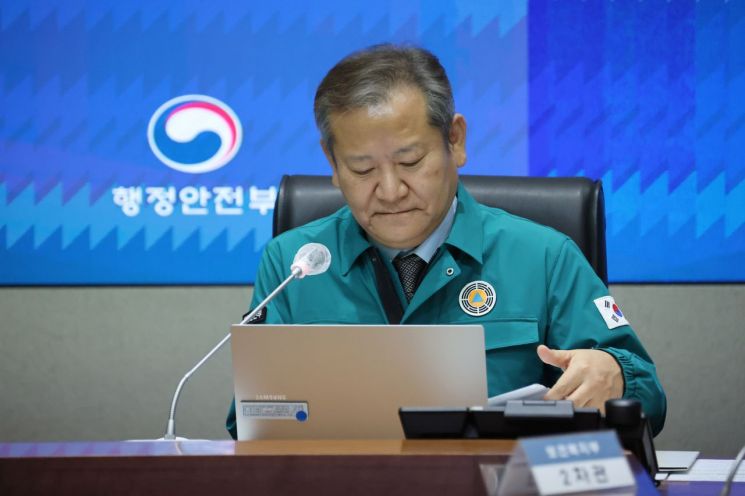
The Central Disaster and Safety Countermeasures Headquarters (CDSCH) announced on the 2nd that at a meeting chaired by Lee Sang-min, CDSCH 2nd Deputy Head (Minister of the Ministry of the Interior and Safety), they discussed the progress and future plans for a large-scale COVID-19 antibody positivity rate survey.
This antibody positivity rate survey will be conducted by establishing a network among the Korea Disease Control and Prevention Agency’s National Institute of Health, the Korean Society of Epidemiology, and local community-related organizations, similar to the first survey released last September. As a follow-up survey, antibody tests and questionnaires will be conducted on participants who wish to join from the 9,959 individuals who took part in the first survey. Additionally, a computerized system using tablet PCs will be introduced to input and compile questionnaire and blood collection data in real time at the site.
The CDSCH explained that the second survey aims to further confirm how antibody titers have changed. Kwon Jun-wook, Director of the National Institute of Health, stated, "While the first survey aimed to identify the overall scale of infections, including hidden undiagnosed cases in the community, the second survey will be conducted as a follow-up on willing participants from the first survey to check changes in COVID-19 antibody positivity rates and titers." The degree of immunity decline can be assessed based on how much the titers decrease.
From today, authorities will notify participants about the survey via text messages or phone calls. Starting from the 7th, blood collection will be conducted through public health centers and cooperating medical institutions across 17 cities and provinces nationwide. Director Kwon added, "According to the questionnaire results from the first survey, about 60% of participants expressed willingness to participate in the second survey, and this number is expected to increase during the process."
Previously, the first antibody positivity rate survey results released on September 23 showed that among 9,901 citizens aged 5 and older, the N antibody positivity rate was 57.65%, and the S antibody positivity rate was 97.38%. This means approximately 57% of the population has antibodies from natural infection. Unlike the N antibody, which is formed only through natural infection, the S antibody can be produced through both natural infection and vaccination.
The health authorities aim to complete the analysis of the entire second survey results within this month. The upcoming third survey will select a new representative sample of 10,000 people using the same framework as the first survey to assess the COVID-19 epidemic situation.
Additionally, the CDSCH received a report on the 19th general ward hospitalization status survey results. Conducted from the 25th to the 30th of last month, the survey found that 13,349 general ward beds are currently operated in 683 hospitals nationwide, showing a continuous increase over the last five surveys. The previous four survey results were: 15th survey - 12,202 beds → 16th survey - 12,790 beds → 17th survey - 13,148 beds → 18th survey - 13,327 beds.
During the same period, the number of patients admitted to general wards increased from 3,375 in the 15th survey to 4,781 in the 19th survey, also showing an upward trend. The CDSCH explained, "This is evaluated as a result of activating voluntary hospitalization of COVID-19 patients using the general medical system."
At the meeting, Deputy Head Lee encouraged COVID-19 vaccination for the winter season. He said, "The bivalent vaccine used for additional winter vaccinations has been confirmed to have up to 2.6 times greater ability to neutralize the virus compared to existing vaccines. Considering that the virus currently detected domestically is mostly of the Omicron lineage, the necessity of receiving the bivalent vaccine is even higher."
© The Asia Business Daily(www.asiae.co.kr). All rights reserved.

















