Suspected Flu Patients per 1,000 Increase from 13.9 to 15 in One Week
Adolescents Aged 13-18 Reach 42 per 1,000... 8.5 Times the Epidemic Threshold
Noro Virus Patients Near 70 per 1,000 for Second Week
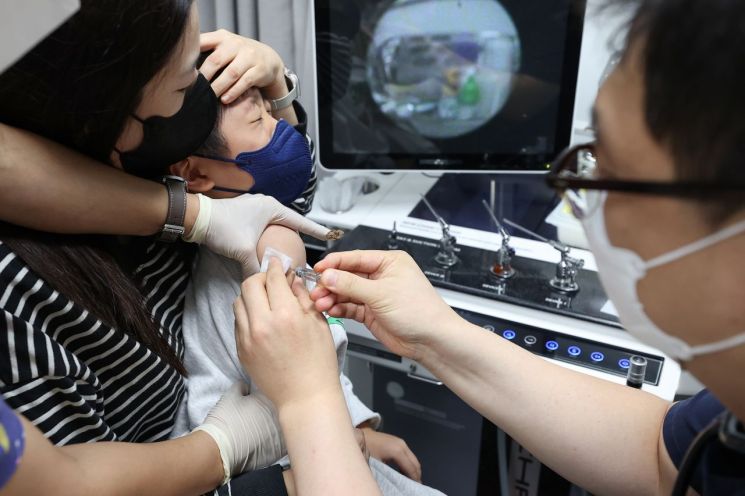
[Asia Economy Reporter Jo In-kyung] As the number of influenza (flu) patients continues to rise during the winter season, the epidemic trend among adolescents is becoming prominent.
According to the Korea Disease Control and Prevention Agency (KDCA) on the 2nd, the proportion of patients showing suspected influenza symptoms (influenza-like illness rate) per 1,000 outpatients was 15.0 from November 20 to 26 (week 48 of 2022), which increased again from 13.9 the previous week. This is the highest figure this year and about three times the 2022-2023 influenza epidemic threshold of 4.9.
The influenza-like illness rate has been rising for six consecutive weeks since the second week of October, increasing from 6.2 to 7.6, 9.3, 11.2, 13.2, 13.9, and finally 15.0 per 1,000 outpatients.
KDCA operates an influenza surveillance system targeting 200 medical institutions nationwide. Individuals with sudden fever over 38 degrees Celsius accompanied by cough or sore throat are classified as influenza-like illness patients.
Influenza did not spread for two consecutive years until last year due to the COVID-19 pandemic, but this year the epidemic started earlier than usual in the fall. Patients continue to occur across all age groups, but the epidemic is rapidly spreading especially among children aged 7 to 12 and adolescents aged 13 to 18.
In week 48, the influenza patient rate among 13 to 18-year-olds was 41.9 per 1,000 outpatients, which is 8.5 times the epidemic threshold. This is almost the same level as the previous week (41.8). For ages 7 to 12, the rate was 33.1, a sharp increase of 45.8% from 22.7 the previous week.
The rate for 0-year-olds was 7.7, and for 1 to 6-year-olds it was 14.2, both slightly increased from the previous week. Meanwhile, adult patients aged 19 to 49 decreased slightly from 18.2 to 16.5, middle-aged adults aged 50 to 64 decreased from 9.9 to 8.9, and elderly patients aged 65 and over decreased from 5.1 to 4.2.

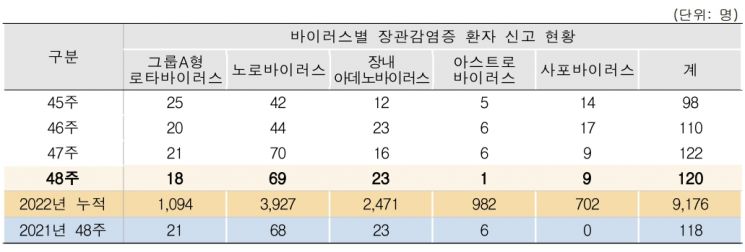
As winter approaches, norovirus is also on the rise. From November 20 to 26, there were 69 norovirus patients, almost the same as the previous week (70). The cumulative number of patients this year is 3,927.
Norovirus infection occurs through ingestion of contaminated food or water or contact with infected patients. Infection can also occur if a person touches faucets, door handles, etc., contaminated by an infected patient who did not wash their hands, and then touches their mouth or consumes food.
Due to its high contagiousness, norovirus often causes group infections in daycare centers, schools, and other places. Symptoms such as vomiting, diarrhea, abdominal pain, chills, and fever usually appear after an incubation period of 1 to 2 days. Most cases recover naturally within a few days, but severe symptoms may require hospitalization.
To prevent norovirus infection, it is recommended to wash hands frequently and thoroughly, eat seafood including oysters, fish, and shellfish fully cooked, and drink boiled water.
© The Asia Business Daily(www.asiae.co.kr). All rights reserved.
![Clutching a Stolen Dior Bag, Saying "I Hate Being Poor but Real"... The Grotesque Con of a "Human Knockoff" [Slate]](https://cwcontent.asiae.co.kr/asiaresize/183/2026021902243444107_1771435474.jpg)













