Singers "Suffer Losses Due to Association's Revision of 'Medley and Light Music' Royalty Distribution Rules"
Supreme Court "Not Significantly Unreasonable nor Infringing on the Essential Content of Copyright"
[Asia Economy Reporter Choi Seok-jin, Legal Affairs Specialist] In a copyright royalty lawsuit filed by over 20 singers, including famous trot singer Seol Woon-do (real name Lee Young-chun), against the Korea Music Copyright Association (hereinafter the Association), the plaintiffs were ultimately defeated.
The plaintiffs challenged the Association's revision of regulations that excluded part of the performance royalties for 'medleys and light music' played on loop (when there are no customers) in singing rooms or entertainment bars from the distribution of music copyright usage fees, but their claim was not accepted.
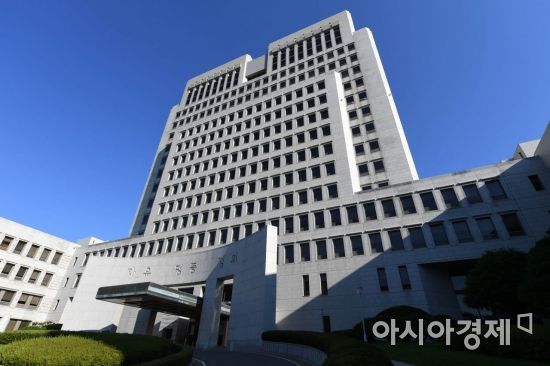
According to the legal community on the 2nd, the Supreme Court's 3rd Division (Presiding Justice Ahn Cheol-sang) recently finalized the appellate ruling that dismissed the plaintiffs' appeal in the damages claim lawsuit filed by 24 singers, including Seol Woon-do, against the Association.
The court stated, "It is reasonable and acceptable that the lower court rejected all the plaintiffs' claims regarding breach of trust contract or illegal acts, and there is no error affecting the judgment such as failure to conduct necessary hearings beyond the limits of free evaluation of evidence or misunderstanding of legal principles concerning breach of trust contract, illegal acts, or invalidity of the music copyright usage fee distribution regulations set by the copyright trust management agency, as argued in the grounds for appeal."
The plaintiffs, who are singers, entrusted the copyright of their musical works to the Association and entered into a trust contract whereby the Association collects usage fees from business owners of music usage establishments such as entertainment bars, karaoke bars, and singing rooms, and distributes the usage fees to the plaintiffs according to certain criteria.
However, the issue arose when the Association revised the distribution regulations as of December 31, 2014, excluding part of the usage fees for 'medleys and light music' from the distribution target.
The Association calculates the usage fees for musical works played in these establishments by applying two data sources?the recorded songs and log data (song accompaniment machine operation information)?at a ratio of 30% and 70%, respectively. When revising the regulations, it excluded 'medley and light music log data collected from song accompaniment machines' from the distribution target.
In other words, for medley songs played on accompaniment machines in establishments like entertainment bars regardless of customer presence, only the performance royalties as recorded songs are distributed, while the performance royalties based on log data are excluded from distribution.
As a result, the usage fees the plaintiffs received from the Association decreased. In the most severe cases among the plaintiffs, the average monthly amount received before and after the regulation revision differed by up to approximately 3.4 million KRW, and Seol Woon-do's average monthly amount also decreased by about 2.1 million KRW.
The plaintiffs argued that the Association's revision of the regulations causing financial damage constituted a breach of trust contract or an illegal infringement of their copyright property rights, and filed a lawsuit in November 2018 demanding compensation for the difference between the performance royalties calculated under the pre-revision regulations, which included medley and light music log data, and the actual performance royalties received under the revised regulations.
The plaintiffs' position was that the Association, which manages the entrusted copyright property rights and has the obligation to distribute collected usage fees with the care of a good manager, distorted the distribution ratio of performance royalties by excluding medley and light music log data from the distribution target, causing unfair distribution of performance royalties among rightful members, including the plaintiffs, with some royalties being distributed to other members.
The trial focused on whether there were procedural defects in the Association's regulation revision process, whether the revised distribution regulations were grossly unfair and invalid, and whether the Association could be held liable for breach of contract or illegal acts.
The first trial court ruled in favor of the Association.
Regarding procedural defects, the first trial court acknowledged that the Association did not hold a member opinion gathering process or public hearings before revising the regulations, as claimed by the plaintiffs.
However, the court found that after complaints about distortion of accompaniment machine log data for medleys and light music were raised, the Association conducted a special audit revealing excessive looping, formed a task force (TF) that held seven meetings, decided to revise the regulations through board resolution according to its articles of association, obtained approval from the competent authority, the Ministry of Culture, Sports and Tourism, and reported to the general meeting, thus revising the regulations in accordance with the procedures stipulated in the Association's articles of association.
The court also noted that the Association's articles of association do not require prior member opinion gathering or public hearings for regulation revisions, and that the Association held three public hearings after revising the regulations, which supported the court's judgment.
The court further concluded that it was difficult to recognize the Association's liability for breach of contract or illegal acts based on the fact that the Ministry of Culture, Sports and Tourism received the special audit report and requested future measures and improvements, that medley and light music were not completely excluded from performance royalty distribution but still received up to 30% of collected royalties if recorded on accompaniment machines after the revision, and that one plaintiff's criminal complaint against the former Association representative for breach of duty was dismissed.
The second trial court also found the first trial court's conclusion reasonable.
In particular, the second trial court pointed out, "As of May 2017, among a total of 341,416 domestic song accompaniment machines, 104,243 collect log data online, and 1,697 collect log data offline, resulting in a log data collection rate of about 31%. Meanwhile, approximately 235,476 machines, accounting for about 69%, are not used as data for log data collection. Considering this, it seems practically difficult in terms of time and cost to collect log data from all domestic accompaniment machines to accurately grasp the actual usage rate of musical works."
Regarding the plaintiffs' claim that the Association revised the regulations on the premise that looping played for atmosphere or customer attraction regardless of customer presence in singing rooms and similar establishments does not constitute a performance under copyright law, the court stated, "Even if the defendant revised the distribution regulations on such a premise, considering the purpose and background of the revision, the defendant (Association) discovered through a special audit that medley songs were frequently used by owners or employees during business hours when no customers were present, causing the distribution ratio of performance royalties for medley and light music to be disproportionately high compared to single songs actually sung by customers. The defendant judged that this did not properly reflect the actual usage pattern of musical works and revised the regulations to correct this."
Meanwhile, the plaintiffs argued that a general meeting resolution was required to change the usage fee distribution regulations under the trust contract.
Article 25, Paragraph 1 of the trust contract between the Association and the plaintiffs (Amendment of Trust Contract Terms) stipulates, "The trustee shall promptly announce and notify the consignor when changing these terms, the regulations on the procedure for concluding copyright trust contracts, or the music copyright usage fee distribution regulations, after obtaining approval from the general meeting and the competent authority." The plaintiffs interpreted the phrase "after obtaining approval from the general meeting and the competent authority" as modifying even the music copyright usage fee distribution regulations.
However, the court ruled, "It is reasonable to interpret that the phrase 'after obtaining approval from the general meeting and the competent authority' in Article 25, Paragraph 1 of the trust contract modifies only 'these terms' and does not extend to 'music copyright usage fee distribution regulations.' Therefore, it is difficult to consider that a general meeting resolution is required in addition to approval from the competent authority for changes to the usage fee distribution regulations."
The Supreme Court shared the same view.
First, regarding the concept of 'performance,' the court stated, "As long as the public can access the work in a publicly open place, it is considered a performance under copyright law regardless of whether the public is actually present. Establishments such as entertainment bars, karaoke bars, and singing rooms are publicly open places during business hours where anyone can access the musical works recorded on accompaniment machines without restrictions other than paying fees. Therefore, playing musical works recorded on accompaniment machines during business hours, regardless of customer presence or singing, constitutes a performance under copyright law."
The court added, "However, the specific criteria for distributing performance royalties for musical works can be determined at the discretion of the copyright trust management agency, the defendant, within the scope of its purpose and considering the interests of the consignors and other circumstances. Given the difficulty in accurately grasping the actual usage rate or method of musical works, the revision of the distribution regulations in this case appears to have been made considering the realistic usage situation and various conditions. Therefore, it is difficult to conclude that the revision has lost its social acceptability."
Furthermore, "The revision of the distribution regulations in this case excluded only the performance royalties based on log data for medley songs from the distribution target, not the entire distribution, so it cannot be considered an infringement of the essential content of copyright," the court added.
Among the 24 plaintiffs, 9 withdrew their appeals shortly after the appellate trial began, finalizing their defeat in October 2019, and the remaining 15 plaintiffs recently received a final defeat ruling from the Supreme Court.
The Supreme Court also consolidated and dismissed two similar lawsuits filed by some of the plaintiffs and other singers, ruling in favor of the Association in all cases.
© The Asia Business Daily(www.asiae.co.kr). All rights reserved.

















