Semiconductor Reliability Evaluation and Comprehensive Analysis Company QRT
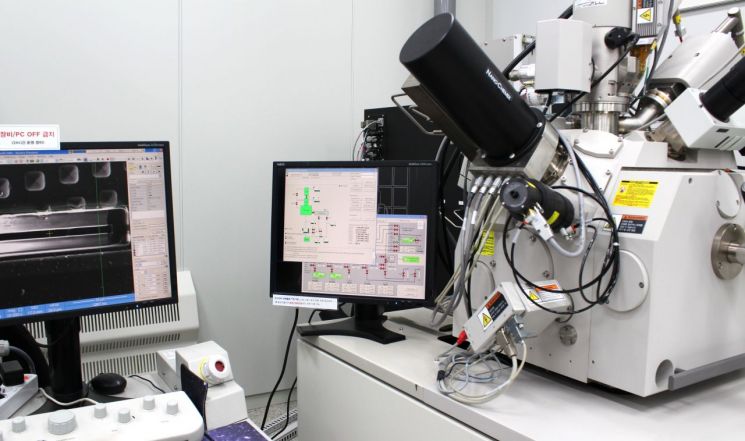
[Asia Economy Reporter Donghyun Choi] The core of global semiconductor competition lies in ultra-fine processes. This refers to how narrowly circuit lines can be drawn on a silicon-based semiconductor substrate (wafer) using specialized equipment. In June, Samsung Electronics began mass production of the world's first 3-nanometer (nm; 1 nm = one billionth of a meter) process. This is equivalent to narrowing the thickness of an adult human hair to one three-hundred-thousandth of its width. As semiconductors become finer, it becomes increasingly difficult and precise to identify the causes of unexpected defects. From analyzing fine dust, temperature, humidity, and static electricity generated during the manufacturing process to conducting experiments at the neutron and proton level?which are impossible to measure without cutting-edge equipment and technology?extensive procedures are required. QRT, which entered the KOSDAQ market on the 2nd of last month, is the top domestic company possessing such technological capabilities.
QRT: The Only Domestic Semiconductor Reliability Testing and Comprehensive Analysis Company
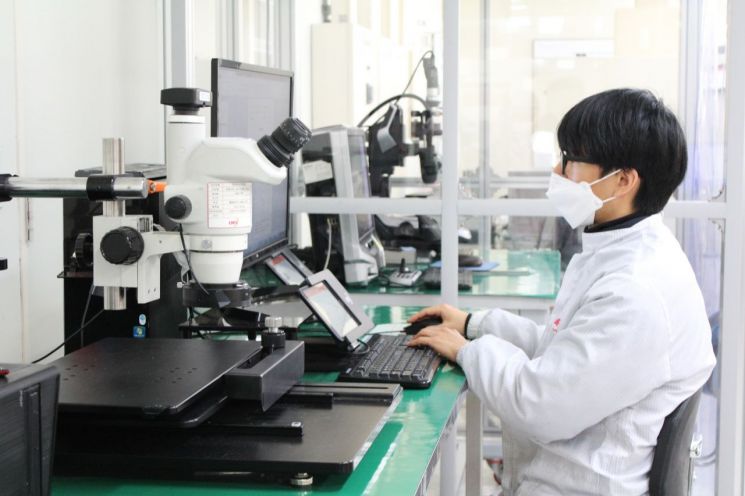
QRT is a company that evaluates semiconductor reliability and analyzes defect causes. It started as a department within Hyundai Electronics in 1983 and was established as QRT Semiconductor in 2005, becoming a subsidiary of Hynix Semiconductor. Later, in May 2014, QRT separated from SK Hynix’s then-subsidiary SK Hynix ENG and has since continued its business across six domestic and international sites. Last year, it recorded sales of 70.5 billion KRW and an operating profit of 18.6 billion KRW. For the first half of this year, sales and operating profit were 30.4 billion KRW and 8.2 billion KRW, respectively.
QRT’s business is broadly divided into reliability testing and comprehensive analysis. Reliability testing is the process of verifying whether a semiconductor can maintain its initial quality or performance without failure over a certain period under specific environmental conditions. For example, it subjects semiconductors to extreme temperature ranges from minus 50 degrees Celsius to plus 150 degrees Celsius or applies high voltage currents of 20,000 volts to assess any performance changes. Comprehensive analysis involves identifying unknown operational errors or defect causes in mass-produced or prototype products. QRT has provided services to over 1,500 companies, including global IT firms such as Samsung Electronics, SK Hynix, Qualcomm, Meta, and Microsoft.
Engineers from Global Semiconductor Companies Unite
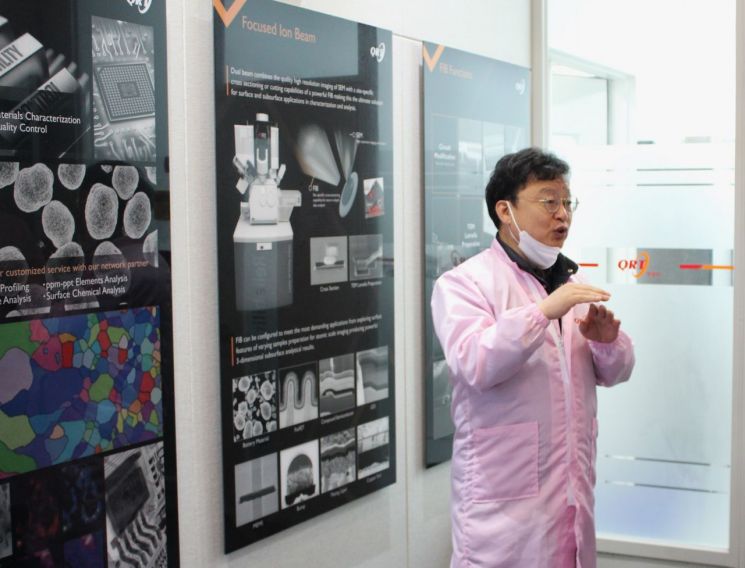
QRT’s Gwanggyo branch, located at the Korea Nano Technology Institute in Yeongtong-gu, Suwon, Gyeonggi Province, is responsible for the company’s comprehensive analysis business. Jeon Heeseok, head of QRT’s comprehensive analysis division, whom we met there, said, “Reliability analysis is equipment-focused, but comprehensive analysis is a division where the experience and know-how of technicians are crucial. Many engineers from leading domestic and international semiconductor companies have gathered at QRT.”
Mr. Jeon joined QRT last year after working for about 30 years in Samsung Electronics’ semiconductor division. He witnessed Samsung’s ultra-fine process evolution firsthand, from the cutting-edge 1.5-micrometer (μm; 1 μm = one millionth of a meter) CMOS logic process in the 1990s to the 28-nanometer mass production before his departure. He said, “At Samsung, I was in a position to outsource semiconductor analysis or provide opinions externally, but now I perform analysis tasks upon clients’ requests. Because I understand exactly what clients want, customer satisfaction is very high.”
The Gwanggyo branch is equipped with various advanced devices for comprehensive analysis. The 3D computed tomography (CT) equipment compiles thousands of X-ray images taken by rotating the semiconductor 360 degrees into 3D images and visuals. The focused ion beam (FIB), which looks like a large microscope, can manipulate copper wiring circuits at the nanometer scale. Mr. Jeon stated, “Copper wiring is mainly used in semiconductor fine processes to prevent performance degradation, and with FIB, immediate circuit modifications are possible. QRT is the only company in Korea that possesses this technology.”
Discovering New Businesses in 5G, Autonomous Driving, Aerospace, and More
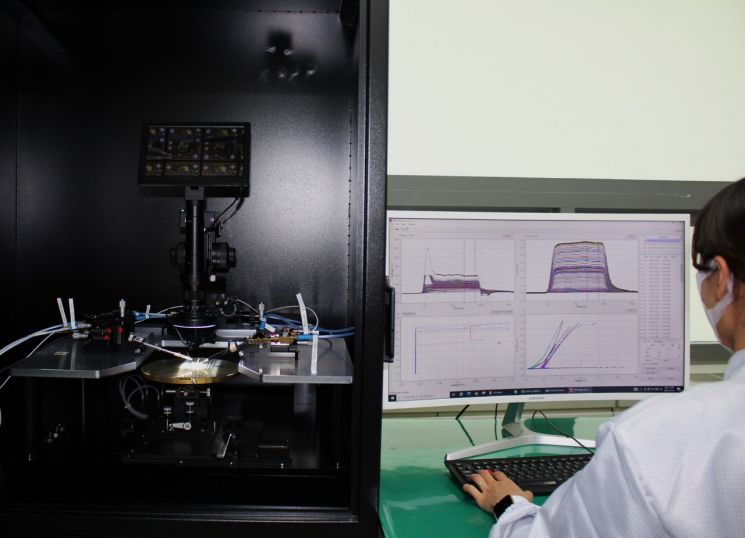 A QRT researcher is conducting an electrostatic discharge (ESD) reliability evaluation test using Transmission Line Pulse (TLP) equipment.
QRT is currently developing 5G system semiconductor lifetime evaluation equipment and semiconductor soft error detection equipment in collaboration with the Ministry of Trade, Industry and Energy for next-generation growth engines. The 5G system semiconductor lifetime evaluation equipment is reliability evaluation equipment tailored to the characteristics of 5G semiconductors used in autonomous vehicles, drones, and robots. The semiconductor soft error detection equipment detects soft errors that can cause malfunctions in semiconductor circuits due to specific causes in space or terrestrial environments.
Mr. Jeon said, “Demand for reliability evaluation and comprehensive analysis is expanding from TVs, smartphones, and electronic devices to autonomous driving, artificial intelligence (AI), aerospace, robotics, and digital healthcare fields. We will do our best to strengthen partnerships with domestic semiconductor companies and contribute to improving semiconductor quality.”
© The Asia Business Daily(www.asiae.co.kr). All rights reserved.



















