Over 3,500 Cases Since September... Guidance via Phone and Messenger
"Information Warfare to Undermine Scams... Considering Prisoner Exchange"
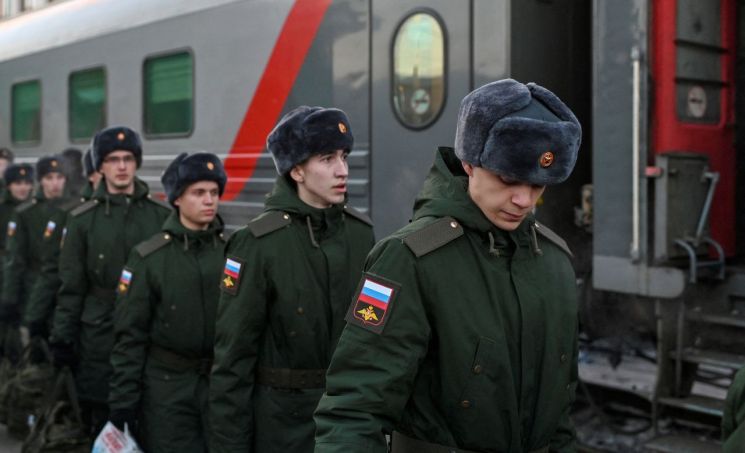
[Asia Economy Intern Reporter Lee Gyehwa] The British BBC reported on the 30th (local time) that inquiries from Russian soldiers are pouring in to the hotline established by the Ukrainian government to induce the surrender of Russian troops. The number of inquiries has significantly increased following the partial mobilization order for Russian reservists and the announcement of withdrawal from the Kherson occupied area earlier this month.
The Ukrainian government stated that more than 100 inquiries per day are coming from Russian soldiers and their families to the 'I Want To Live' hotline, which was established in September. So far, a total of about 3,500 inquiries have been recorded.
Russian soldiers wishing to surrender contact the Ukrainian side via phone, Telegram, WhatsApp, and other mobile messengers to receive guidance on how to surrender safely.
An official from the Prisoner of War Treatment Headquarters said, "Almost all Russian soldiers who call here say they desperately want to live," adding, "The number of calls sharply increases during the evening hours when they can secretly escape from their military units and make calls." He also added, "Some inquire about surrender methods not immediately but as preparation for the future."
The hotline project is also used as a psychological warfare operation to lower the morale of Russian troops. Those currently using the hotline are likely Russian soldiers actually in Ukraine.
Russia has blocked the use of the surrender hotline for Russian soldiers through its domestic telecommunications. The propaganda video created by the Ukrainian side prominently features the phrase "Ask yourself ? what are you fighting for?" along with explosion scenes and images of Russian soldiers surrendering.
Surrendered Russian soldiers are also used as means for prisoner exchanges. The U.S. defense and diplomatic think tank, the Institute for the Study of War (ISW), analyzed that "Russia appears to be more actively engaging in prisoner exchanges than in the past to suppress internal criticism related to this war."
Vitaly Matviyenko, in charge of the Russian soldier surrender hotline project, emphasized, "We aim to save Russian conscripts who do not want to fight and are being used as shields on the battlefield," adding, "This project is designed to ensure that (Russian troops) can guarantee their lives through voluntary surrender."
© The Asia Business Daily(www.asiae.co.kr). All rights reserved.

















