1st and 2nd Trials Recognize State Compensation Liability... Long Statute of Limitations Completed for 'Illegal Acts' During Investigation
Supreme Court: "Statute of Limitations Lost Due to Constitutional Court's Unconstitutional Ruling... Must Reassess"
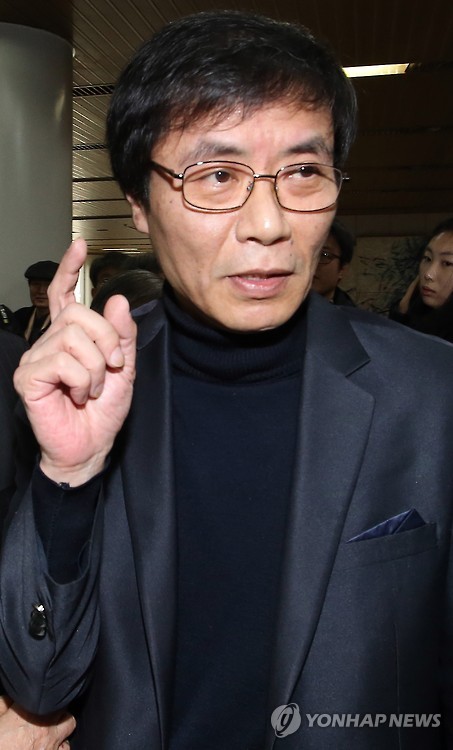 Mr. Kang Ki-hoon.
[Asia Economy Reporter Heo Kyung-jun] The Supreme Court overturned the lower court’s ruling that denied the state’s liability for damages in the lawsuit filed by victim Kang Ki-hoon in the ‘forged suicide note case’ on the grounds of ‘statute of limitations completion.’
The Supreme Court’s First Division (Presiding Justice Oh Kyung-mi) on the 30th overturned the lower court’s ruling, which partially ruled in favor of the plaintiff in the damages lawsuit filed by Kang and his family against the Republic of Korea, and remanded the case to the Seoul High Court.
In May 1991, Kang, who was serving as the head of the social department at the National Alliance for Democracy and Ethnic Minorities (Jeonminryeon), was prosecuted on charges of forging the suicide note of his friend and Jeonminryeon member Kim Gi-seol, who jumped to his death from the rooftop of Sogang University, and charges including aiding suicide.
Kang was sentenced to three years in prison and a suspension of qualifications for one year and six months, and served his sentence. However, it was later recognized that the crucial evidence, the handwriting expert’s report, was forged, and after a retrial, he was acquitted. Subsequently, Kang and his family filed a lawsuit against the state and others.
Both the first and second trials recognized the state’s liability for damages. The first trial acknowledged the handwriting expert’s error and ruled that the handwriting expert and the Republic of Korea were jointly liable to pay approximately 690 million won to the plaintiffs. The second trial accepted the statute of limitations completion claim regarding the handwriting expert and dismissed the claim against the expert but rejected the state’s statute of limitations claim, ordering the state to pay 800 million won to Kang and 100 million won to his parents, increasing the compensation amount.
However, the Supreme Court ruled that the second trial’s judgment, which found the statute of limitations completed regarding the state’s liability for illegal acts during the investigation process, was incorrect and held that the statute of limitations had not been completed.
The court stated, “The part seeking damages for individual illegal acts during the investigation process has lost the effect of the long-term statute of limitations following the Constitutional Court’s ruling of unconstitutionality,” adding, “This case can be seen as a claim for state compensation for damages caused by unlawful official duties in a serious human rights violation and fabrication suspicion case, but the lower court applied the long-term statute of limitations to this.”
Furthermore, the court ruled, “The part of the plaintiffs’ loss against the defendant Republic of Korea seeking damages for individual illegal acts during the investigation process applied the long-term statute of limitations, which lost its effect due to the unconstitutionality ruling, and thus this is a mistake warranting reversal.”
© The Asia Business Daily(www.asiae.co.kr). All rights reserved.
!["The Woman Who Threw Herself into the Water Clutching a Stolen Dior Bag"...A Grotesque Success Story That Shakes the Korean Psyche [Slate]](https://cwcontent.asiae.co.kr/asiaresize/183/2026021902243444107_1771435474.jpg)















