Emphasizing the Importance of the Yuan as an International Settlement Currency Amid US Dollar Hegemony
China Evaluates Yuan's Beneficial Impact from Russia-Ukraine War
[Asia Economy Senior Reporter Cho Young-shin] Hungary, a member of the European Union (EU) and the North Atlantic Treaty Organization (NATO), has mentioned the international role of the Chinese yuan, drawing attention to the background behind this.
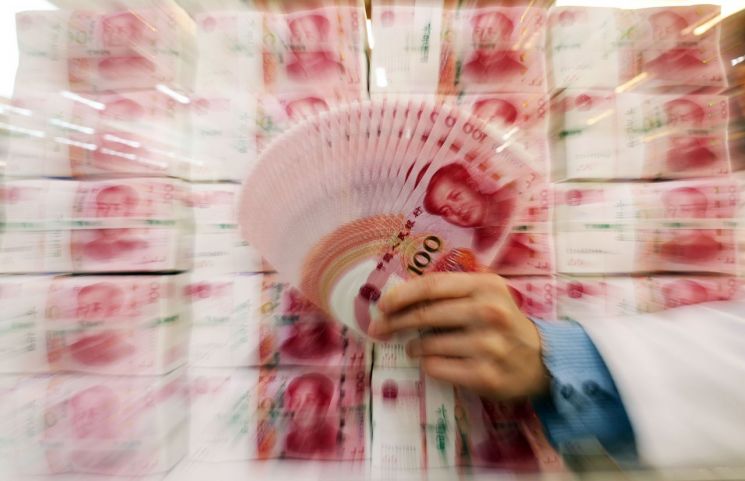
Internationalization of the yuan has been a long-cherished goal of the Chinese government, but due to China-related risks, it has failed to achieve significant results for over a decade. However, yuan transactions have surged since Russia's invasion of Ukraine, leading to analyses that China is benefiting indirectly from the Russia-Ukraine war.
According to Chinese economic media Caijing on the 30th, Mihaly Patai, Deputy Governor of the Hungarian National Bank, attended the Shanghai Global Asset Management Summit Forum and began by stating that since 2010, China has been the world's largest goods trading nation.
Deputy Governor Patai said that although the US dollar dominates global trade, yuan-denominated trade has increased fivefold over the past decade. He elaborated that this means the yuan's importance is growing as a cross-border settlement currency in international trade, as well as a funding currency through loans and bonds.
Deputy Governor Patai introduced that the Hungarian National Bank recognizes the growing international role of the yuan and has been investing part of its foreign exchange reserves in yuan since 2015.
He also stated that Hungary has signed a currency swap agreement with the People's Bank of China, the Chinese central bank, and that the agreement is currently valid. Hungary was the first European Central Bank (ECB) member country to sign a yuan swap agreement with China in 2013.
He added that discussions are ongoing regarding the construction of yuan settlement infrastructure and regulatory issues related to cross-border yuan usage.
Deputy Governor Patai said that the China Development Bank will soon open a representative office in Budapest, and that the financial systems of Hungary and China will become increasingly closer.
Caijing cited International Monetary Fund (IMF) statistics, reporting that the share of yuan in foreign exchange reserves of major foreign countries increased from 1% to 3% over five years from 2017 to 2021. It also emphasized that the number of overseas central banks investing in yuan-denominated assets is increasing.
According to the People's Bank of China's 2021 yuan internationalization report, the amount of cross-border yuan remittances in the first half of this year was 20.32 trillion yuan (approximately 3,800 trillion Korean won), a 15.7% increase from last year. While the increase in yuan transactions is partly due to Russia facing sanctions from the Western bloc following its invasion of Ukraine, the overall trend shows a rise in international yuan transactions.
Last year, the number and amount of yuan transactions through the China International Payment System (CIPS) were 3,341,600 cases and 79.6 trillion yuan, respectively, increasing by 51.6% and 75.8% compared to the previous year.
© The Asia Business Daily(www.asiae.co.kr). All rights reserved.
!["The Woman Who Threw Herself into the Water Clutching a Stolen Dior Bag"...A Grotesque Success Story That Shakes the Korean Psyche [Slate]](https://cwcontent.asiae.co.kr/asiaresize/183/2026021902243444107_1771435474.jpg)
















