13000 Substitute Workers at 83% of Normal Levels and 138 Seoul City Employees Deployed to Maintain Subway Transport Function
Rapid Deployment of Stepwise Alternatives if Strike Extends Beyond 8 Days... Spare City Buses and Concentrated Dispatching Implemented
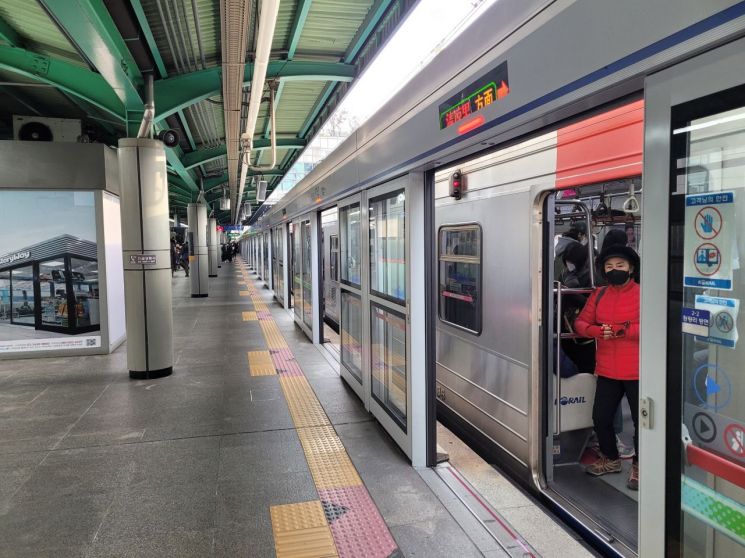
[Asia Economy Reporter Lim Cheol-young] The Seoul Metropolitan Government announced on the 29th that it will form and operate an Emergency Transportation Countermeasures Headquarters to minimize inconvenience to citizens in response to the Seoul Transportation Corporation (Lines 1 to 8) labor union’s strike scheduled to begin on the 30th.
The Emergency Transportation Countermeasures Headquarters will maintain close cooperation with related organizations such as Seoul Transportation Corporation, Korail, bus companies, autonomous districts, and the police until the strike ends, and will implement emergency transportation measures according to the strike situation. These countermeasures will be carried out in two stages, Stage 1 and Stage 2, based on the duration of the strike, comprehensively considering the strike and traffic conditions to minimize inconvenience to citizens.
First, even if the Seoul Transportation Corporation union goes on strike, the Seoul Metropolitan Government plans to operate the subway at normal levels during commuting hours, and operate the subway at about 72.7% of normal service during off-peak daytime hours when congestion is low. Additionally, about 13,000 personnel, which is 83% of the usual workforce including retirees and partner company employees, will be secured to maintain subway transportation functions, and 138 Seoul city employees will be assigned as station support staff to make every effort to minimize inconvenience to citizens.
Even if the strike extends beyond eight days, subway operation during commuting hours will be maintained at 100% of normal service, but considering the fatigue of deployed personnel, train operations during non-congested hours will be reduced to about 67.1% to 80.1% of normal levels. Measures to increase alternative transportation capacity will also be implemented simultaneously. All possible means will be mobilized to enhance alternative transportation capacity, including extending concentrated city bus dispatch intervals by 30 to 60 minutes during commuting hours, deploying charter buses at congested subway stations, and encouraging autonomous districts to operate commuter buses.
Meanwhile, since the subway is designated as an essential public utility, Seoul plans to focus on transportation measures to maintain normal operation levels. In particular, safety personnel will be deployed to manage station congestion.
Baek Ho, Director of the Seoul Metropolitan Government’s Urban Transportation Office, said, “We will make every effort to mobilize transportation capacity to minimize inconvenience to citizens using public transportation,” and added, “We hope that a smooth agreement between labor and management will be reached before the strike, and that both sides will make concessions to quickly find a resolution so that citizens do not experience inconvenience in using the subway.”
© The Asia Business Daily(www.asiae.co.kr). All rights reserved.
![Clutching a Stolen Dior Bag, Saying "I Hate Being Poor but Real"... The Grotesque Con of a "Human Knockoff" [Slate]](https://cwcontent.asiae.co.kr/asiaresize/183/2026021902243444107_1771435474.jpg)
















