Financial Services Commission and Financial Supervisory Service Announce 'Interim Discussion Results of Internal Control Improvement Task Force'
CEO Holds Overall Responsibility
Board of Directors to Enforce CEO Management Duties
Establish Departmental Responsibility Structure for Responsible Executives
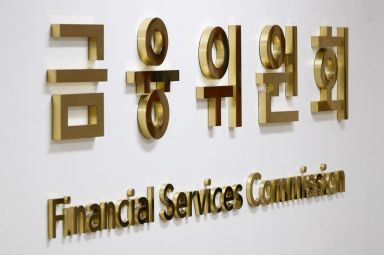
[Asia Economy Reporter Sim Nayoung] Measures to prevent illegal acts by executives and employees, including large-scale embezzlement and mis-selling incidents such as the 70 billion KRW embezzlement case at Woori Bank that occurred last April, have begun to take shape. The Financial Services Commission (FSC) has decided to impose the most comprehensive internal control management obligations on financial company CEOs, including financial holding company chairpersons and bank presidents. They will also be obligated to take appropriate measures to prevent financial accidents.
The CEO Holds Overall Responsibility
On the 29th, the FSC announced the 'Interim Discussion Results of the Internal Control Improvement Task Force (TF).' Kim Soyoung, Vice Chairman of the FSC, stated, "Financial accidents cause direct harm to consumers and shareholders, and beyond that, they significantly damage trust in the financial sector and have broad economic and social repercussions. Therefore, in addition to punishing and sanctioning the perpetrators of illegal acts, there are questions about whether the company, management, and board of directors have properly fulfilled their roles." She added, "Although financial companies have established and operate internal control systems, these systems tend to be formalistic and may lack proper functioning and effectiveness."
As a preventive measure to strengthen CEO responsibility, Vice Chairman Kim explained, "However, realistically, it is difficult for the CEO to prevent all financial accidents, so the scope of responsibility will be limited to 'serious financial accidents' that have severe social repercussions or significantly affect consumers and the soundness of financial companies."
Not all serious financial accidents will automatically result in sanctions against financial holding company chairpersons or bank presidents. If the CEO has established regulations and systems expected to prevent or detect the financial accident and has properly managed the normal operation of these systems, it will be considered that the CEO has fulfilled their duty of care, thereby reducing or exempting their responsibility.
The Board of Directors Must Establish a Responsibility Structure by Division and Impose Management Obligations on the CEO
The FSC plans to codify the board of directors’ obligation to supervise the management of internal controls by the executive team. This includes granting the board the authority to oversee the CEO’s internal control management duties and to require reports on the fulfillment status of internal control obligations from the CEO.
Vice Chairman Kim stated, "Recognizing internal control as an organic system, we will clarify the responsibilities of each executive so that all executives can fulfill their roles and responsibilities related to internal control within their respective business areas." She explained, "Executives will bear responsibility for preventing financial accidents other than serious financial accidents directly handled by the CEO."
Each executive is expected to directly manage and supervise internal control within their area of responsibility without delegating or transferring their duties to non-executives.
As a reference, the UK’s 'responsibilities map' was mentioned. This is a responsibility map that financial companies prepare in advance, detailing the scope of responsibility and duties for each executive. When an accident occurs within the pre-established scope of responsibility, sanctions are imposed considering the adequacy of the internal control activities of the responsible executive.
Vice Chairman Kim said, "This institutional improvement aims to have financial companies accept internal control not as an externally imposed regulation but as a management strategy and organizational culture." She added, "We expect that the CEO will balance performance management for profit generation and risk control to prevent financial accidents, ultimately reducing the occurrence of such accidents."
She continued, "We also hope this will create an environment in the financial sector where executives with not only ability and performance but also integrity, honesty, and good reputation can succeed." She said, "By clarifying the locus and scope of internal control responsibility, the principles of checks and balances in financial company governance will operate smoothly, and the board’s supervisory function over management will be further strengthened."
The FSC plans to finalize the detailed institutional contents through legal review and industry consultation in the upcoming task force meetings and prepare legislative amendment plans, with the final proposal expected to be announced next year.
© The Asia Business Daily(www.asiae.co.kr). All rights reserved.

















