Rare Artifact from Unified Silla Unearthed: "Empirical Site of Seung-gwan System"
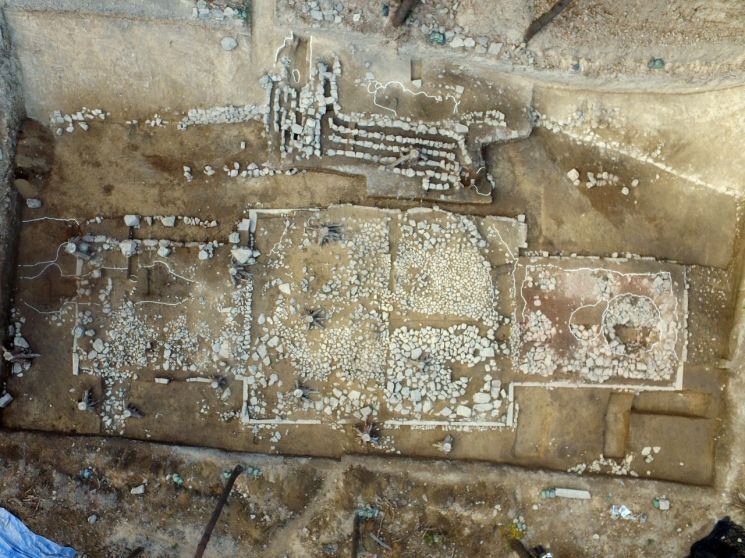
The site of Heungjeon-ri Temple in Samcheok, Gangwon Province, believed to have been established during the Unified Silla period, will be managed as a nationally designated cultural heritage. On the 28th, the Cultural Heritage Administration announced that 'Samcheok Heungjeon-ri Temple Site' has been designated as a historic site. It was evaluated as highly valuable in terms of art and architectural history due to numerous relics demonstrating the outstanding artistry and advanced technical skills of Buddhist art, as well as traces of buildings with various forms and facilities.
The Heungjeon-ri Temple Site is located in a mountainous area of Dogye-eup, Samcheok City. From 2014 to 2017, the Cultural Heritage Administration and the Buddhist Cultural Heritage Research Institute conducted important surveys and excavations of abandoned temple sites, unearthing a large number of relics with high historical and cultural value. These include two complete bronze purification bottles (Cheongdong Jeongbyeong) estimated to have been made during the Unified Silla period, an ink box with the ink pad still intact, and a gilt-bronze lion statue. These relics are rare finds in existing temple ruins and have attracted significant attention.
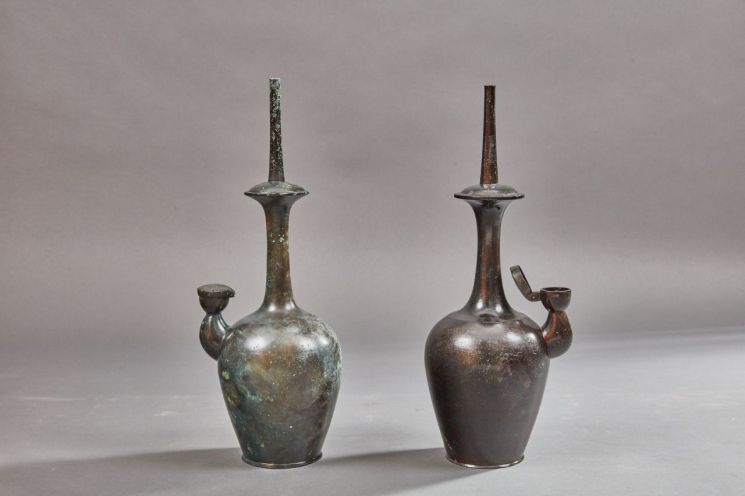
The bronze purification bottles were mainly produced during the Unified Silla to Goryeo periods when Buddhism flourished. The relics found at the Heungjeon-ri temple site are estimated to have been made in the 9th century. They bear the inscription 'Guktong (國統),' referring to a monk who served as a royal advisor during the Silla dynasty. On the seal, the characters 'Beomung,' meaning 'Shakyamuni' or 'Buddha,' were discovered. 'Beomung Gwana' means the Shakyamuni office, that is, the seal of the Seung-gwan (monastic official). Seung-gwan refers to officials appointed centrally and locally to oversee and manage all matters related to the Buddhist order and monks.
During the Unified Silla period, local private temples with Seung-gwan sometimes partially performed administrative functions. For this reason, academia largely believes that the former Heungjeon-ri temple was both a Seung-gwan temple and a Seon (Zen) sect temple. The Cultural Heritage Administration also explained, "This site provides tangible evidence of the Seung-gwan system of Silla, which had previously been confirmed only through historical documents," adding, "It offers insight into governance methods aimed at checking local powers and strengthening central control."
© The Asia Business Daily(www.asiae.co.kr). All rights reserved.


















