Global Stock Trading Volume Rebounds to Monthly Record High
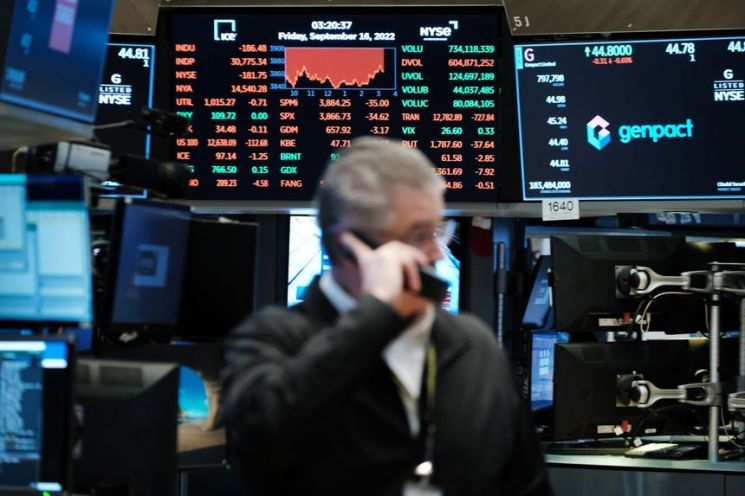
[Asia Economy Reporter Yujin Cho] The U.S. stock market made a surprising rebound amid expectations of a slowdown in interest rate hikes, breaking the recent sluggish trend in global stock trading volume and setting a record for the highest monthly volume. However, the initial public offering (IPO) market shows no signs of recovery due to liquidity shortages, with forecasts suggesting the downturn will continue until the second half of next year.
On the 26th (local time), Bloomberg reported that the global stock market's trading volume rebounded unexpectedly this month, partially offsetting losses caused by the sluggish IPO market. Trading volume in global stock markets increased to $24 billion (approximately 32 trillion won) this month, breaking the downward trend since August and setting a monthly record. However, during the same period, IPO volume decreased by 65% compared to the previous year.
The Federal Reserve (Fed), the U.S. central bank, hinted at a slowdown in the pace of interest rate hikes in the minutes of the November Federal Open Market Committee (FOMC) meeting, which was reflected in market expectations.
The report evaluated, "The increase in stock trading volume is a welcome sign for the financial investment industry, which has been experiencing an endless downturn as risk sentiment toward high-intensity tightening policies by governments worldwide and inflation weakens."
Emma Wall, Head of Investment Analysis and Research at Hargreaves Lansdown in the UK, said, "The rebound in stock trading volume this month indicates a recovery in investor sentiment," but added, "However, inflationary pressures remain high, and the macroeconomic environment is still challenging."
Typically, an increase in stock trading volume would invigorate the IPO market as well, but experts assessed that macro factors such as inflation are suppressing the IPO market recovery, and demand for IPOs is not picking up.
Yudai Furta, Head of Equity Issuance Markets for Asia-Pacific at Citigroup, said, "Although the stock market made a surprising rebound ahead of the year-end (Santa Rally), it is too early to say this will lead to a sustained upward trend," adding, "Many companies and investors still have significant concerns about the macroeconomic situation."
Last year, the IPO market enjoyed an unprecedented boom as funds, displaced by ongoing monetary easing due to COVID-19, flooded in. In particular, companies entering the stock market through SPACs, in addition to traditional IPOs, led the IPO boom, and individual investors enthusiastically drove the frenzy by investing in SPACs with high capital gains.
However, as the COVID-19 pandemic ended, high-intensity tightening policies by governments worldwide and inflation dried up liquidity, causing investor sentiment to deteriorate sharply. Additionally, the sharp decline in stock prices of companies listed on the stock market, including SPACs, deepened the IPO market downturn.
With a low likelihood of an immediate shift to an interest rate cut policy, forecasts suggest that companies and investors will continue to avoid the IPO market.
Germany's largest investment bank, Deutsche Bank, stated, "Companies are focusing more on investments that can guarantee stable returns rather than growth potential," adding, "This situation is affecting the slowdown in the IPO market, and the global IPO market recovery is expected to be possible only after the second half of next year."
© The Asia Business Daily(www.asiae.co.kr). All rights reserved.