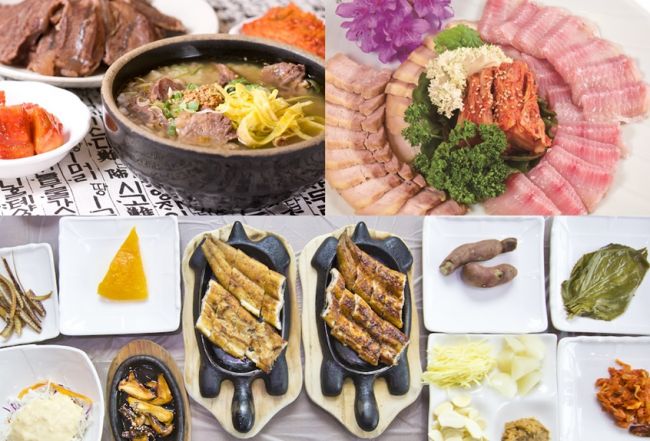
[Naju=Asia Economy Honam Reporting Headquarters Reporter Kim Yuk-bong] Naju City, Jeollanam-do (Mayor Yoon Byung-tae) announced the results of a ‘consumer perception survey,’ the first step in establishing a comprehensive plan for designating and fostering local representative restaurants under the tentative name ‘Naju Bapsang’.
According to the city on the 25th, this survey was conducted nationwide from the 21st of last month to the 6th of this month to collect basic data for the ‘Naju Bapsang branding’ project aimed at preserving local food resources and developing food tourism attractions.
The Naju Bapsang branding is a campaign pledged in the 8th term of the local government to preserve the legacy of traditional Naju local cuisine passed down through generations, foster distinctive Naju-style meals, promote food tourism resources, and revitalize the local economy.
The survey consisted of 19 questions across three areas: ‘Respondent Basic Information,’ ‘Perception of Restaurants in Naju City,’ and ‘Consumer Perception of Designating Naju Representative Restaurants.’
The survey was conducted online (via QR code and website popup) over two weeks, with 1,919 participants out of 4,323 total visitors, representing a 44.3% participation rate.
In the basic respondent demographics, 51.1% were male and 48.9% female; age groups were led by those in their 30s (42.1%), followed by 40s (24.7%) and 20s (19.6%), with the majority in their 30s and 40s.
Regarding residence, 54% lived within Naju City and 46% outside; occupations were mainly company employees (39.5%), public enterprise workers (17.6%), and government officials (11.9%).
Regarding the main survey question on whether there are recommended restaurants worth visiting in Naju City, 88.6% (1,700 respondents) answered affirmatively.
Preferred cuisine types were overwhelmingly Korean food at 78.7%, followed by Western food (6.8%) and Japanese food (5.6%).
The preferred representative Naju dishes were ‘Gomtang’ (78.1%), ‘Hongeo’ (fermented skate) (7.1%), ‘Bulgogi’ (4.8%), ‘Eel’ (4.5%), and ‘Others’ (5.5%).
Regarding the types of food considered when designating representative restaurants, ‘Gomtang varieties’ (31.5%), ‘Grilled dishes such as bulgogi and fish’ (15.6%), and ‘Boiled dishes such as meat bossam and hongeo samhap’ (12.6%) showed similar preferences.
Improvements suggested for restaurants were evenly distributed across facility environment (29%), taste (21.8%), friendliness (19.4%), hygiene (18.5%), and table setting (11.3%).
On the question of willingness to visit if designated as a Naju Bapsang representative restaurant, 97.2% of respondents said they would be willing to visit.
The criteria for designating representative restaurants ranked highest as ‘Serving local traditional representative food menus’ (37.4%), followed by ‘Business environment (cleanliness, hygiene, restrooms, etc.)’ (26.1%), ‘Use of local food ingredients’ (11.1%), and ‘Table setting’ (9.9%).
The appropriate price range per person for a representative restaurant was ‘around 10,000 KRW,’ chosen by 64% (1,229 respondents) of all participants.
Based on the consumer perception survey results, the city plans to establish standards for designating and fostering representative restaurants and publicly recruit participating restaurants for Naju Bapsang within the local dining industry.
They plan to form an external evaluation team including culinary and dining experts to ensure fair evaluation and selection of Naju Bapsang representative restaurants.
The ‘Ordinance on Designation and Fostering of Naju Bapsang Representative Restaurants in Naju City,’ covering the purpose, plans, support, and management of the project, is also scheduled to be enacted and promulgated within the year.
Mayor Yoon Byung-tae said, “Based on the results of this consumer perception survey, we will improve Naju’s food culture and dining service levels and foster a safe dining culture. Through fostering Naju Bapsang representative restaurants, we aim to develop distinctive food tourism attractions unique to Naju and revitalize the local economy.”
Naju=Asia Economy Honam Reporting Headquarters Reporter Kim Yuk-bong baekok@asiae.co.kr
© The Asia Business Daily(www.asiae.co.kr). All rights reserved.

















