"USD 65-70 per barrel, an absurd price"
Concerns over effectiveness due to little difference from Russian selling price
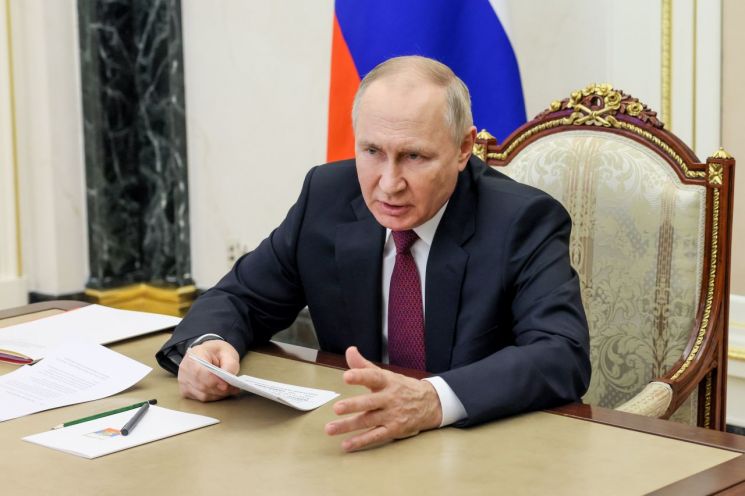
[Asia Economy Reporter Hyunwoo Lee] Russian President Vladimir Putin has warned that the introduction of a price cap on Russian crude oil, being pursued by the Group of Seven (G7) and the European Union (EU), could lead to serious consequences. As the Russian government once again pressured countries participating in the price cap to halt oil and gas exports, tensions with the West over the price cap are expected to intensify further.
According to AFP on the 25th (local time), President Putin said during a phone call with Iraqi Prime Minister Mohammed Shia Al Sudani that "the introduction of a price cap goes against market principles" and warned that "the Western countries' introduction of a price cap on Russian crude oil could cause serious consequences in the global energy market."
Dmitry Peskov, spokesperson for the Kremlin, also stated at a press conference that "setting a price cap on Russian crude oil at $65 to $70 per barrel is an absurd price figure," adding, "President Putin has expressed the position that Russia will not supply oil and gas to countries participating in the price cap for the time being, and before officially announcing this stance, the situation will be analyzed."
Within Russia, the prevailing analysis is that if the price cap is announced around $70 per barrel, it will not immediately cause fatal consequences to the Russian economy. This is because Russia is already exporting oil to countries such as China and India at prices around $70 per barrel.
TASS News Agency analyzed, "Currently, Russian oil is exported at a discounted price of around $70 per barrel, so if a price cap of $65 to $70 is implemented, there will be no immediate economic problems. However, if G7 countries participate and persuade major oil-importing countries to join, when oil prices surge again in the future, it could have long-term strategic significance, and they will continue to try to lower the price cap."
Meanwhile, within the EU, disagreements among member states over the price cap on Russian crude oil have deepened, making it difficult to reach a conclusion. Eastern European countries adjacent to Russia, led by Poland, argue that a price cap of $65 to $70 per barrel will not significantly impact Russia and insist on lowering it below $20, which is the production cost of Russian oil.
On the other hand, countries such as Greece, Cyprus, and Malta, where maritime transport of Russian crude oil and oil tankers plays a significant role in the economy, oppose lowering the price cap below $70. The G7 and EU plan to implement the price cap starting from the 5th of next month, but there are also prospects that the actual application may be delayed due to the postponement in deciding the cap amount.
© The Asia Business Daily(www.asiae.co.kr). All rights reserved.
![Clutching a Stolen Dior Bag, Saying "I Hate Being Poor but Real"... The Grotesque Con of a "Human Knockoff" [Slate]](https://cwcontent.asiae.co.kr/asiaresize/183/2026021902243444107_1771435474.jpg)
















