2022 Metaverse Fashion Trends Analyzed from Survey of 1,000 Gen Z: 47% Respondents Say Dressing Avatars Is a Means of Self-Expression... Spending 130,000 KRW Monthly; Gucci, Louis Vuitton, Nike Enter Digital Fashion Market
[Asia Economy Reporter Han Seung-gon] Kim, a worker in his 20s, recently bought new clothes for his avatar in a virtual space. Kim said, "As the weather gets colder and it's winter, I got a padded jacket," adding, "Other avatars also change their fashion according to the season." He further noted, "Many avatars are dressed in real luxury brands like Louis Vuitton."
Global metaverse platform Roblox collaborated with Parsons School of Design to analyze Gen Z's digital fashion trends and recently released the "2022 Metaverse Fashion Trends." Based on Roblox platform user behavior data and a survey of 1,000 Gen Z users (born from the mid-1990s to early 2000s), it was found that Gen Z willingly spends money on avatar styles and digital fashion as a means of expression.
On a monthly basis, 31% of respondents said they spend up to $5 (about 6,500 KRW), and 30% said they spend between $10 and $20 (about 13,000 to 26,000 KRW). Additionally, 12% of users spend $50 to $100 (about 65,000 to 130,000 KRW) per month. According to the survey, half of Roblox's Gen Z users customize their avatar's clothes at least once a week. Forty-seven percent of respondents said dressing their avatar is a way to express their personality, and through this, they feel ▲ enjoyment (43%) ▲ pride in their digital collection (35%) ▲ a stronger connection with friends or colleagues in digital spaces (32%).
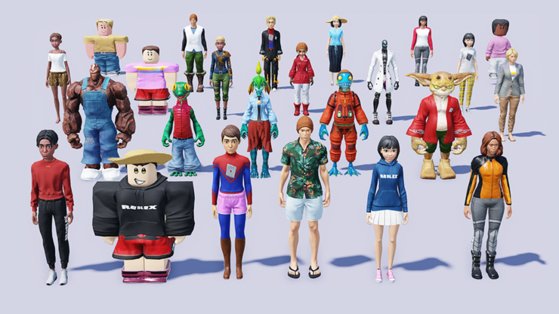 Generation Z users of Roblox spend money on their avatars' clothing just as they do on fashion consumption in real life. Photo by Roblox
Spending money to dress up avatars may seem unfamiliar, but it is common in metaverse spaces. Most global fashion brands such as Gucci, Louis Vuitton, and Nike have already entered the "digital fashion" market. These companies use non-fungible tokens (NFTs) to add scarcity to digital content and sell clothes, bags, sneakers, and more.
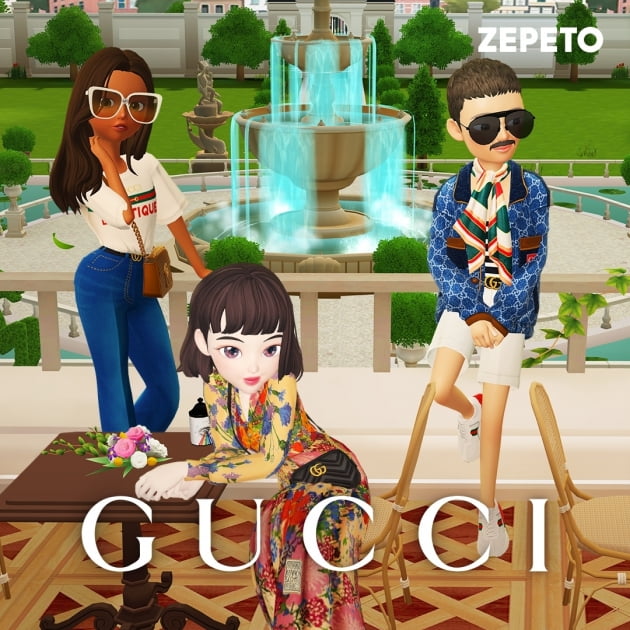
For example, gifting your avatar a new Louis Vuitton bag means owning a one-of-a-kind bag worldwide due to NFT scarcity. Last year, Gucci opened the "Gucci Villa" on Zepeto (a virtual space created by Naver Z in August 2018), which felt like moving the entire store from Florence, Italy, into the virtual world.
The market response has also been positive. According to blockchain market research firm DappRadar, the global NFT transaction volume for art and fashion reached $25 billion (about 30 trillion KRW) in 2021, a more than 260-fold increase from $94.9 million (about 113 billion KRW) in 2020. U.S. investment bank Morgan Stanley expects the digital fashion industry to be worth $50 billion (about 70.8 trillion KRW) by 2030.
Given this situation, the domestic fashion industry is also showing interest in so-called "avatar clothes." Korean apparel company F&F launched the metaverse fashion brand "Supra" in February this year, and Lotte Home Shopping released the digital fashion brand "LOV-F." Lotte Home Shopping sells LOV-F virtual products linked to physical items through its app's NFT marketplace. Kolon FNC's women's brand "Lucky Chouette" operates the metaverse platform Lucky Town, which offers a 360-degree view of models wearing products, allowing customers to see how the items look when worn, closely resembling reality.
The industry expects the digital fashion market to continue growing. Christina Wootton, Vice President of Global Partnerships at Roblox, said, "Next-generation fashion designers and brands are expected to be deeply involved in digital fashion by dressing avatars, designing 3D digital versions of fashion collections, and creating metaverse-exclusive items. As Gen Z consumers spend more time in immersive spaces and their economic power and influence on fashion grow, metaverse trends will significantly impact real-world fashion, and real-world trends will also carry over into the metaverse."
© The Asia Business Daily(www.asiae.co.kr). All rights reserved.


















