EU Funding Project Worth 20 Billion KRW
Plan for Tandem Cell Mass Production by June 2026
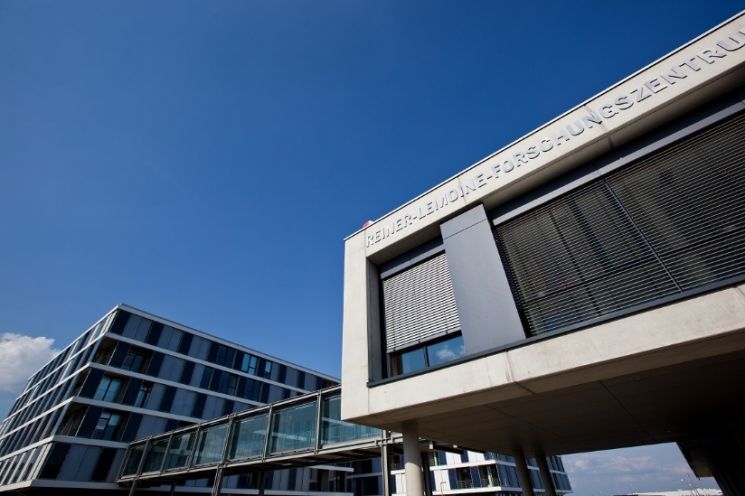 Exterior view of Hanwha Q CELLS Global R&D Center located in Thalheim, Germany. Photo by Hanwha Q CELLS
[Asia Economy Reporter Choi Seoyoon] Hanwha Solutions Q CELLS Division (hereinafter Hanwha Q CELLS) is participating in a research and development (R&D) project for the mass production of next-generation solar cells, supported by the European Union (EU) with 15 million euros (approximately 20 billion KRW).
According to Hanwha Q CELLS on the 24th, this EU-supported project involves establishing a pilot production line for ‘perovskite-crystalline silicon tandem cells’ (hereinafter tandem cells) at Hanwha Q CELLS’ global R&D center in Talheim, Germany, to be used for R&D purposes.
Based on the results of this project, Hanwha Q CELLS plans to start mass production of tandem cells after June 2026. Earlier, in March, Hanwha Q CELLS collaborated with the Helmholtz Institute in Germany to develop tandem cells with a maximum efficiency of 28.7%, achieving its highest efficiency to date.
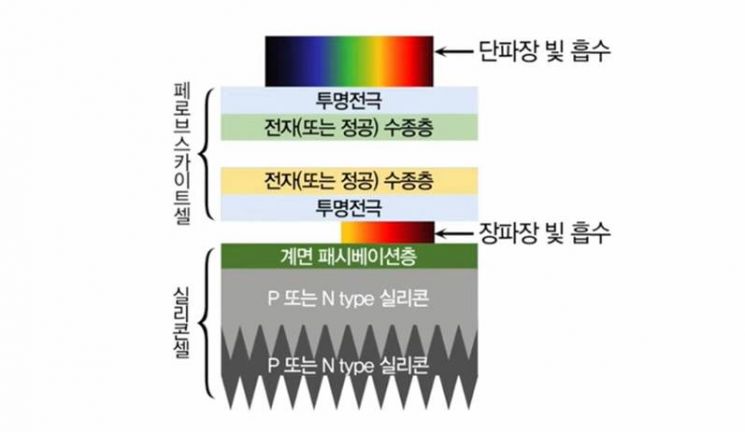
Tandem cells are manufactured by layering a perovskite layer, a new solar material attracting attention, on top of a silicon layer. Tandem cells can absorb additional light in regions that single silicon cells, which currently account for more than 90% of the global solar market, cannot absorb, resulting in higher potential power generation efficiency. The theoretical limit efficiency of tandem cells estimated by academia is 44%, about 1.5 times higher than the 29% theoretical limit efficiency of single silicon cells.
The project aims to mass-produce high-efficiency tandem cells and develop equipment, processes, and materials for manufacturing tandem cell-based modules over four years from this month until 2026. A production line for tandem cells using Hanwha Q CELLS’ proprietary Q.ANTUM cell manufacturing technology for the bottom cell will be established to develop process technology that minimizes efficiency loss when producing tandem cells into modules. The consortium includes a total of 17 solar-related companies and research institutions across Europe, including Hanwha Q CELLS.
This project is being promoted to realize the EU’s renewable energy transition goals through the commercialization of high-efficiency tandem cells. In June, the EU announced the ‘REPowerEU’ plan to strengthen energy security and respond to climate change by increasing the share of renewable energy from 32% this year to 45% by 2030. Accordingly, renewable energy in Europe will increase to a total of 1,236 GW, including 600 GW of solar power, by 2030.
Meanwhile, Hanwha Q CELLS continues its R&D collaboration on tandem cells with domestic industry and academia. It was selected as a research institution for the national tandem cell project in 2020 and for the national tandem cell-based module process project in 2021, laying the groundwork for the commercialization of tandem cells together with domestic SMEs and research institutions.
Hanwha Q CELLS CEO Lee Guyoung said, “Hanwha Q CELLS is working with leading institutions at home and abroad to accelerate the commercialization of perovskite-silicon tandem cells,” adding, “We will continue to lead technological innovation in the next-generation solar market through two-track R&D based in Europe and Korea.”
© The Asia Business Daily(www.asiae.co.kr). All rights reserved.


















