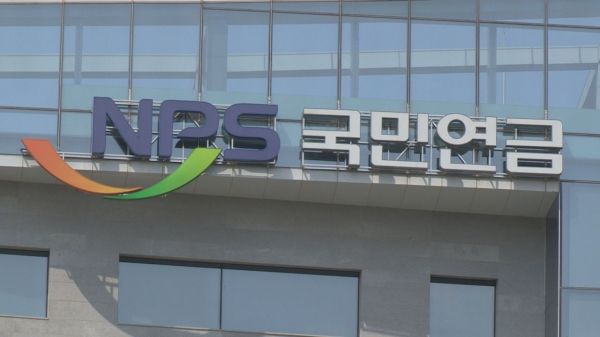
[Asia Economy Reporter Byeon Seon-jin] “We already pay alimony and child support, so do we have to pay the divided pension as well?”
Mr. A, who divorced before the implementation date of the divided pension system on January 1, 1999, filed a reexamination request with the Ministry of Health and Welfare, asking not to apply the divided pension retroactively. According to Mr. A, the divorce mediation with his ex-spouse Mr. B was finalized on December 12, 1997, and they agreed to pay only alimony and child support.
Will Mr. A’s claim be accepted in this case? The National Pension Act stipulates that when the reason for paying the divided pension arises, the divided pension regulations apply from the old-age pension benefits after January 1, 1999. Therefore, Mr. B, who became eligible to receive the divided pension from September 20, 2020, can share a certain percentage of the old-age pension amount with Mr. A, according to the decision. The main reason is that “the application cannot be excluded for the legally recognized marriage period, thus it cannot be excluded from the calculation target of the divided pension.”
Divided Pension, which deducts a certain portion of the spouse’s old-age pension upon divorce... Were there any objections?
The divided pension is a system that allows a spouse to receive a certain portion of the old-age pension amount when the National Pension subscriber divorces. It was introduced to recognize the spouse’s contribution during the marriage period and to ensure the spouse’s dignified life after divorce by the state. The conditions to receive the divided pension are that the divorced couple must have maintained a substantial marital relationship for more than five years and both must have reached the National Pension receiving age. On the 23rd, through the ‘2022 National Pension Rights Protection Casebook,’ we reviewed cases where objections to the National Pension Service’s divided pension disposition were dismissed.
If the divorce mediation record states, “No claims for alimony, property division, or any other property claims will be made by the claimant regarding the divorce,” can the divided pension payment be canceled? Claimant Mr. C filed a rights protection request to cancel the pension amount change disposition due to the divided pension payment against his ex-spouse Mr. D, citing “current financial difficulties.”
The issue is whether the “property settlement clause” in the divorce mediation record includes the right to receive the divided pension. According to Article 64, Paragraph 2 of the National Pension Act, if there is a separately decided matter regarding pension division, it shall be followed. In the reexamination request, it was judged that the statement of not claiming property division cannot be conclusively interpreted as separately deciding the division ratio of the pension, which is part of “social insurance.” The reason is that there was no clear explicit agreement to set a different pension division ratio.
To prevent the payment of the divided pension when the spouses never lived together during the marriage period, it must be proven with official documents. The divided pension can only be received if the actual marriage period, excluding periods of separation or desertion, is five years or more as stated in the marriage certificate or similar documents. However, there have been cases where the period of separation or desertion was not proven with documents prescribed by law, resulting in the divided pension amount being deducted from the old-age pension.
There are also cases where it was proven that the spouses did not live together during the legal marriage period. Mr. E filed an objection to the divided pension payment, stating that “from 1994 until the consensual divorce date, my spouse Mr. F did not cohabit, support, or perform household duties.” The reexamination sided with Mr. E. In this case, Mr. F was registered as having an unknown residence on the resident registration abstract for a certain period, so that period was excluded from the marriage period, and the divided pension was calculated accordingly.
Out of about 2,000 reexamination requests reviewed, around 450 cases had their dispositions modified
The procedures to follow when there is an objection to the qualifications or pension benefits of a National Pension subscriber are objection request → review request → reexamination request → litigation. If it is necessary to specifically review the application standards of the law depending on individual cases, there is a separate procedure to protect citizens’ rights by filing a review request with the National Pension Service or a reexamination request with the Ministry of Health and Welfare. The government announced that from 2019 to last year, it reviewed over 2,000 reexamination requests and modified the dispositions in about 450 cases (22.5%).
© The Asia Business Daily(www.asiae.co.kr). All rights reserved.

















