[Seoul District News] Nowon-gu Strengthens Internal and External Situation Transmission System, Enables Immediate Disaster Text Message Sending with Duty Command Approval & Shares Detailed Manual of Possible Accident Types with All Staff, Ensures Immediate Two-Way Communication in Emergencies & Increases Duty Personnel from 2 to 4, Provides Daily Risk Sensitivity Training for Duty Staff ...
‘Seocho Geonchuk Alimi’ App Disaster Safety Service Launched & Push Notifications for Action Guidelines During Disasters ... Gwangjin-gu Establishes ‘Safety Review Committee’ for Private Events with Over 500 Participants
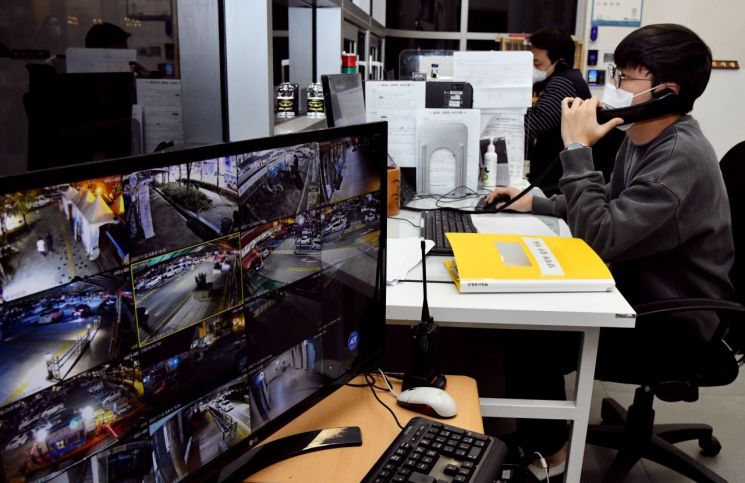
[Asia Economy Reporter Park Jong-il] Nowon-gu (Mayor Oh Seung-rok) is reorganizing the duty work system to minimize potential gaps during holidays and late-night emergency situations.
This year, 819 civil complaints were received by the duty situation room during holidays and late nights, all via phone calls. Most were simple complaints, but some involved incidents, accidents, or disaster situations. In the latter cases, the response depends heavily on the initial responder's judgment, making the duty officer's decision very important.
Accordingly, the district will significantly revamp the current duty work system by ▲strengthening internal and external situation dissemination systems ▲establishing a step-by-step reporting system and revising manuals by sector ▲adding dedicated duty personnel and conducting daily training for duty officers.
Rapidly disseminating facts internally and externally during emergencies is the first step to preventing larger accidents. Therefore, the district will simplify the emergency broadcast (internal) and disaster text message sending (external) systems. During holidays and late nights, disaster text messages will be sent from the duty room with the approval of the duty commander. Previously, sending disaster texts required approval from an authorized team leader in the disaster department office, causing significant delays. The emergency broadcast system for all employees will also be intensified. With the duty commander's approval, notifications will be simultaneously sent via AlimTalk, text message, and phone call?three methods at once?to increase employee participation.
The reporting system is based on the principle of ‘real-time sharing of situations with all employees and the relevant department head being on-site,’ and is specified step-by-step. During normal times (Stage 1), emergency contact networks are checked regularly, and communication with the CCTV control center is maintained. If two or more complaints of the same content are received (Stage 2), on-site verification is conducted, results are posted on the employee communication app ‘Nowon Diary,’ and CCTV monitoring is intensified.
In cases of large-scale disasters such as wildfires or wind and flood damage, or when situation control is difficult due to events (Stage 3), the emergency broadcast system (OiTalk) will quickly disseminate information to all employees and immediately activate the emergency contact system.
To ensure unified judgment by duty officers, response manuals will also be revised. A new bulletin board will be established on the internal network to share current issues and manuals by sector. Not only general complaints but also detailed types of possible accidents will be categorized into ▲construction sites ▲wildfires ▲cold waves, heat waves ▲noise, dust ▲snow removal, sinkholes ▲wind and flood damage ▲road facilities ▲crowd-dense events, etc. Relevant departments will regularly update materials, and the duty room will promptly handle situations according to the response manuals.
Also, the average duty cycle of 60 days had some shortcomings in continuity and expertise. To address this, the district will increase dedicated duty personnel from two to four, ensuring that one person is included in each work shift daily.
Before each duty shift, training to enhance risk sensitivity will be conducted. Under the supervision of the general affairs team leader, current issues will be communicated and manuals reviewed to enable early prediction and detection of risk signs rather than simply forwarding resident reports as simple complaints.
Meanwhile, the district is closely monitoring to alleviate residents’ safety concerns. Recently, a ‘Private Event Safety Review Committee’ was formed to conduct thorough inspections of overcrowded areas and major facilities, including all situations expected to have crowds of 500 or more. The ‘Safety Watch Team,’ composed of six architects, regularly inspects construction sites. For frequently accident-prone building demolitions, the district produced and distributed the nation’s first guideline in August last year and recently upgraded it to reflect legal amendments.
Oh Seung-rok, Mayor of Nowon-gu, said, “We are sharpening our focus on safety to identify blind spots and build systems. We will do our best to make Nowon a place where all residents can live with peace of mind.”
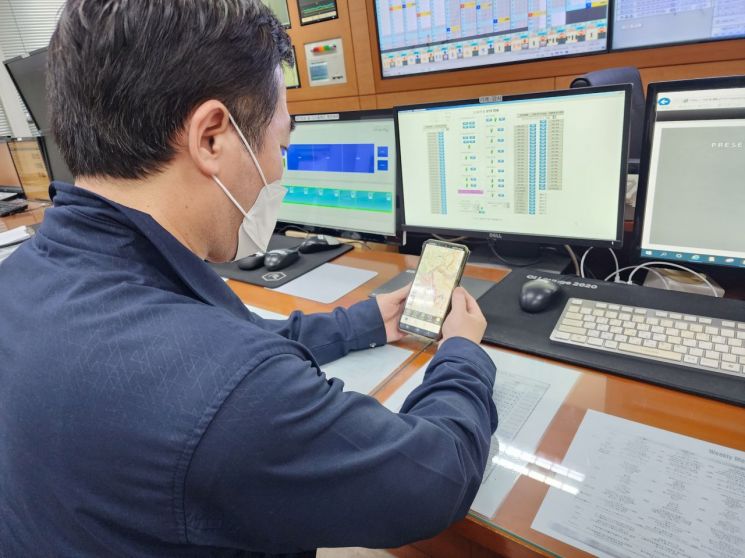
There may be cases where people want to take safety measures for buildings in preparation for sudden heavy rain but do not know how to prepare in advance. From now on, the ‘Seocho Geonchuk Alimi’ mobile app will allow easy and convenient access to disaster action guidelines as well as various building management information.
Seocho-gu (Mayor Jeon Seong-su) has added a disaster safety service function to the ‘Seocho Geonchuk Alimi’ app for construction sites and building management starting this month.
The newly added ‘Disaster Safety Service’ function is a customized notification service that supports real-time situation dissemination and safety management by providing urgent information to enable disaster preparedness according to situations such as abnormal weather or safety accidents through push notifications.
For example, when a heavy rain forecast is issued, the app informs users in real time about the issuance of preliminary weather warnings by the Korea Meteorological Administration. Building managers receive specific disaster prevention guidance such as installing flood barriers and moving vehicles, while general residents receive disaster response guidelines via push notifications from the ‘Seocho Geonchuk Alimi’ app.
The district is currently conducting a pilot operation by building a database for 153 large buildings through functional upgrades of the ‘Seocho Geonchuk Alimi’ mobile app. Next year, the service will be expanded to about 500 medium-sized buildings.
Through this project, the district expects that in the event of a disaster, building managers of buildings such as office buildings and apartment complexes will be able to post emergency action results such as flood barrier installation and request SOS through the app for rapid response.
Meanwhile, the ‘Seocho Geonchuk Alimi’ app has been operated nationwide for the first time since December last year to prevent safety accidents at construction sites and facilitate communication with the field. Its main function is that when a safety accident occurs in the area, construction site personnel can report it via the app, and the district office staff immediately take necessary actions such as dispatching to the site.
Additionally, the app provides safety inspection schedules and construction permit status, enabling safety measures based on weather forecasts such as heavy rain and snow. Currently, 486 construction site personnel and building managers have registered on the app, and 693 general residents have downloaded it to use services such as viewing permit status.
Jeon Seong-su, Mayor of Seocho-gu, said, “We hope that the introduction of proactive and customized notification services for disaster preparedness will help protect the lives and property of residents. We will continue to lead safety management based on digital platforms to protect residents’ safety more systematically.”
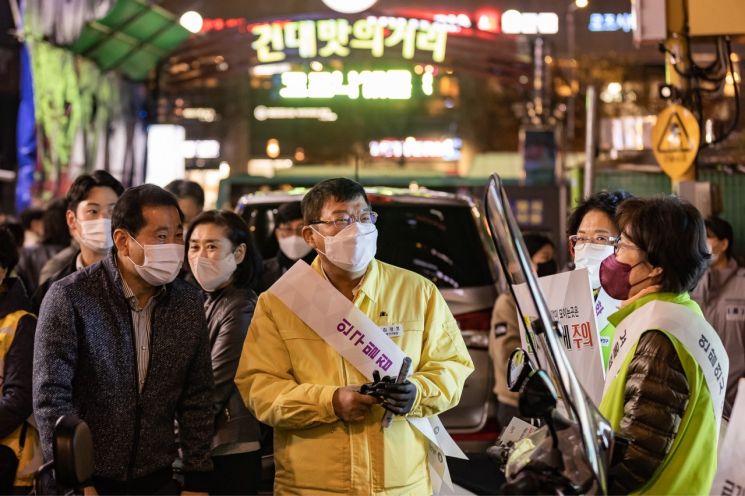
Gwangjin-gu (Mayor Kim Kyung-ho) will operate a ‘Private Event Safety Review Committee’ for outdoor events hosted by private parties or without hosts where more than 500 people gather, to prevent incidents similar to the Itaewon tragedy.
Accordingly, private events with 500 to fewer than 1,000 attendees and crowd-dense events without hosts, which are currently exempt from safety management plan establishment and measures under the Disaster and Safety Act, will now undergo safety review through the district office.
Although not mandatory, the district established the committee to ensure residents’ safety and alleviate anxiety. The committee reviews event details in advance to identify potential risks and prepare measures and counterplans.
The committee, which meets 10 days before the event, is chaired by the deputy mayor of Gwangjin-gu and consists of about 11 members. The members review ▲event period and location ▲participants and scale ▲use and scale of gas and electricity, then assess ▲event site safety ▲damage around the event site ▲traffic measures ▲quarantine and security measures ▲other safety-related matters.
Additionally, based on the review content and results, the district plans to share information with police stations and fire stations and recommend and implement safety measures found through joint inspections with police, fire departments, and private experts if necessary. Furthermore, if an emergency situation is anticipated at crowd-dense events without hosts with 500 or more people, the district’s safety management department will proactively establish and implement a separate safety management plan.
Kim Kyung-ho, Mayor of Gwangjin-gu, said, “Through the Private Event Safety Review Committee, we will do our best to detect and address risk factors in advance to prevent safety accidents.”
Gwangjin-gu plans to conduct joint field inspections with private, police, and government agencies focusing on Kondae Food Street and Rodeo Street (Hwayang-dong), and Yangkkochi Street (Jayang-dong) in preparation for the large crowds expected during the upcoming Christmas and year-end holidays.
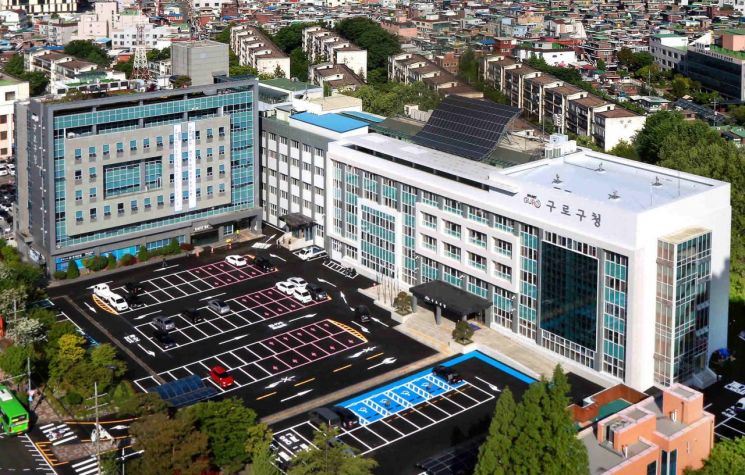
Guro-gu (Mayor Moon Heon-il) has established safety measures for Gocheok Sky Dome, where large crowds are expected ahead of year-end and New Year’s large-scale performances, and will conduct special safety inspections of multi-use facilities.
Starting with the Melon Music Awards (MMA) on the 26th, at least six concerts and year-end award ceremonies are scheduled at Gocheok Sky Dome. This means large-scale performances will be held weekly for six weeks from the end of this month to early next year.
The district expects crowds of at least 12,000 and up to 20,000 people near Gocheok Sky Dome on performance days. Accordingly, it will conduct on-site monitoring for crowd safety and traffic accident prevention, and intensively crack down on street vendors and illegal parking to prevent safety accidents.
Special attention will be paid to preventing safety accidents at the bus stop in front of Dongyang Mirae University and around Exit 2 of Guro Station, where crowds gather before and after performances.
The event organizers, police, fire departments, and other related agencies have been requested to deploy order maintenance and safety personnel and cooperate for rapid response.
Additionally, from November 16 to December 14, the district will conduct special safety inspections of multi-use facilities with private experts in architecture, electricity, fire, and gas over four weeks.
The inspection targets include four performance venues?Oryu Art Hall, Guro-gu Community Center, Guro Art Valley, D-Cube Art Center?13 religious facilities, one lodging facility, four large marts and traditional markets, one hospital, two underground-connected buildings, and two high-rise apartments, totaling 27 multi-use facilities.
Inspections will focus on expected movement (evacuation) routes and risk factors during crowding, safety management systems by management entities, facility abnormalities, and compliance with recent inspection findings under individual laws.
A Guro-gu official said, “Safety can never be overemphasized. We will strengthen safety inspections and regular patrols of hazardous facilities to prevent accidents that may occur during winter.”
© The Asia Business Daily(www.asiae.co.kr). All rights reserved.



















