Public Opening of the National Museum of Korea's 'Cheongja Room' from the 23rd
Exhibition of All Things Goryeo Celadon
Fragments Without Complete Forms but of Great Value Also Displayed
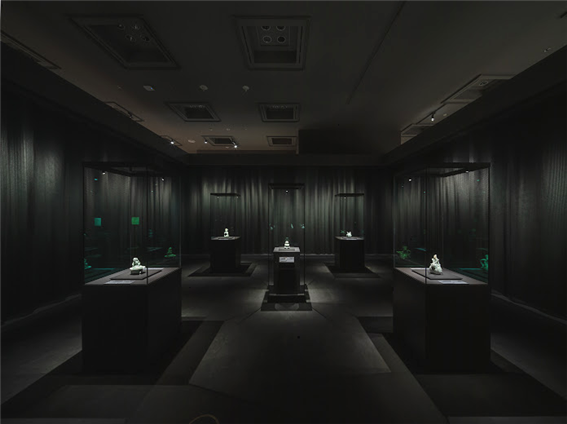
[Asia Economy Reporter Seomideum] The beauty of the greenish-blue color of Goryeo celadon is world-renowned. The ancient Goryeo people called the color of Goryeo celadon "bisaek (翡色)" to distinguish it from the bluish-green color (?色) of the Song Dynasty, the originator of celadon. Woltan Park Jonghwa described this color in his poem "Celadon Poem" as "a piece of autumn sky pierced with holes just after an autumn shower," and Choi Sunwoo, former director of the National Museum of Korea, depicted it in "Sky-colored Celadon" as "a calm and freshly clear sky on a distant mountain ridge after the rain clears and the fog lifts."
Starting from the 23rd, these Goryeo celadons will welcome visitors at the National Museum of Korea's "Celadon Room." It showcases the beauty of Goryeo celadon, which saw a remarkable advancement in porcelain-making technology about 150 years after Goryeo succeeded in porcelain production around the 10th century. The exhibition features over 250 artifacts, including twelve national treasures and twelve treasures such as the "Celadon Incense Burner with Openwork Chilbo Pattern" and the "Celadon Bottle Shaped Like a Melon."
Especially, the "Goryeo Bisaek" space is designed as an immersive viewing area that maximizes the beauty of Goryeo celadon's greenish-blue color. With the gentle music "Blue Celadon" playing softly, customized lighting enhances the color of the celadon artifacts. The museum explained, "The beauty of celadon shines brightest under sunlight, but considering the indoor setting, the lighting intensity was adjusted according to the thickness of the glaze."
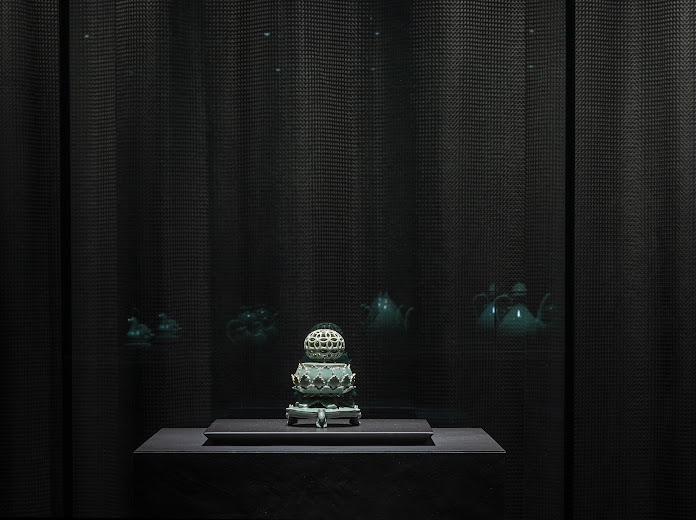 National Treasure 'Celadon Incense Burner with Chilbo Openwork Pattern' Exhibited in the 'Goryeo Bisek' Space
In the Goryeo Bisaek space, eighteen figurative celadons that harmonize color and form (including five national treasures and three treasures) are exhibited. According to the museum, this is the first time that eighteen figurative celadons have been displayed together in one place. Among the five national treasures on display, the "Celadon Incense Burner with Openwork Chilbo Pattern" represents the pinnacle of celadon decorative techniques, employing engraving, relief, openwork, iron painting, inlay, and figurative designs all at once. Notably, the cute rabbit decorations supporting the base add significance for the upcoming Year of the Rabbit (2023).
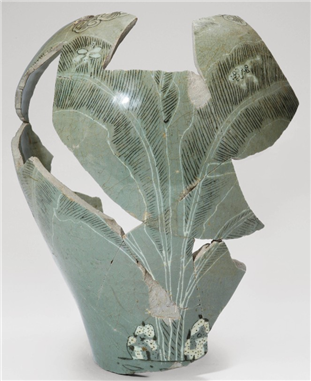
They also revealed fragments of celadon for which complete examples have not been preserved. These inlaid celadon shards were collected from kiln sites in Yucheon-ri, Buan, Jeollabuk-do, depicting rarely seen natural scenes in celadon such as a toad resting on a banana leaf and a heron playing by the water's edge.
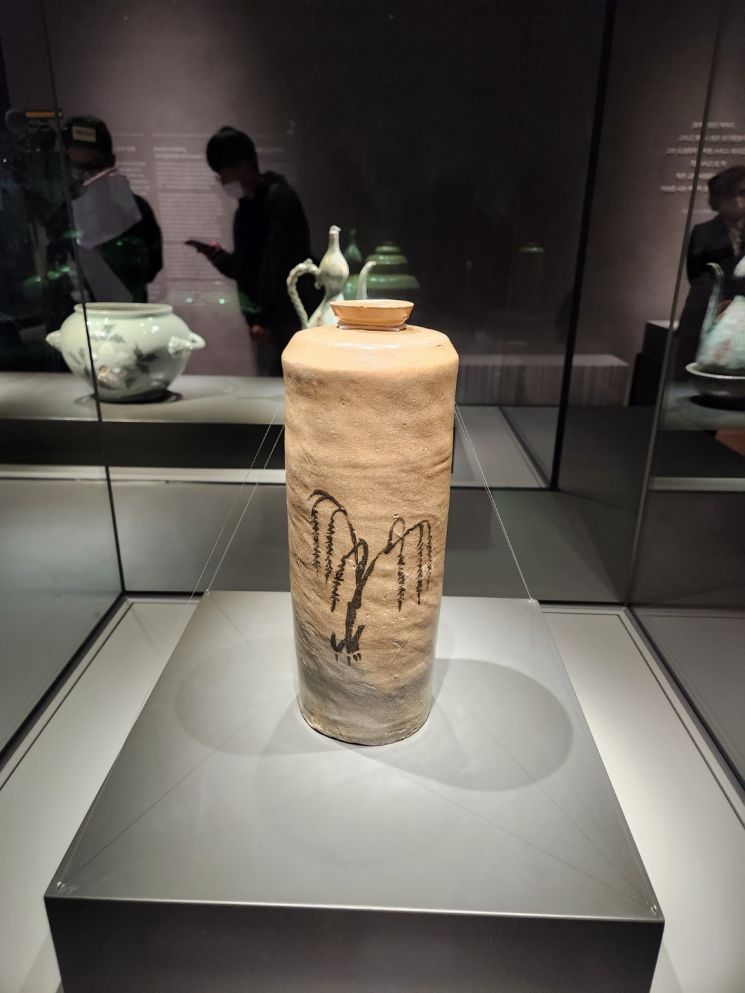
Greenish-brown celadon is also on display. Celadon colors vary depending on the amount of iron and oxygen introduced during firing, and the museum explained, "The Goryeo people were very skilled at varying celadon colors."
The exhibition covers a range from national treasure-level artifacts to altered pieces, rare fragmentary examples without complete forms, and even the crude celadon of the late Goryeo period. The museum stated, "When Goryeo was threatened by the Mongol invasion in the 13th century, artisans who supplied celadon to the royal family and government offices scattered across the country, leading to a decline in ceramic quality. Later, this evolved into the Buncheong ware of the Joseon Dynasty."
A museum official said, "Just as color therapy brings peace of mind, we hope visitors find tranquility through Goryeo Bisaek," adding, "We hope you gain a piece of peaceful and quiet rest by feeling the hearts of the Goryeo people who loved and longed for nature, and the beauty of Goryeo celadon that embodied those feelings."
© The Asia Business Daily(www.asiae.co.kr). All rights reserved.



















