The 3rd 'Kimchi Day' on the 22nd
Record High Kimchi Imports
Surpassing Last Year's Annual Import Value
Causes Include Rising Kimchi Prices
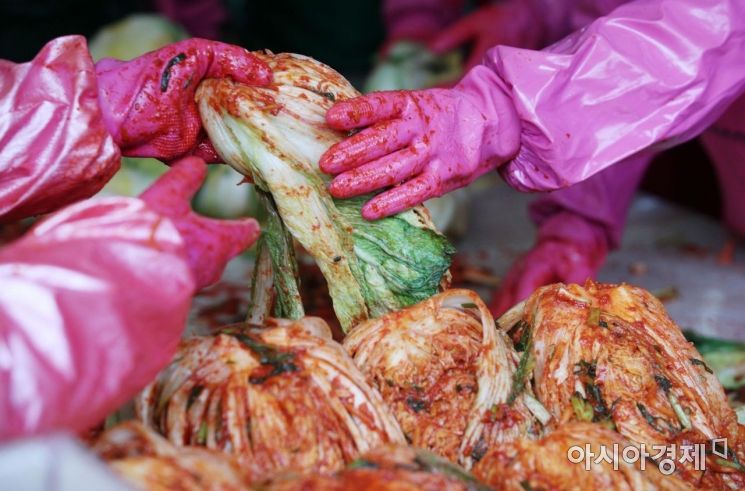
[Asia Economy Reporter Song Seung-yoon] Although November 22 marked the third annual ‘Kimchi Day’ this year, the original purpose of preserving our kimchi culture is becoming meaningless. While kimchi export value has decreased, import value has reached an all-time high, and domestic consumption is steadily declining.
Kimchi Day was established to promote the development of the kimchi industry, to inherit our kimchi culture, and to inform the public about the nutritional value and importance of kimchi. The date, November 22, was chosen starting in 2020 to symbolize the 11 ingredients that come together to provide 22 health benefits such as immune enhancement, antioxidant effects, and anti-cancer properties.
This year marks the third Kimchi Day, but the status of Korea as the birthplace of kimchi is modest. Recently, kimchi imports have been increasing significantly. According to Korea Customs Service trade statistics, last month’s kimchi import value surged 50.9% year-on-year to $17.018 million. This is the highest monthly record ever, and it is the first time monthly imports have exceeded $17 million.
By last month, the total kimchi import value had already surpassed last year’s annual import value. From January to October this year, kimchi imports totaled $141.521 million, a 30% increase compared to the same period last year. Last year’s total kimchi import value was $140.742 million, so this year’s imports have already exceeded that. The annual kimchi import value for this year is expected to reach $170 million, setting a new record. On the other hand, kimchi exports from January to October this year amounted to $118.644 million, a 12.8% decrease compared to the same period last year. This decline is analyzed as a base effect following record-high exports after kimchi gained global attention as a health food post-COVID-19. As imports increase and exports decrease, the kimchi trade balance has turned negative for the first time in a year. From January to October this year, the kimchi trade deficit stands at $22.877 million.
The increase in kimchi imports is attributed to the sharp rise in prices of kimchi ingredients, which has led to higher prices for domestic kimchi, and the growing share of imported kimchi in the foodservice industry. In March last year, the so-called ‘Naked Kimchi’ controversy increased preference for domestic kimchi and led to a boycott of Chinese kimchi. However, with the arrival of high inflation, prices of kimchi ingredients such as napa cabbage and radish rose, causing domestic kimchi prices to increase and reversing the situation within about a year.
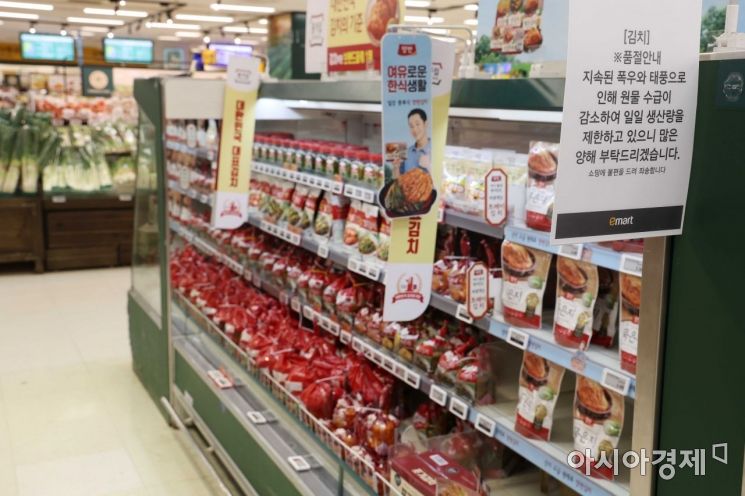
Daesang, which holds the largest market share in the domestic packaged kimchi market, raised the price of its ‘Jongga’ kimchi by an average of 9.8% starting from the 1st of last month, and CJ CheilJedang also increased the price of its ‘Bibigo’ kimchi by an average of 11% across channels since September. Both companies have raised prices twice this year. Most imported kimchi is from China, and since the price difference with domestic kimchi can be more than three times, many restaurants that used domestic kimchi have reverted to Chinese kimchi. The import price per ton of kimchi was $648 last month, which is 19.3% of the export price of $3,359 per ton. Exported kimchi is about five times more expensive than imported kimchi.
Domestic kimchi consumption is also on a declining trend. This is mainly due to the continuous increase in single-person households and changes in consumer consumption patterns. As the taste preferences of the main consumer base gradually westernize and the preference for low-sodium foods increases, consumption is steadily decreasing. Additionally, the so-called ‘Kimchi Process’ controversy continues, with Chinese media labeling kimchi as ‘Pao Cai (泡菜)’, which further challenges Korea’s status as the kimchi origin country. To regain this status, there are calls to strengthen the competitiveness of the domestic kimchi industry.
Professor Kim Si-wol of Konkuk University’s Department of Consumer Studies said, “Since it is fundamentally impossible to control imports and exports, raising awareness about kimchi requires targeting the core consumption values of each generation.” He added, “Since COVID-19, the importance of health, safety, and environmental issues has emerged. We need to focus on the safety and efficacy of domestic kimchi and hold participatory events to share this information. The public and private sectors should closely cooperate on content aspects.”
Meanwhile, the Ministry of Agriculture, Food and Rural Affairs will hold a commemorative ceremony at Namsangol Hanok Village to mark the 3rd Kimchi Day. This event is planned as the first outdoor event this year and will include an awards ceremony for contributors to the kimchi industry and winners of the kimchi contest, an exhibition of winning kimchi products, and exhibitions, demonstrations, and tastings of regional kimchi varieties. There will also be a kimchi cooking competition and the Korea Kimchi Festival.
© The Asia Business Daily(www.asiae.co.kr). All rights reserved.


















