63% of China's Wheat Imports from January to October This Year Are Australian
First Summit in 6 Years Shows Willingness to Improve Relations
[Asia Economy Reporter Kim Junran] This year, China's imports of Australian wheat have reached the highest level in 18 years. On the 21st, Bloomberg News reported, based on Chinese customs statistics and its own analysis, that from January to October this year, 63% of China's wheat imports were Australian. Last year, Australian wheat accounted for only 28% of China's wheat imports, and in 2020, it was just 15%.
Bloomberg explained that the total Australian wheat imported by China from January to October this year was 4.97 million tons, more than double the same period last year, marking the largest volume since 2004.
Recently, global wheat supply has been limited due to adverse weather in major producing regions and disruptions in Black Sea trade caused by the Ukraine war. Amid this situation, despite the deterioration of political relations between China and Australia, the mutual needs of both sides have aligned, leading to an increase in wheat trade.
The relationship between China and Australia began to worsen gradually since 2018 when Australia banned Huawei's participation in its 5G network. Since 2020, after Australia called for an international investigation into the origins of the COVID-19 pandemic, relations between the two countries have reached their worst state.
Subsequently, China took retaliatory measures by restricting imports of Australian coal, barley, lobster, wine, and other products. Recently, China has expanded its military influence in the South Pacific by signing a security agreement with the Solomon Islands. In response, Australia has strengthened cooperation with the United States and others.
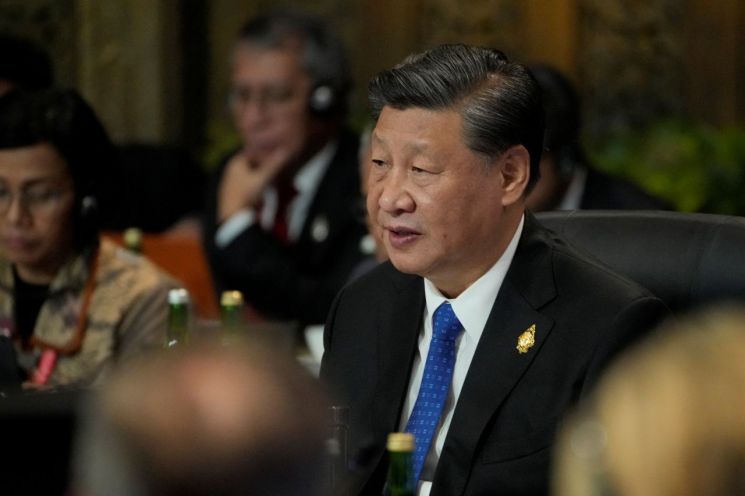
Only recently did China and Australia hold a summit meeting for the first time in six years, expressing their willingness to improve relations. Chinese President Xi Jinping and Australian Prime Minister Anthony Albanese held a bilateral meeting on the 15th in Bali, Indonesia, where the Group of Twenty (G20) summit was held.
Regarding this, Bloomberg evaluated, "Although some trade restrictions remain, China is still Australia's largest export market, with more than one-third of Australian exports going to China," and added, "Australia has realized that there is no substitute for Chinese consumers."
© The Asia Business Daily(www.asiae.co.kr). All rights reserved.
![Clutching a Stolen Dior Bag, Saying "I Hate Being Poor but Real"... The Grotesque Con of a "Human Knockoff" [Slate]](https://cwcontent.asiae.co.kr/asiaresize/183/2026021902243444107_1771435474.jpg)
















