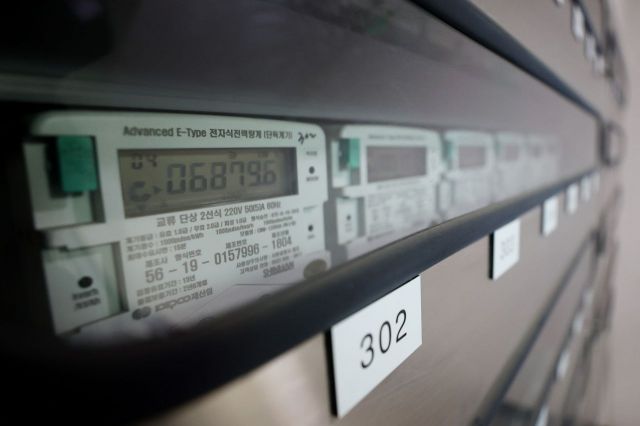
Starting next month, a cap will be set on the wholesale electricity price (SMP), which serves as the benchmark for Korea Electric Power Corporation (KEPCO) to purchase electricity from power producers. The purpose of capping the wholesale electricity price is to partially reduce KEPCO's deficit, and KEPCO expects that the introduction of the SMP cap system will result in cost savings exceeding 1.5 trillion won per month. However, the implementation of the SMP cap system will inevitably reduce the profits of power producers, leading to anticipated conflicts between the government and power producers.
According to related government departments on the 21st, the Ministry of Trade, Industry and Energy is pushing for the revision of the "Notice and Rules on the Cap of Electricity Trading Prices," aiming for enforcement starting from the 1st of next month. The revision will be submitted to and approved by the Electricity Committee under the Ministry of Trade, Industry and Energy by the end of this month, with plans to implement it from next month. If the cap system is implemented, the SMP is expected to drop to around 100 won per kWh on average. According to the amendment, the SMP cap system will be applied for one month if the average SMP over the previous three months exceeds the top 10% of the average SMP over the preceding 10 years (120 months). The cap will apply only to power generators with a capacity of 100 kW or more, excluding small-scale solar power projects.
Based on this month’s data, examining whether the cap system applies shows that the weighted average SMP for the previous three months (August to October) was 227 won per kWh, which is higher than 154 won, the top 10% of the weighted average SMP over the past 10 years, thus meeting the condition for implementing the cap system. In this case, the capped SMP price is calculated as 1.5 times the 10-year average SMP of 106 won per kWh, resulting in 159 won. Considering that last month’s SMP was 253 won per kWh, applying the cap would reduce the price by 95 won. If the SMP is set in the low 160 won range, KEPCO’s actual electricity purchase price is likely to be in the high 130 won range per kWh.
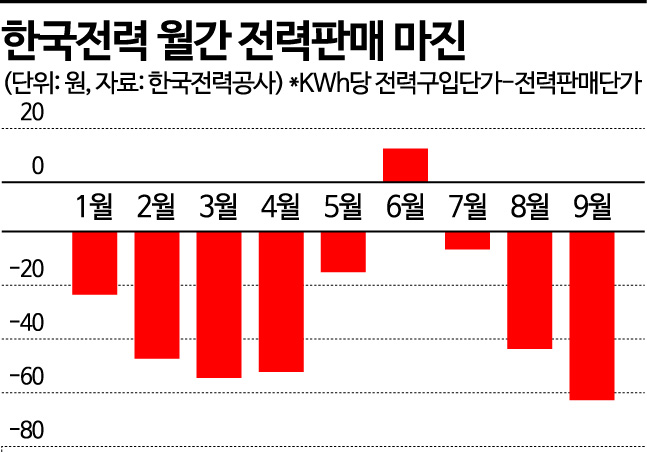
KEPCO sets its actual electricity purchase price in proportion to the SMP price. According to the Korea Power Exchange, as of September, the weighted average SMP combining the mainland and Jeju regions was 234.75 won, while KEPCO’s average electricity purchase price was 179.2 won per kWh and the electricity sales price was 116.5 won per kWh, resulting in a loss of 62.7 won per kWh. During this period, KEPCO’s accumulated deficit from electricity sales amounted to approximately 2.674 trillion won. If the cap system is implemented, KEPCO is estimated to save about 1.5 trillion won monthly on average.
However, friction with the private power generation industry is expected. Private power producers, who produce electricity by purchasing liquefied natural gas (LNG) at high prices due to soaring fuel costs, argue that their business conditions could deteriorate significantly if the cap system is implemented. They emphasize that the cap system is merely a temporary government measure to levy a 'windfall tax' on private power producers to cover KEPCO’s deficit. Fundamentally, they insist that electricity rates should be raised in response to increased fuel costs.
An official from the Ministry of Trade, Industry and Energy stated, "Implementing the SMP cap system is inevitable to reduce KEPCO’s large-scale deficit burden," adding, "We plan to gather opinions from private power producers and seek maximum cooperation."
© The Asia Business Daily(www.asiae.co.kr). All rights reserved.


















