AI, Technologies Used in Specific Areas → Expanding to Work Domains Across Industries
Commercialization of Super Large AI, AI Semiconductor Development, Urban Air Mobility, and Ecosystem Expansion
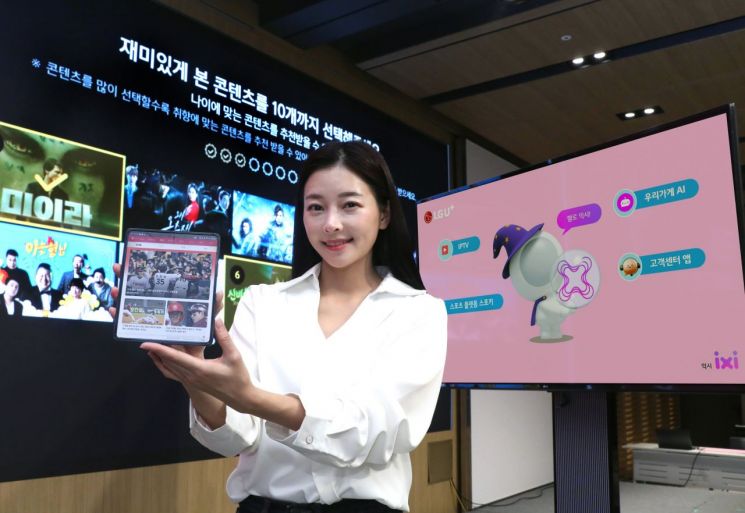
[Asia Economy Reporter Lim Hye-seon] The three major telecommunications companies?SK Telecom, KT, and LG Uplus?are identifying artificial intelligence (AI) as a core future technology and are putting their all into related business sectors. AI is expanding beyond specific applications to encompass the entire industrial work domain. Companies are commercializing services by advancing key AI technologies such as algorithmic trading, sentiment analysis, voice recognition, virtual assistants, intelligent product design, and defect detection in product quality.
Strengthening Customer Communication with Super Large AI
According to the telecommunications industry on the 18th, the three major telecom companies are focusing on developing super large AI. SK Telecom plans to enhance its A. Dot service to increase customer usage value. The super large AI service A. Dot handles cumbersome actions customers face while using smartphones, recommends and plays content they might like. Based on advanced natural language processing and sentiment analysis technologies, A. Dot communicates with customers through personalized characters, strengthening relationships as a platform. The core AI technology applied in A. Dot combines everyday conversations and the natural handling of specific tasks requested by customers, based on the large language model (GPT-3). SK Telecom is mobilizing all its technological capabilities in the A. Dot service to help customers save time, cost, and effort, enabling them to enjoy a richer life.
KT is also commercializing its own AI service called 'Mideum.' It is a 'collaborative convergence intelligence' service that can easily learn various application cases. The goal is an AI that understands and empathizes with human emotions. It can interpret user intent even with a small amount of data and can change tone or voice according to the situation. AI expert consultation goes beyond simple inquiry responses by learning vast knowledge in specialized fields and providing professional consultation through various technologies. It also remembers past conversations with senior customers and recognizes their situations such as favorite places or hobbies to engage in emotional conversations. KT has also launched 'Mideum LETS,' a specialized tool that creates customized super large AI models for corporate clients (B2B).
LG Uplus plans to approach customers by introducing AI services that are friendly and helpful in daily life under the integrated brand 'IXI.' IXI means an AI service that supports human-to-human solidarity, aiming to be a pleasant 'friend-like AI platform' that makes everyday life more enjoyable.
Development of Korean-style AI Semiconductors and Ecosystem Advancement
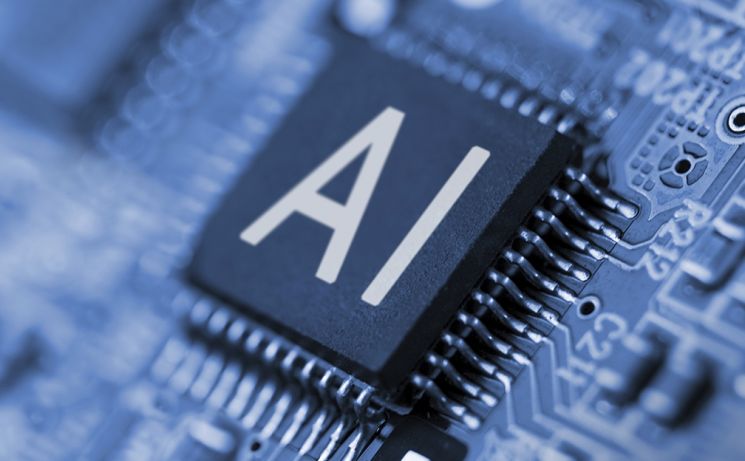
Companies are also paying attention to the AI semiconductor sector. SK Telecom is expanding its AI semiconductor business through Sapeon. The company has secured product competitiveness by simultaneously establishing Sapeon's U.S. and Korean subsidiaries and recruiting talent. Sapeon is a non-memory semiconductor that executes large-scale computations required for AI services at ultra-high speed and low power. In April 2020, Sapeon developed an AI semiconductor for R&D testing, and in November of the same year, it launched the commercial product 'Sapeon X220.' Sapeon developed the neural processing unit (NPU), the core AI semiconductor technology, entirely in-house from hardware to software. The company plans to strengthen its attack on the data center inference service semiconductor market and the autonomous driving semiconductor market.
KT has entered AI chip development. NVIDIA currently holds 80% of the entire graphics processing unit (GPU) industry, and KT CEO Koo Hyun-mo believes hardware innovation such as developing AI-dedicated chips is necessary. KT aims to develop Korean-style AI semiconductors to reduce dependence on foreign GPUs and advance the domestic AI ecosystem. Accordingly, KT has made strategic investments in AI startups such as Rebellion (AI semiconductor design) and More (AI infrastructure solutions). KT invested 30 billion KRW in Rebellion, and 5-nanometer AI chips are expected to begin mass production starting next year.
Expanding AI Services to Airspace
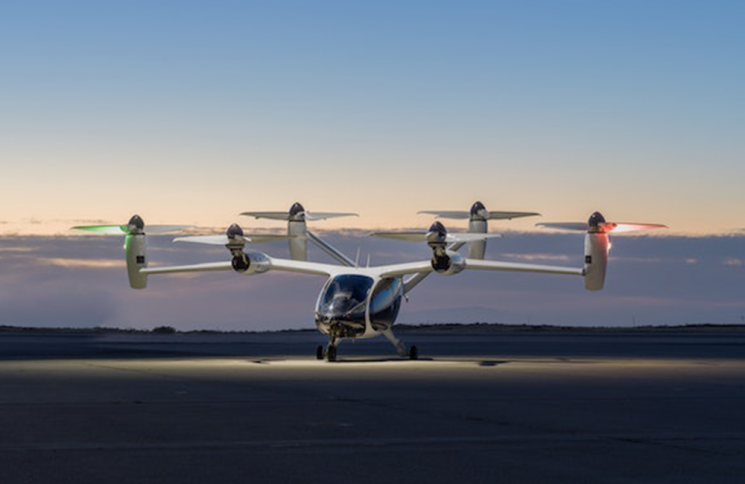
The scope of AI services, previously provided on the ground, is also expanding into the airspace. Urban Air Mobility (UAM) is an electric-powered aerial mobility service that enables vertical takeoff and landing without runways in urban areas and can be linked with various land transportation modes, attracting attention as an eco-friendly mobility solution. SK Telecom plans to actively support next year's government-led demonstration project through its partnership with Joby Aviation, which possesses UAM aircraft manufacturing technology, accelerating innovation in the domestic UAM ecosystem.
LG Uplus plans to introduce UAM services that monitor aircraft in real-time and safely manage air traffic flow. LG Uplus formed a consortium to participate in the Ministry of Land, Infrastructure and Transport's UAM demonstration project, 'K-UAM Grand Challenge,' and will establish a stable air communication network and traffic management system to verify safety. LG Uplus will research handover mechanisms suitable for the airwave environment and develop technologies to minimize latency, including support for takeoff and landing control, flight control, and emergency control such as corridor deviation. LG Uplus also plans to apply high-precision positioning technology.
© The Asia Business Daily(www.asiae.co.kr). All rights reserved.
![Clutching a Stolen Dior Bag, Saying "I Hate Being Poor but Real"... The Grotesque Con of a "Human Knockoff" [Slate]](https://cwcontent.asiae.co.kr/asiaresize/183/2026021902243444107_1771435474.jpg)


















