Residential Land Price Base Rises 0.3% After 31 Years
High-Income Dual-Income Couples and Overseas Investors Increase Purchases of Tower Mansions in City Center
Outskirts with Poor Transportation Face Overflow of Vacant Houses
[Asia Economy Intern Reporter Lee Gyehwa] Domestic real estate buying sentiment has frozen solid due to the rising interest rate trend and concerns over price declines. China's housing market is also staggering under the direct impact of real estate regulations. The U.S. housing market is cooling down due to interest rate hikes. In contrast, there is a country where housing prices are steadily rising: Japan, which has been experiencing a long-term slump after the real estate bubble burst.
Since the beginning of this year, foreign media in Japan have reported that "Japanese housing prices are rising." In September, the Nihon Keizai Shimbun reported that the nationwide average residential land price (chika) rose for the first time in 31 years. The Ministry of Land, Infrastructure, Transport and Tourism's annually announced standard residential land price (nationwide average) increased by 0.3% compared to the previous year, marking the first rise since 1991.
Since 2013, housing prices have started to rise earlier than land prices. This began when the Abe administration started injecting money to revive the Japanese economy trapped in the "Lost 20 Years." According to statistics from the Ministry of Land, Infrastructure, Transport and Tourism, the real estate price index has generally increased for both detached houses and mansions since 2013. Last year, the average price of newly built mansions in Tokyo's 23 wards reached 84.49 million yen (approximately 812.14 million KRW), the highest in 30 years since the real estate bubble period. However, the price per square meter was still lower at 1.308 million yen (approximately 12.6 million KRW) in 2021 compared to 1.51 million yen (approximately 14.51 million KRW) in 1991.
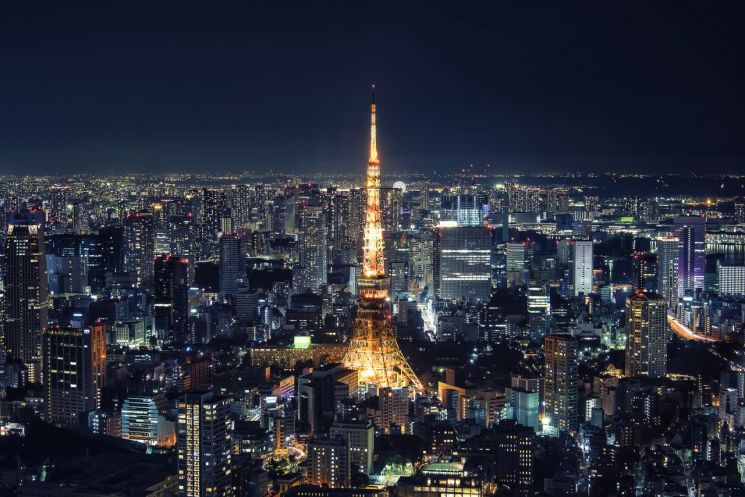
The driving force behind the rise in housing prices in Japan is tower mansions. These are large-scale high-rise buildings made of reinforced concrete, similar to apartments in Korea. After COVID-19, with the increase in remote work, demand for spacious and comfortable homes like urban mansions in Japan has grown. The so-called 2030 generation "power couples," high-income dual-earner couples, have increased, boosting demand and influencing housing price rises. Their annual income is over 7 million yen each, totaling 14 million yen (approximately 134.63 million KRW), making them high-income couples. Preferring conveniently located urban homes, they buy mansions with the mindset of "rather buy a house than pay expensive rent."
The ultra-low yen phenomenon cannot be overlooked. Jin Hyeyoung, a Japanese cultural critic, said in an interview with Maeil Business Newspaper, "Due to the Abenomics financial easing policy, mortgage interest rates are very low," adding, "Many high-income dual-earner couples choose to buy houses because of tax benefits when purchasing homes, preferring to buy rather than rent."
Foreign investors targeting the weak yen are also flooding in. Overseas investors mainly buy tower mansions in Tokyo, aiming for price appreciation. According to real estate specialized media Ouchino News, the number of real estate transactions in the metropolitan area (2020?2021) increased for apartments, detached houses, and land alike.
With rising raw material prices, the cost of wooden houses is also increasing. The rise in raw material prices due to COVID-19-related shipping cost increases, U.S.-China trade friction, and the Russia-Ukraine war appears to have influenced housing price increases.
On the other hand, vacant houses remain a social problem in outlying areas with poor transportation. Japan had 8.49 million vacant houses (as of 2018), accounting for 13.6% of all houses. Critic Jin said, "Vacant house problems are severe mainly in areas with high aging rates and poor transportation far from urban centers," adding, "Vacant houses in Tokyo are around 2%, so there is no vacant house problem in the city center."
© The Asia Business Daily(www.asiae.co.kr). All rights reserved.
![Clutching a Stolen Dior Bag, Saying "I Hate Being Poor but Real"... The Grotesque Con of a "Human Knockoff" [Slate]](https://cwcontent.asiae.co.kr/asiaresize/183/2026021902243444107_1771435474.jpg)
















