Newsletter Popular for Stories about Farms and Factories Producing Food
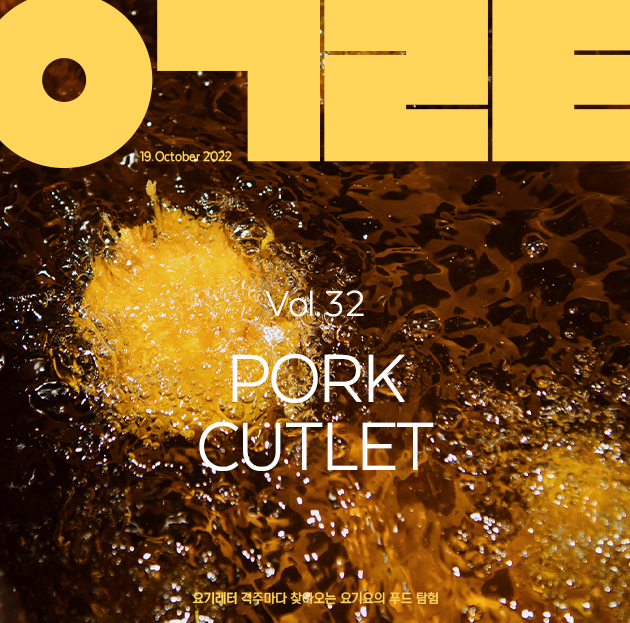
#Haengun Donkatsu located in Jangan-dong, Seoul, opens its doors at 9 a.m. before business hours, and the story begins with a detailed depiction of how the first customer’s donkatsu is fried. The scene unfolds with a basketball player’s palm-sized donkatsu frying in oil heated to 170℃, alongside a salad made by mixing macaroni and corn with mayonnaise placed next to the freshly fried donkatsu. As you take a bite of this donkatsu, the story transitions into an exploration of Korean-style donkatsu and soon moves to Katsuya in Mugyo-dong, which serves Japanese-style donkatsu. The narrative connecting Haengun Donkatsu to Katsuya traces the history of donkatsu, a dish that came to Korea via Japan from the West. It offers a clear view of where the donkatsu we enjoy comes from and how it is prepared before it reaches our mouths.
This vivid content about donkatsu is not a video but a carefully written 4,000-character article. It was published on the 19th of last month as part of 'Yogi Letter.' Yogi Letter is a newsletter service issued by the delivery app Yogiyo on the first and third Wednesdays of every month. In an era dominated by video content, we looked into why a delivery app consistently delivers long-form written content about food every two weeks.
According to Yogiyo on the 17th, Yogi Letter started last July with the concept of 'exploration' and has published 33 issues to date. It covers stories about farms and factories where food is produced. Although composed only of text and photos, it has established itself as a well-received newsletter with an average subscriber rating of 4.56 out of 5.
Yogi Letter targets consumers in their late 20s to mid-30s who are not easily persuaded through traditional marketing channels like TV or YouTube ads. A Yogiyo representative explained, "This consumer group is familiar with video media but also has a high preference for reading content and prefers in-depth content over light snack content. We decided to communicate about taste in newsletter format to expand communication with diverse consumer groups."
The first 'exploration' began with a story about how pizza dough is made. Next, they visited a yogurt factory. The yogurt factory episode is also the most impressive content according to the Yogi Letter team, as five people operate a state-of-the-art facility producing tens of thousands of tons of yogurt. The most popular content was about 'eco-friendly paper cups,' which covered a visit to Pelican & Plus, a first-generation Korean paper cup factory. A Yogi Letter representative said, "At first, we were worried about the reaction since it wasn’t about food, but contrary to expectations, it received the most feedback and requests for follow-up episodes from subscribers."
The food stories delivered by Yogi Letter have covered strawberries, chicken, cheese, triangular kimbap, donuts, ice cream, bread, dumplings, grapes, and more. The criteria for selecting topics are products available for order on the Yogiyo app. However, the scope is gradually expanding. Since various foods made from chestnuts can be ordered, they even visited a chestnut farm in Hoengcheon-myeon, Hadong-gun, Gyeongsangnam-do.
The reason Yogiyo puts so much effort into promoting Yogi Letter is to build a positive brand image. It is difficult for consumers to differentiate delivery apps based on features alone and make a choice. A Yogiyo representative said, "Yogi Letter is one way to build brand fandom. It is attractive to readers who are sincere about eating by informing them about the origins of food, and that positive affinity translates into a favorable image of the app."
© The Asia Business Daily(www.asiae.co.kr). All rights reserved.

















