'Biyoungkkeul' 2030 Tenants Face Increasing Housing Burden
Average Monthly Rent for 30s at 520,000 KRW... Rising Annually
Renters Experience Greater Sense of Deprivation Due to Housing Costs
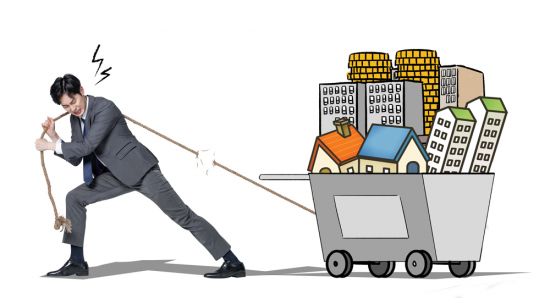
Apartment sale prices in the Seoul metropolitan area are showing a downward trend accompanied by the term "record-breaking," but monthly rent continues to rise. Monthly rent is predominantly paid by students, young workers, and the 20s and 30s age groups who lack initial capital. With ongoing pressures such as the conversion of jeonse (long-term lease deposits) to monthly rent and rising jeonse-to-monthly rent conversion rates, calls for policy support to alleviate the monthly rent burden on the 2030 generation are growing louder.
According to the Korea Real Estate Board on the 17th, the nationwide integrated monthly rent price index (including monthly rent, semi-monthly rent, and semi-jeonse) for October rose 0.05% from the previous month to 103, setting a new all-time high. This marks 58 consecutive months of increase since December 2019. This trend sharply contrasts with the sales market, which is experiencing the largest drop since the financial crisis, and the jeonse market, where concerns about reverse jeonse are spreading.
The ongoing interest rate hike policy is further stimulating monthly rent. As the interest burden on jeonse loan funds increases, tenants are also preferring monthly rent. According to KB Real Estate, the jeonse-to-monthly rent conversion rate for Seoul apartments was 3.28% in October, up 0.14% from 3.14% a year earlier. The apartment monthly rent index rose from 98.2 to 104.8 during the same period.
According to a recent mobile survey conducted by real estate information platform Zigbang with 1,306 app users, 43.0% responded that they prefer monthly rent (including monthly rent with deposit) in lease contracts. This figure is more than double the 21.3% recorded in the same survey conducted in 2020.
The proportion of monthly rent transactions is also rapidly increasing. The share of monthly rent in lease contracts has exceeded 50%. The proportion of monthly rent among all housing (from January to September) rose from 40.4% in 2020 to 43.0% last year, and reached 51.8% this year. Huh Yoon-kyung, a research fellow at the Korea Institute of Construction Industry, explained, "The trends of rising interest rates, increasing jeonse-to-monthly rent conversion rates, and rising monthly rent prices are intensifying the housing cost burden on ordinary citizens."
In fact, the monthly rent burden on the 20s and 30s age groups is breaking record highs every year. According to the Korea Real Estate Board's "Average Monthly Rent Amount by Age" data, monthly rent expenses for those under their 20s rose from 400,000 KRW in December 2020 to 430,000 KRW in December 2021, and 440,000 KRW in September this year. Monthly rent for those in their 30s also steadily increased from 460,000 KRW, 510,000 KRW, to 520,000 KRW during the same period.
Considering the "management fee tricks" that have been rampant since the introduction of the jeonse and monthly rent reporting system in June last year, the burden on monthly rent tenants is likely even greater. Under the reporting system, landlords must report contract details if the deposit exceeds 60 million KRW or the monthly rent exceeds 300,000 KRW. To avoid being subject to reporting, landlords are lowering monthly rent and increasing management fees. Phenomena such as monthly rent being 70,000 KRW while management fees reach 380,000 KRW are appearing in various places.
As instability in the rental market continues, the government has introduced monthly rent support measures for youth and low-income groups, but criticisms remain that these are insufficient. The Ministry of Land, Infrastructure and Transport has been implementing the "Youth Monthly Rent Temporary Special Support" program since this year. From August this year to August next year, applicants will be recruited, and eligible youth without housing will receive up to 200,000 KRW per month for a maximum of 12 months until December 2024. However, since the youth monthly rent support program lacks clear legal grounds and is operated temporarily, it is scheduled to be abolished after 2024.
Jo Jeong-hee, a deputy research fellow at the Korea Research Institute for Human Settlements, suggested, "It is necessary to expand housing cost support for low-income tenant households," adding, "Consideration can be given to expanding the scope and support of housing benefits (including management fees)."
Establishing a legal foundation is also urgent. On the 16th, Kim Byung-wook, a member of the Democratic Party of Korea, introduced two bills as representatives to institutionalize youth monthly rent and low-income housing loan interest support policies: the "Housing Benefit Act Amendment" and the "Housing and Urban Fund Act Amendment." Kim said, "During times of high inflation and high interest rates, especially youth and low-income groups suffer more from rising monthly rent and housing loan interest rates," adding, "We will contribute to housing stability for youth and low-income groups by establishing legal grounds for the government's youth monthly rent support and interest support projects."
Meanwhile, the housing cost burden is leading to serious socioeconomic deprivation. According to a recent report titled "The Impact of Housing Cost Burden on Socioeconomic Deprivation" published by the Korea Research Institute for Human Settlements, 41.4% of all respondents perceived their housing cost burden as high relative to their current income. This perception was much higher among monthly rent households (68.2%). The housing cost burden led to reductions in spending on various non-housing areas such as health, entertainment, and education. Fifty-eight percent of respondents said they felt deprived when comparing what they have to others.
© The Asia Business Daily(www.asiae.co.kr). All rights reserved.
![Clutching a Stolen Dior Bag, Saying "I Hate Being Poor but Real"... The Grotesque Con of a "Human Knockoff" [Slate]](https://cwcontent.asiae.co.kr/asiaresize/183/2026021902243444107_1771435474.jpg)

















