hy Expands Introduction of Electric-Powered Refrigerated Cart 'Coco 3.0'
CJ Freshway Collaborates with Kia Motors to Develop Electric Vehicles for Food Distribution
Dong-A Otsuka to Replace Work Vehicles with Eco-Friendly Electric Cars by 2025
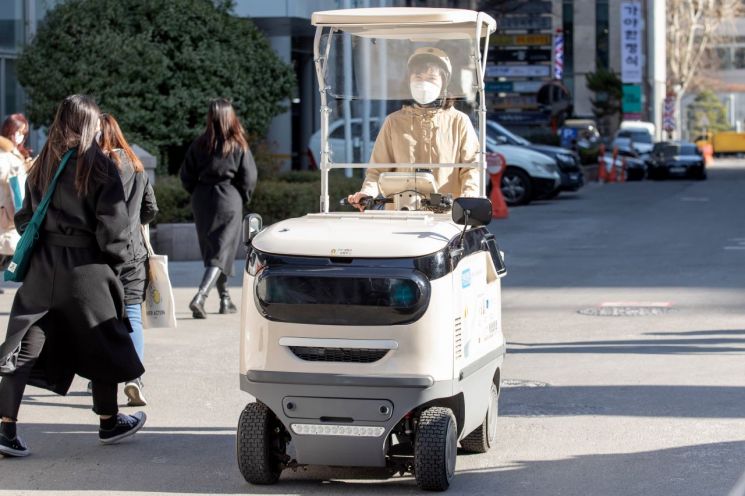
[Asia Economy Reporter Eunmo Koo] The food industry is accelerating the adoption of eco-friendly mobility by replacing work vehicles used for logistics and delivery with electric-powered vehicles.
According to the industry on the 17th, hy deployed 2,200 units of the new electric-powered ride-on refrigerated cart ‘Coco 3.0’ to the field by the end of last month.
hy’s Coco was first introduced in 2014 to ensure product safety and improve convenience for its own distribution network ‘Fresh Manager’ (formerly Yakult Ajumma), and it is periodically upgraded and replaced. Since it is electrically powered, it emits no air pollutants. Additionally, it can deliver products in a refrigerated state, minimizing the use of cooling boxes during delivery.
The current fleet of about 10,000 Coco units travels an average of approximately 4.5 million km per month. When converted to internal combustion engines, this corresponds to a reduction of 1,086 tons of carbon dioxide (CO₂) per month, which would require 165,000 pine trees to offset.
Jung Myungsoo, head of hy’s purchasing team, said, “In modern society where delivery is a daily routine, Coco is one of the representative eco-friendly means,” adding, “We will continue to help build a sustainable society through low-carbon management activities such as reducing plastic usage.”
CJ Freshway has partnered with Kia Motors to develop electric vehicles optimized for food ingredient distribution. Having started operating electric cargo vehicles for the first time in the industry last year, CJ Freshway plans to lead the advancement of the food ingredient distribution market through the introduction of eco-friendly electric Purpose-Built Vehicles (PBVs). PBVs are specialized vehicles developed for specific operational purposes, unlike general passenger cars.
CJ Freshway will receive Kia’s electric PBVs starting in 2025. Accordingly, it plans to sequentially convert about 200 of its 1-ton logistics vehicles to Kia’s electric PBVs and encourage the conversion of about 800 vehicles of CJ Freshway’s partner companies, including small business owners, to build a sustainable supply chain.
Dong-A Otsuka has also begun replacing work vehicles used for sales and logistics with eco-friendly vehicles. Starting with 16 vehicles last year, Dong-A Otsuka replaced 65 work vehicles this year with electric and hybrid vehicles and plans to convert 100% to eco-friendly electric vehicles by 2025 according to the annual replacement cycle.
Dong-A Otsuka expects to reduce greenhouse gas emissions by more than approximately 166,000 tons annually by converting existing internal combustion engine vehicles to eco-friendly vehicles. The company aims to enhance on-site sales competitiveness by securing driving safety for employees and improving job satisfaction and efficiency through the introduction of eco-friendly vehicles.
Additionally, Domino’s Pizza plans to replace all delivery motorcycles with electric motorcycles by next year. The target includes 629 delivery motorcycles operated at directly managed stores. Domino’s Pizza plans to participate in eco-friendly delivery through the replacement of electric two-wheelers.
© The Asia Business Daily(www.asiae.co.kr). All rights reserved.

















