Sent Hacking Emails to 500 Famous Blog Operators to Steal Personal Information
‘Account Threat’ Scam Demanding Money as a Condition to Release Frozen Accounts
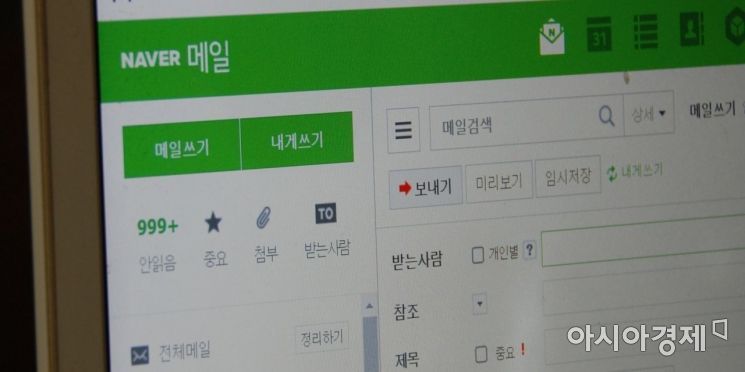 On the 16th, a group that hacked hundreds of popular blog accounts by cleverly altering the domain address of Naver, the largest portal site in Korea, was arrested by the police. The photo is not related to any specific expression in the article. Photo by Hwang Sumi choko216@asiae.co.kr
[Asia Economy Reporter Hwang Sumi] Hacking methods that deceive victims to obtain money and valuables are becoming more sophisticated and diverse. These include depositing money into bank accounts to freeze them or sending security enhancement emails from hacking domains to steal personal information. Due to these cunning tactics, there is a risk of falling victim without realizing it, so caution is required.
Recently, a group that hacked hundreds of popular blog accounts on Naver, the largest portal site in Korea, was caught by the police. According to Yonhap News on the 16th, the Cyber Crime Investigation Unit 2 of the Northern Gyeonggi Provincial Police Agency arrested 10 members of the blog hacking organization on charges of fraud and violations of the Act on Promotion of Information and Communications Network Utilization and Information Protection, and detained four main suspects including the ringleader Mr. A.
Mr. A and his group are accused of sending hacking emails to about 500 popular Naver blog operators from July 2021 to last February and selling the obtained personal information to third parties.
They created email addresses similar to the domain used by Naver to deceive bloggers. Instead of the legitimate domain 'naver.com,' they used a fake domain 'nevercorp.com' and sent emails claiming that Naver accounts had been logged in from overseas countries. Mistaking these for security enhancement emails sent by Naver, the bloggers entered their passwords and other information as requested in the emails, resulting in hacking damage.
The hacked blog accounts were transferred to marketing agents. These agents, who needed to advertise, purchased popular blog accounts for around 10 million won each. Mr. A and his group reportedly registered as legitimate blog sellers and even drafted sales contracts during blog transactions, pretending to be lawful business operators.
According to the police, out of the 500 targeted accounts, about 150 were actually hacked. Among these, the police confirmed payment deposits for 18 accounts. So far, only 200 million won in criminal proceeds has been confirmed.
Bank account extortion scams are also on the rise. This scam involves voice phishing groups freezing numerous unspecified accounts and then demanding money from the account holders as a condition to unfreeze the accounts.
These groups commit crimes by sending money to specific accounts and then falsely reporting to the police that they are victims of voice phishing scams or by visiting commercial banks to request account suspension. The victims who receive the remitted money find themselves unable to use electronic financial transactions on all accounts under their names without understanding the reason.
© The Asia Business Daily(www.asiae.co.kr). All rights reserved.

















