Scholz: "Decoupling from China is Not the Answer"
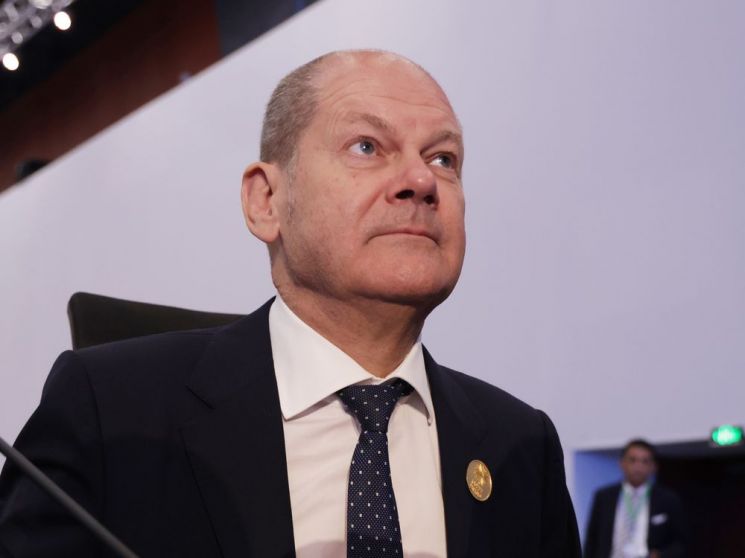
[Asia Economy Reporter Yujin Cho] German automaker BMW has made a massive investment in the Chinese market. This achievement came just one week after German Chancellor Olaf Scholz's diplomatic visit to China. Amid worsening U.S.-China relations, the economic closeness between Germany and China continues.
According to the Hong Kong South China Morning Post (SCMP) on the 15th, BMW announced that it will invest 10 billion yuan (approximately 1.9 trillion KRW) to expand the facilities of its Lydia plant located in Shenyang, Liaoning Province, northern China.
BMW stated in a press release that on the 11th, it signed a contract with the local government to expand the Lydia plant. The Lydia plant produces high-performance batteries for electric vehicles, including the i3 and iX3 series.
With this investment, BMW's total investment in the Lydia battery plant in China will increase to 25 billion yuan. BMW expressed expectations that this will accelerate the development of electric vehicles in China.
Earlier, Oliver Zipse, Chairman of BMW Group, had announced plans to target the Chinese market, stating that "China will continue to remain one of our most important markets." BMW delivered 53,000 electric vehicles to China this year (as of the end of September), marking a 65% increase compared to the same period last year.
This contract was concluded just one week after Chancellor Scholz led 12 German business leaders from companies such as Volkswagen, Deutsche Bank, and Siemens on a visit to China, where they met with President Xi Jinping and Premier Li Keqiang. Chancellor Scholz was the first Western leader to visit China after President Xi secured a third term last month, focusing on pragmatic gains.
China highlighted the timing of the contract by signing a purchase agreement for 140 passenger aircraft from European aircraft manufacturer Airbus during Scholz's visit. The aircraft ordered include 132 A320s and 8 A350s, with the contract valued at 17 billion USD (approximately 24.055 trillion KRW).
SCMP reported, "This BMW contract raises expectations that more trade and investment negotiations between China and Germany will be finalized in the coming months."
Chancellor Scholz's visit to China runs counter to the European Union (EU) and the Biden administration's efforts to contain China. Critics point out that despite emphasizing issues like Taiwan and human rights at the end of last year when he took office, Scholz is deviating from the West's unified stance on China due to Germany's economic interests.
Before the G20 summit held in Bali, Indonesia, Scholz, who visited Singapore the day before, reiterated his opposition to the U.S.-led decoupling from China.
He stated, "We are establishing a new national security strategy that includes reducing risky and unilateral dependencies," adding, "German business leaders will reduce excessive dependence on China through trade diversification." However, he emphasized, "Trade diversification does not mean decoupling from China."
He further explained, "Reducing unilateral dependence on certain raw materials or technologies is important for Germany's national security, but decoupling is not the answer," adding, "A world with additional trade barriers will not be a better place."
© The Asia Business Daily(www.asiae.co.kr). All rights reserved.

















