Forbes Announces '2022 Mainland China Billionaires List'
Economic Downturn Due to Long-Term Lockdowns from 'Zero COVID' Policy
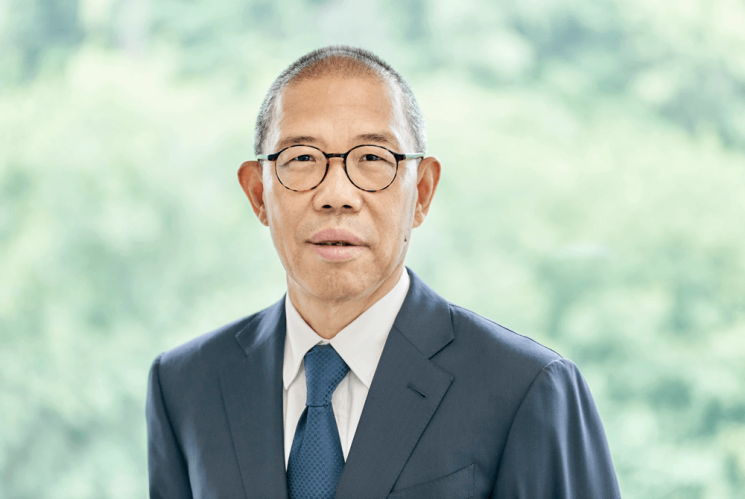 Chairman Zhong Shanshan of Nongfu Spring, who maintains the number one position in China's rich list.
[Asia Economy Culture Young Intern Reporter] It was revealed that the wealth of 79 out of the top 100 richest people in China decreased compared to last year.
On the 9th (local time), the American economic magazine Forbes announced the '2022 Forbes China Mainland Rich List' and reported that their total assets were $907.1 billion (approximately 1,245 trillion KRW). In last year's survey, the total assets of the top 100 richest people in China were $1.48 trillion (approximately 2,031 trillion KRW). The total assets dropped sharply by 39% in one year.
Forbes stated that the wealth of Chinese billionaires generally decreased compared to last year, and the minimum assets of the top 100 richest also fell from $5.74 billion last year to $3.5 billion this year.
This is interpreted as the wealthy also being unable to avoid the worsening Chinese economic situation caused by external adversities such as the Ukraine war, the prolonged lockdown in Shanghai due to the 'Zero COVID' policy, and the real estate slump.
Chung Shan-shan, founder of Nongfu Spring (農夫山泉), a bottled water company who maintained first place for the second consecutive year, had total assets of $65.9 billion last year, but it decreased to $62.3 billion (approximately 85 trillion KRW) this year. Chinese online media Tencent analyzed that the decline was mitigated because bottled water is an essential item and due to investments in companies related to PCR (polymerase chain reaction) testing.
Zhang Yiming, founder of ByteDance, the parent company of the video-sharing platform TikTok, also retained second place with no change in ranking from last year. However, his total assets were recorded at $49.5 billion, down $9.9 billion from last year. Additionally, Zheng Yuqun, chairman of CATL (Ningde Times), the world's largest electric vehicle battery manufacturer ranked third, saw his wealth drop 43% from $50.8 billion to $28.9 billion.
M? Hu?t?ng (?化?), chairman of Tencent, ranked fourth, saw his assets plunge from $49.1 billion to $23.4 billion, and M? Y?n (?云), former chairman of Alibaba Group ranked fifth, saw a sharp decline from $41.5 billion to $20.6 billion. Lei Jun, founder of the home appliance company Xiaomi ranked 37th, experienced a vertical drop from $17.9 billion to $7.6 billion, and Liu Changdong, founder of e-commerce company JD.com ranked 32nd, saw his wealth halved from $17.6 billion last year to $8.3 billion this year.
Furthermore, Yang Huiyan, major shareholder of the real estate company Country Garden ranked 69th, saw her wealth fall from $27.8 billion last year to $4.9 billion, and Xu Jiayin, founder of Evergrande (恒大), who was ranked 44th last year but is now facing bankruptcy, fell out of the top 100.
On the other hand, the wealth of billionaires in the new energy sector increased. Jin Baofang, founder of solar-related company Jingao Science and Technology, rose to 23rd place with $10.4 billion, a 16% increase from $8.9 billion last year, and Gao Jifan, founder of Tianhe Guangneng, slightly increased from $7.1 billion last year to $7.3 billion this year, ranking 40th.
© The Asia Business Daily(www.asiae.co.kr). All rights reserved.
![Clutching a Stolen Dior Bag, Saying "I Hate Being Poor but Real"... The Grotesque Con of a "Human Knockoff" [Slate]](https://cwcontent.asiae.co.kr/asiaresize/183/2026021902243444107_1771435474.jpg)
















