[Seoul District News] Gwanak-gu to Regulate 19 Illegal Street Vendors Around Siheung-daero and Sillim Station Exit 7 This Year for Safe Pedestrian Environment & Promote Coexistence by Managing Livelihood Vendors Within the System, Improving People-Centered Sidewalk Environment and Urban Aesthetics ... Seongdong-gu and Seongdong Police Station Jointly Inspect High-Risk Traffic Accident Areas ... Gwanak-gu to Install 1,230m Smart Road Heating System on 8 Routes Including Bongcheon-ro 21-gil
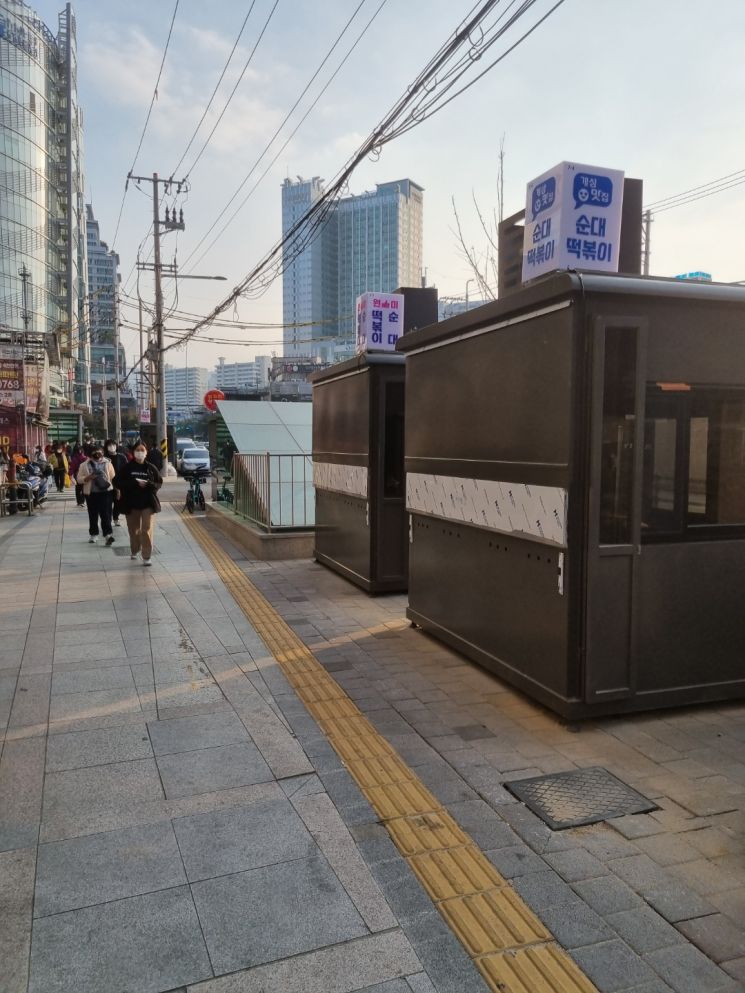 The area around Exit 7 of Sillim Station has become cleaner with the replacement of standardized street vendors.
[Asia Economy Reporter Park Jong-il] Unauthorized street vendors, which occupied major streets and caused negative perceptions regarding hygiene and urban aesthetics, are transforming into 'street shops' that everyone wants to use.
Gwanak-gu (Mayor Park Jun-hee) is actively promoting the 'Street Shop Road Occupancy Permit' to secure a safe walking environment for citizens, create pleasant and clean streets, and foster coexistence with unauthorized street vendors.
The 'Street Shop Permit System' officially grants road occupancy permits to street shops that meet certain conditions without damaging the urban landscape, allowing operators to pay occupancy fees and fulfill related obligations to operate stably.
This year, the district replaced 19 outdated street shops with redesigned sales stands around 8 locations near Siheung-daero and 11 locations near Exit 7 of Sillim Station, and carried out sidewalk and landscaping maintenance. Especially in the Sillim Station area, illegal street vendors were reorganized and converted to permitted vendors following the completion of the Sillim Line light rail construction.
Standardized stalls and all infrastructure such as electricity and communal water supply will be completed by the end of November to create a safe business environment.
A district official said, "These two areas have a high transient population and many illegal street vendors, leading to frequent complaints. Although administrative measures such as on-site guidance and fines were implemented, improvements were limited."
The 'Street Shop Permit System' is expected not only to revitalize the local economy but also to allow livelihood-type street vendors to operate their shops more stably within the formal system by paying road occupancy fees.
Including this year's 19 locations, the district has invested about 1.13 billion KRW to replace and maintain a total of 67 street shop stalls: 21 near Sillim Station in 2019 and 27 near Seoul National University Station in 2020.
Additionally, a full survey of illegal street vendors in the area will be conducted by the end of this month to systematically address the continuously increasing illegal vendors.
Alongside this, the district is promoting various street environment maintenance projects for residents' walking convenience, including ▲replacement of old sidewalk blocks ▲creation of street greenery ▲creation of street rest areas ▲maintenance of pedestrian paths.
A district official said, "We plan to secure residents' walking rights, create a people-centered road environment, and improve urban aesthetics. We will continue to strive to make Gwanak-gu clean and pleasant through pedestrian environment creation and street shop management."
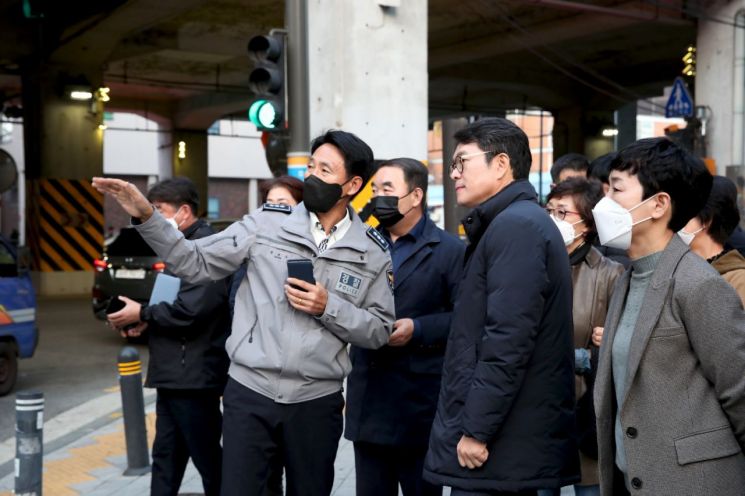
Seongdong-gu (Mayor Jung Won-oh) announced on the 8th that it conducted an on-site inspection of traffic improvement projects in Seongsu-dong in cooperation with Seongdong Police Station to resolve traffic inconveniences.
Mayor Jung Won-oh personally visited the crosswalk at Exit 2 of Seongsu Station and the intersection near Yeonmujang-gil in the Seongsu-dong cafe street, which are among the locations where pedestrian passage is inconvenient and accident risks are high.
In particular, the crosswalk at Exit 2 of Seongsu Station is located under the elevated section of Line 2, making the risk of collision between vehicles and pedestrians very high when crossing. Additionally, the area is densely packed with office facilities, resulting in heavy pedestrian traffic.
During the inspection with Seongdong Police officials and residents, the district announced plans to install raised crosswalks that induce vehicle deceleration to improve crosswalk traffic safety facilities.
Furthermore, they are reviewing the installation of customized right-turn safety facilities on-site to raise driver awareness and ensure pedestrian safety.
The second inspection site was the intersection of Yeonmujang-gil and Seongsu-ro, where traffic lights were recently installed. This area is a cafe street on Yeonmujang-gil with a large pedestrian flow due to increased foot traffic and many vehicles due to the construction of nearby knowledge industry centers. It has been a site of frequent complaints about high traffic accident risks for pedestrians.
Since 2021, Seongdong-gu has reviewed improvement plans through multiple joint inspections with Seongdong Police Station, and from November 1st, vehicle and pedestrian traffic lights have been installed and are operating at this intersection. The district expects the new traffic lights to enhance pedestrian convenience and safety.
Seongdong-gu has been implementing various pedestrian safety projects to create a walkable and safe city. It installed 78 smart crosswalks nationwide for the first time, integrating eight smart technologies such as focused lighting, ground-level traffic lights, and automatic vehicle number recognition. It also led new pedestrian safety policies including creating a school route for Gyeongdong Elementary using school grounds, operating walking school buses and traffic safety guardians for all elementary school routes, and introducing a smartphone app to block crosswalk distractions.
Mayor Jung Won-oh said, "We will collect residents' opinions, conduct on-site inspections where traffic improvements are needed, and continuously seek improvement measures. We will do our best to create a pedestrian environment where vulnerable groups can walk safely and conveniently by finding solutions tailored to local characteristics."
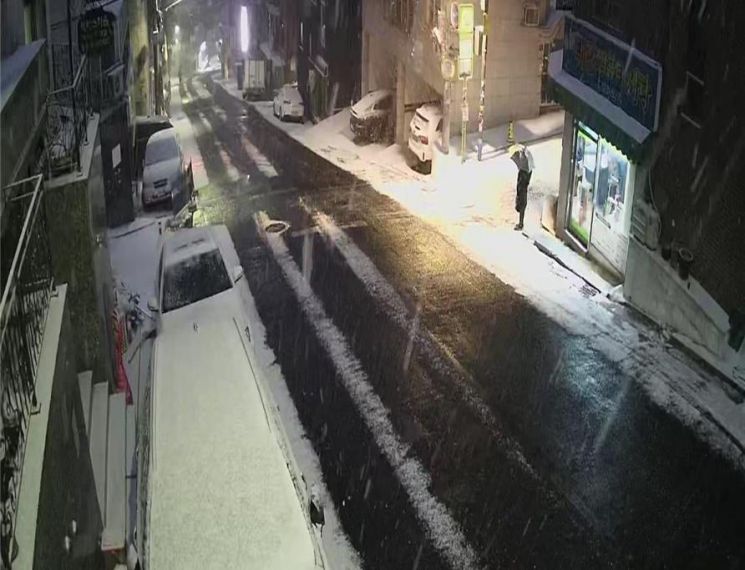
Gwanak-gu (Mayor Park Jun-hee) is preparing its winter snow removal measures for 2022 by expanding the installation of automatic snow removal facilities such as road heating cables and fixed automatic brine spraying devices targeting snow removal vulnerable sections in the area.
Due to the district's topographical characteristics, many snow removal vulnerable sections are distributed, including steep side roads and habitual freezing zones, where snow removal work is difficult. The existing snow removal system using snow removal vehicles and elevated snow removal agents has limitations in speed and efficiency.
Also, calcium chloride, the main component of snow removal agents, is highly effective but causes environmental issues such as road damage, vehicle corrosion, and water pollution in nearby streams.
Therefore, the district plans to minimize residents' inconvenience caused by snowfall and strengthen initial response capabilities during heavy snow by expanding automatic snow removal facilities like road heating cables and fixed automatic brine spraying devices, thereby improving snow removal efficiency.
The fixed automatic brine spraying device is a smart automatic control system that detects weather temperature and snowfall conditions, transports brine solution stored in a tank to the spraying device, and sprays it onto the road surface through pipes and nozzles. This method quickly sprays brine during heavy snow to prevent accidents.
Road heating cables are installed beneath the asphalt pavement surface and automatically activate by heating through sensors detecting snowfall, melting snow. This method is environmentally friendly as it does not use calcium chloride.
The district has already installed fixed automatic brine spraying devices over 2,340 meters at seven locations including the entrance of Guksabong Tunnel (Yangnyeong-ro), and road heating cables over 1,340 meters at five locations including Gukhoe Danji-gil, using them for snow removal. This year, with a budget of 1.919 billion KRW, the district plans to gradually expand these installations.
Additional installations include road heating cables over 1,230 meters on eight routes such as Bongcheon-ro 21-gil and Bogeun-gil, and fixed automatic brine spraying devices over 1,460 meters on two sections of Nangok-ro's uphill and downhill lanes.
Furthermore, recognizing the limits of administrative power alone in winter snow removal, the district emphasizes voluntary participation from local residents and private organizations, operates volunteer and private manpower snow removal task forces, and promotes joint public-private winter snow removal efforts to prevent safety accidents caused by road icing.
A district official said, "By installing automatic snow removal facilities, we will strengthen proactive snow removal response systems during heavy snowfall to minimize traffic congestion and inconvenience, ensuring residents' safety."
© The Asia Business Daily(www.asiae.co.kr). All rights reserved.



















