Nearly Twenty Words Left: "Materials to Infer the Appearance of Baekje Royal Palace-Level Buildings"
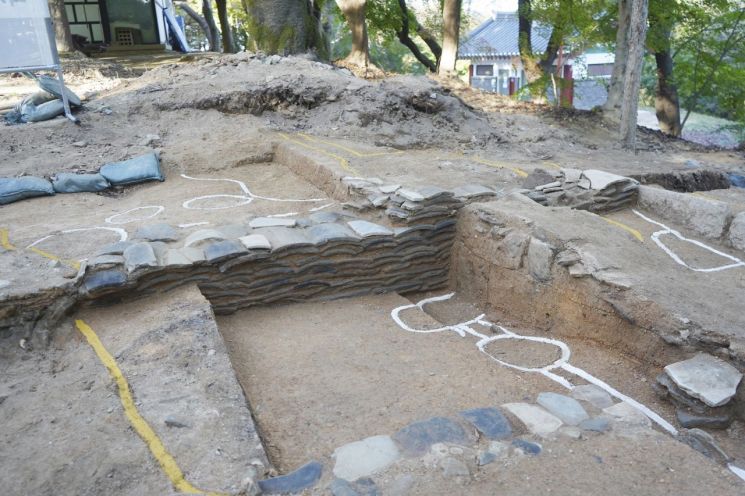
Two large tiled platform building sites from the Baekje Sabi period have been confirmed around the military warehouse site (軍倉址) at Busosanseong Fortress in Buyeo. A tiled platform (瓦積基壇) refers to a staircase made by stacking roof tiles.
According to the National Buyeo Cultural Heritage Research Institute on the 7th, the area where the tiled platform building sites were confirmed is the southeastern part of the military warehouse site, the largest flat area in Busosanseong Fortress. Two buildings, the northern one with an east-west length of over 16 meters and the southern one over 14 meters, were arranged parallel to each other. The platform remains were preserved up to nearly twenty layers.
The institute explained, "Considering that the average number of layers for tiled platform building sites known so far is about five or six, this is the best-preserved form of horizontally stacked tiled platforms." Tiled platform building sites have mainly been confirmed at representative Baekje temple ruins such as Jeongnimsaji, Wanggungsa Temple Site, and Gunsuri Temple Site.
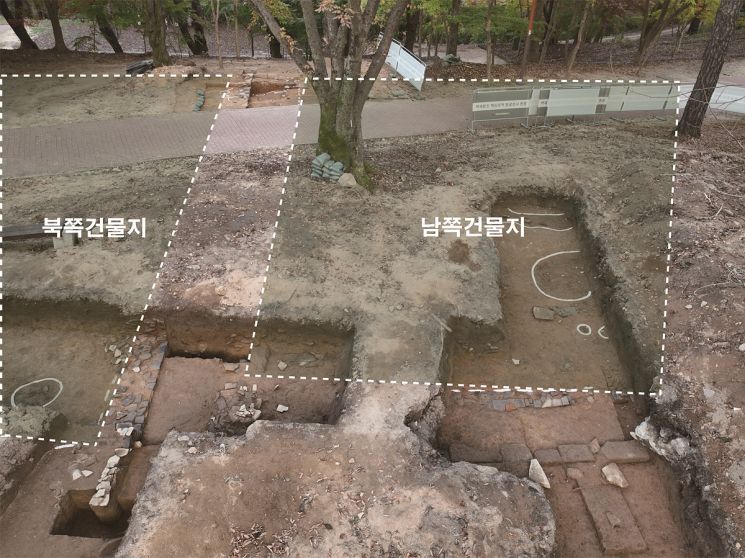
Busosanseong Fortress is located in the northern central part of the Baekje Sabi capital. During the Sabi period, it served as a royal castle, garden, and rear mountain fortress. The National Cultural Heritage Research Institute and the National Buyeo Cultural Heritage Research Institute conducted excavations from 1981 to 2002, confirming fortress walls and internal facilities (residences, storage pits, wells, etc.) from Baekje to the Joseon period.
This investigation was a procedure to identify the core building group on the flat area inside the fortress for mid- to long-term research. Important artifacts such as roof tiles inscribed with "Daetang (大唐)" and Chinese porcelain were excavated in the 1993 survey around the Busosanseong military warehouse site. The regular arrangement of the newly confirmed large tiled platform building sites and the construction of the tiled platforms with carefully selected roof tiles are evaluated as valuable data to infer the appearance of Baekje royal palace-level buildings.
The institute stated, "Due to the nature of trial excavations, which must be conducted within about 10% of the area where buried cultural heritage remains, it was not possible to confirm the entire appearance and scale of the building sites in detail," but added, "Through full-scale excavations, it is expected that the arrangement, overall scale, and structure of the building sites can be clearly identified."
© The Asia Business Daily(www.asiae.co.kr). All rights reserved.


















