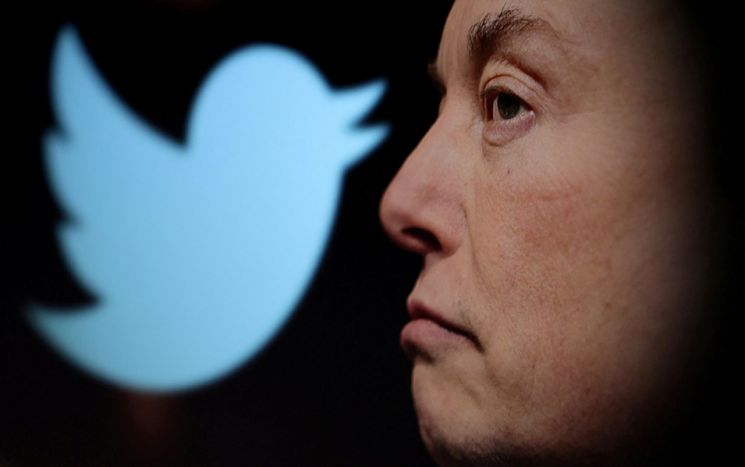
[Asia Economy Reporter Jeong Hyunjin] Elon Musk, CEO of Tesla, is seeking changes to the revenue structure of the social networking service (SNS) Twitter, which he acquired. Following the increase in the 'Twitter Blue' subscription fee after the acquisition, he is now reportedly considering creating a paid direct message (DM) service. Major advertisers are stepping back and observing the situation as they suspend their ads amid Musk's Twitter overhaul, known for his eccentricity.
The New York Times (NYT) reported on the 3rd (local time), citing multiple sources and documents obtained independently, that Musk and his close associates have considered introducing a paid DM service. Additionally, they are discussing putting up paywalls for some video content so that only paying users can view it. There is also consideration of reviving 'Vine,' Twitter's short video service that was discontinued in 2016.
Earlier, Musk attempted to change the business model by raising the existing paid subscription service 'Twitter Blue' fee from the current $4.99 to $8. If the $8 monthly paid service is successfully established, Twitter could generate an additional $4.1 million (approximately 580 million KRW) in annual revenue.
The reason Musk is implementing these changes is that Twitter faces the mission of immediately improving profitability. During Musk's acquisition process, Twitter incurred $13 billion in debt, resulting in an annual interest payment exceeding $1 billion.
The problem is that Twitter's main source of revenue is advertising. Twitter's dependence on advertising reaches 90%. Therefore, the plan is to diversify revenue streams beyond advertising to reduce reliance on ads and enable the platform to sustain itself through its own services. NYT also reported that last week Musk sent a separate product team to Twitter to explore product ideas that could generate new revenue.
Since Musk completed the acquisition, companies have increasingly stopped advertising on Twitter due to concerns over the rise of hateful content and increased uncertainty caused by the departure of key executives. According to the Wall Street Journal (WSJ), following automaker General Motors (GM), pharmaceutical company Pfizer, Audi of the Volkswagen Group, food companies General Mills and Mondelez International have joined this trend.
According to WSJ, the advertising industry expects even more advertisers to leave Twitter in the future.
Meanwhile, Musk has also taken steps to reduce internal costs. He reportedly told engineers in a recent meeting to cut infrastructure costs by $1 million to $3 million per day. The total infrastructure cost reduction he mentioned amounts to over $1 billion annually. A source pointed out that such drastic cost cuts could risk website downtime during high-traffic periods like the U.S. midterm elections scheduled for the 8th.
© The Asia Business Daily(www.asiae.co.kr). All rights reserved.

















