Rate Hike Disagreements Among Monetary Policy Committee Members
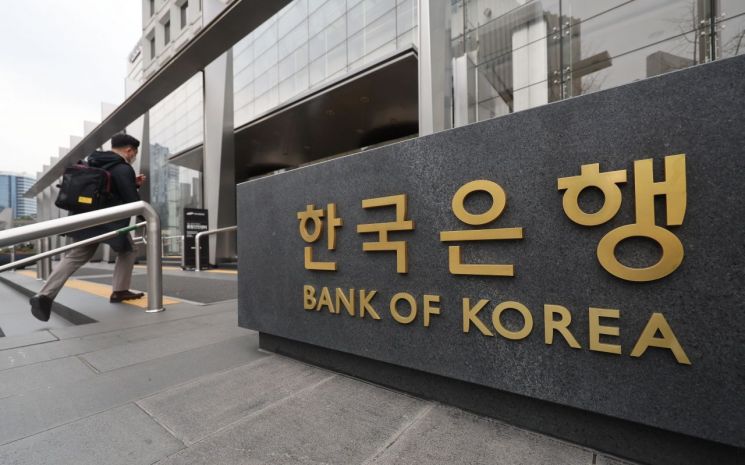
[Asia Economy Reporter Seo So-jeong] Consumer prices have rebounded after three months, deepening concerns over the Bank of Korea's monetary policy. Despite the decline in international oil prices, inflation remains above 5%, making active inflation control necessary. However, worries are spreading that domestic economic growth will also slow as the global economy enters a recession phase next year. The recent short-term funding market turmoil triggered by the Legoland incident is also a major variable.
On the morning of the 2nd, the Bank of Korea held a "Price Situation Review Meeting" chaired by Deputy Governor Lee Seung-heon to assess recent inflation trends and future price movements. Deputy Governor Lee stated, "Consumer prices are expected to maintain a high increase rate in the 5% range until the first quarter of next year," adding, "Personal service prices, which reflect demand-side inflationary pressures, are expected to continue rising in the 6% range for the time being." He diagnosed, "The future inflation outlook is highly uncertain due to mixed risks: downside risks from increased domestic and international economic downward pressures, and upside risks from sustained high exchange rates and expanded production cuts by major oil-producing countries."
The October consumer price inflation rate showed a continued slowdown in petroleum price increases, but due to the expanded rise in processed food prices and increases in electricity and city gas charges, it remained significantly above 5%. As inflationary pressures persist, it is necessary to continue raising the base interest rate and reducing market liquidity to stabilize prices, but domestic and international conditions are challenging. Liquidity tightening, especially in the bond market, is not easily easing, and concerns about an economic recession next year have led to growing opinions that the pace and magnitude of interest rate hikes should be adjusted.
According to the minutes of the October Monetary Policy Committee meeting released by the Bank of Korea the day before, opinions among committee members differed regarding the future scale of interest rate hikes. One committee member emphasized, "It is necessary to accelerate the base rate increase to shift the policy stance to a tight level early and maintain that level until price stability is firmly established." However, another member advocated caution, stating, "While continuing the monetary tightening stance, the magnitude and speed of rate hikes should be flexibly decided based on future domestic and international economic and financial conditions."
The won-dollar exchange rate, which was a key reason for the big step (0.50 percentage point base rate hike) in October, remains a major factor in monetary policy. On the morning of the day, the won-dollar exchange rate hovered between the high 1410s and low 1420s ahead of the Federal Reserve's Federal Open Market Committee (FOMC) meeting, showing a wait-and-see stance. However, if expectations for the Fed's pace adjustment of tightening are dashed, the exchange rate could shift to an upward trend.
Joo Won, head of economic research at Hyundai Research Institute, predicted, "Core inflation has reached its highest level in 13 years and 8 months, and inflation expectations are also high, so a third big step is expected at this month's Monetary Policy Committee meeting." Professor Sung Tae-yoon of Yonsei University's Department of Economics said, "Interest rate hikes are inevitable to control capital outflows caused by interest rate differentials with the U.S. and to manage inflation," adding, "While concerns about slowing economic growth next year are valid, the current high inflation situation is difficult to address with the usual scale of rate hikes."
© The Asia Business Daily(www.asiae.co.kr). All rights reserved.
![User Who Sold Erroneously Deposited Bitcoins to Repay Debt and Fund Entertainment... What Did the Supreme Court Decide in 2021? [Legal Issue Check]](https://cwcontent.asiae.co.kr/asiaresize/183/2026020910431234020_1770601391.png)















