Supreme Court: "Effect Lost After Resolution... Strict Interpretation of Position Suspension Termination Time Is the Principle"
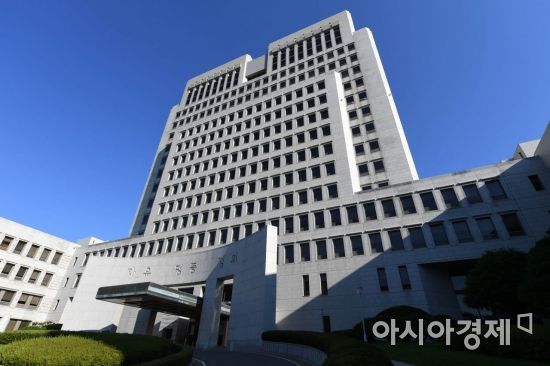
[Asia Economy Reporter Heo Kyung-jun] The Supreme Court has ruled that the effect of a suspension from duty is lost from the day after the disciplinary action against the suspended public official is decided.
The Supreme Court's 2nd Division (Presiding Justice Cheon Dae-yeop) announced on the 2nd that it overturned the lower court's partial ruling in favor of former public official A in the appeal trial of a lawsuit against the state regarding the payment of public official wages and sent the case back to the Daejeon High Court.
In February 2017, the Ministry of Land, Infrastructure and Transport suspended A from duty, demanding a severe disciplinary decision due to allegations of sexual harassment against a subordinate. Article 72-3, Paragraph 1, Item 3 of the State Public Officials Act stipulates that a person "subject to a disciplinary decision requiring dismissal, removal, demotion, or suspension" may be suspended from duty.
Subsequently, the Central Disciplinary Committee decided on February 23, 2018, to impose a two-month pay reduction on A. The Ministry of Land, Infrastructure and Transport requested a re-examination in March of the same year, but it was dismissed in June. In July 2018, the Ministry imposed the two-month pay reduction on A.
After resigning in April 2019, A filed a lawsuit claiming that the suspension from duty was unjustified from the time the minor disciplinary action was decided and demanded payment of wages not received due to the suspension.
A argued in court that the effect of the suspension from duty was lost at the time the Central Disciplinary Committee imposed the two-month pay reduction as a minor disciplinary action. However, the first and second trials judged that the effect of the suspension from duty was lost at the time the Central Disciplinary Committee made a decision on the re-examination request.
On the other hand, the Supreme Court held that "It is reasonable to interpret that the 'person subject to a disciplinary decision requiring severe punishment' as stipulated in the State Public Officials Act is limited to the period until the disciplinary decision is made."
The court stated, "Since suspension from duty is a detrimental measure that causes direct and indirect disadvantages to public officials in various aspects such as salary, promotion, and advancement, if it is unjustly prolonged, it may ultimately cause disadvantages similar to dismissal. Therefore, the requirements for suspension from duty and the timing of the loss or extinction of its effect should be strictly interpreted according to the wording."
Furthermore, the court ruled, "Allowing public officials to remain in an unstable status for a long time raises concerns about violating the constitutional and statutory guarantees of public officials' status, and it is not permissible to interpret the suspension from duty provision in an unfavorable, analogical, or expansive manner toward the subject of the suspension. It is reasonable to limit the 'person subject to a disciplinary decision requiring severe punishment' to the period until the disciplinary decision is made."
© The Asia Business Daily(www.asiae.co.kr). All rights reserved.
![User Who Sold Erroneously Deposited Bitcoins to Repay Debt and Fund Entertainment... What Did the Supreme Court Decide in 2021? [Legal Issue Check]](https://cwcontent.asiae.co.kr/asiaresize/183/2026020910431234020_1770601391.png)