This Week's Biggest Hurdle Before US Midterm Elections... Key to Finding Nuclear Materials
South Korea-US Intelligence Agencies Analyze North Korean Nuclear Program Using Eavesdropping, Seismic Waves, and Sound Waves
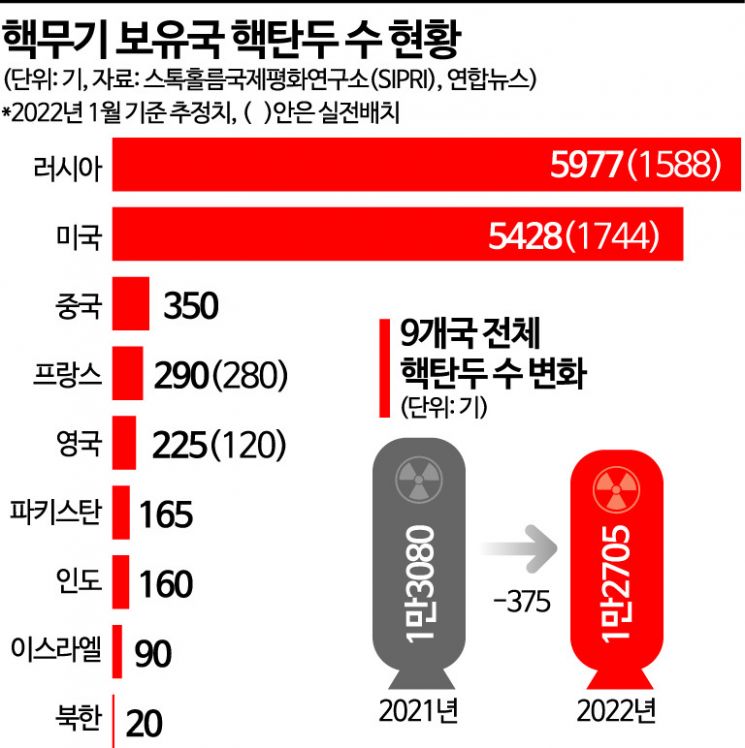
[Asia Economy Yang Nak-gyu, Military Specialist Reporter] With the U.S. midterm elections just a week away, attention is focusing on the possibility of North Korea conducting its 7th nuclear test. Previously, the National Intelligence Service indicated that North Korea might carry out a nuclear test before the midterm elections. The likelihood of an event that could determine the fate of the Korean Peninsula occurring within a week has increased. South Korean and U.S. military authorities are actively working to identify the test materials, scale, and power of the potential nuclear test.
If North Korea proceeds with a nuclear test, the process will follow these steps: ▲site selection and tunnel excavation ▲installation of nuclear weapons and measuring equipment ▲cable connection and tunnel backfilling ▲conducting the nuclear test. If Chairman Kim Jong-un makes the decision, installing measuring equipment and connecting cables can be completed in just a few days. South Korean and U.S. military authorities may detect whether the test is being conducted through eavesdropping 1 to 2 hours before the test. However, the possibility that North Korea might attempt to disrupt by spreading false information cannot be ruled out.
Once North Korea actually conducts a nuclear test, the first indicator to determine its occurrence is an earthquake?specifically, an artificial earthquake. Artificial earthquakes occur when explosives are detonated underground, liquids infiltrate the crust, or reservoirs form due to dams. In contrast, natural earthquakes result from sudden crustal movements inside the Earth. The Korea Meteorological Administration (KMA) detects artificial earthquakes. The KMA has installed seismic observatories at a depth of 100 meters underground in places such as Inje, Gangwon Province; Yeoncheon; and Ganghwa, Gyeonggi Province. The seismometers installed at these observatories detect vibrations as small as about 0.25g, capturing tremors from all directions every second.
When an earthquake occurs, two waves?P-waves (horizontal direction) and S-waves (vertical direction)?are generated. In natural earthquakes, the amplitude of the S-wave is usually equal to or greater than that of the P-wave. In contrast, artificial earthquakes show a much larger amplitude of the P-wave compared to the S-wave. Additionally, natural earthquakes release energy over a longer period, resulting in very complex waveforms. However, artificial earthquakes prominently feature only the initial P-wave, with subsequent waveforms, including the S-wave, becoming simpler.
The presence of an artificial earthquake can also be determined by airborne sound waves. The Korea Institute of Geoscience and Mineral Resources operates an acoustic wave detector at the Ganseong Observatory in Goseong County, Gangwon Province, to measure "airborne acoustic waves." These airborne acoustic waves occur when explosives detonate and do not occur in natural earthquakes. If airborne acoustic waves are detected, it is highly likely that the earthquake is artificial.
The Korea Institute of Nuclear Safety is also involved. Since North Korea's first nuclear test in October 2006, the institute has introduced the "SAUNA" system. This device detects xenon and krypton gases that leak into the air after a nuclear test. If North Korea conducts a nuclear test, radioactive particles will linger over the Korean Peninsula for 3 to 4 days. These radioactive particles can be analyzed to identify the test materials. However, detection may fail depending on the detection location, wind direction and speed, and radiation concentration.
Domestic Institutions Including Korea Institute of Geoscience and Mineral Resources Detect Airborne Acoustic Waves
U.S. Special Reconnaissance Aircraft Simultaneously Search for Nuclear Materials Over the Korean Peninsula
North Korea’s Uranium Reserves Estimated to Exceed Half of Global Reserves
The U.S. Air Force special reconnaissance aircraft WC-135 (Constant Phoenix) determines the occurrence of nuclear tests from the sky. The WC-135 belongs to the 82nd Reconnaissance Squadron under the 55th Wing at Offutt Air Force Base, Nebraska, but it waits at Kadena Air Base in Okinawa and flies over the East Sea. The U.S. government owns only two of this aircraft model. The WC-135 detects radioactive materials using an engine-type atmospheric sample collection device attached to the side of the fuselage. By lowering the internal temperature of the atmospheric component collector inside the reconnaissance aircraft to below minus 50 degrees Celsius, nuclear materials in the air adhere to it. It collects and measures radioactive materials such as xenon, krypton, and cesium released during the nuclear explosion process when atoms are artificially broken, and it can distinguish between enriched uranium, plutonium, and hydrogen bombs.
The reason South Korea and the U.S. analyze North Korea’s nuclear test materials is due to North Korea’s uranium reserves. North Korea’s uranium reserves are estimated to exceed half of the world’s total reserves (40 million tons). Low-enriched uranium is used for energy such as power generation, and when uranium U-235 is enriched to about 90%, it becomes nuclear weapon material. The centrifuges at Yongbyon, which North Korea revealed to nuclear expert Dr. Siegfried Hecker in 2010, numbered 2,000, but it is generally believed that at least 4,000 centrifuges are hidden elsewhere. As nuclear tests continue, the production of nuclear weapons using uranium is expected to increase.
Centrifuges used for enrichment are cylindrical devices about 3 meters long and 20 centimeters in diameter. Due to their small size, they do not require much space. Moreover, if installed in underground facilities, they are difficult to detect. This is why the U.S. has not found evidence of North Korea’s highly enriched uranium program. Uranium bombs have the advantage of low radiation leakage risk and maintain destructive power even after long-term storage, making them easier to manage.
On the other hand, plutonium bombs have disadvantages such as isotope instability and the need for precision in combining with high-explosive devices. They must be tested through nuclear tests, exposing them externally and making them vulnerable to attacks during wartime. Their destructive power rapidly decreases with long-term storage. Plutonium reprocessing requires many facilities, including reactors, spent nuclear fuel rods, cooling towers, and reprocessing plants. The nuclear bomb dropped by the U.S. on Hiroshima, Japan, on August 6, 1945, was the uranium-based "Little Boy," and the one dropped on Nagasaki three days later, on August 9, was the plutonium bomb "Fat Man."
© The Asia Business Daily(www.asiae.co.kr). All rights reserved.
![Clutching a Stolen Dior Bag, Saying "I Hate Being Poor but Real"... The Grotesque Con of a "Human Knockoff" [Slate]](https://cwcontent.asiae.co.kr/asiaresize/183/2026021902243444107_1771435474.jpg)
















