During Peak Tick and Wild Rat Activity, "Reduce Skin Exposure and Avoid Lying Down"
[Asia Economy Yeongnam Reporting Headquarters Reporter Kim Yong-woo] What is this that targets your skin outdoors in autumn?
The Korea Occupational Safety and Health Agency under the Ministry of Employment and Labor is conducting a publicity campaign to prevent infectious diseases caused by ticks and others for outdoor workers.
The agency distributed fever disease prevention guideline materials mainly to 245 local governments with many outdoor works.
Autumn is a period when ticks are highly active, so outdoor workers involved in forest and park development projects, agriculture, and forestry need to be especially careful not to be bitten by ticks.
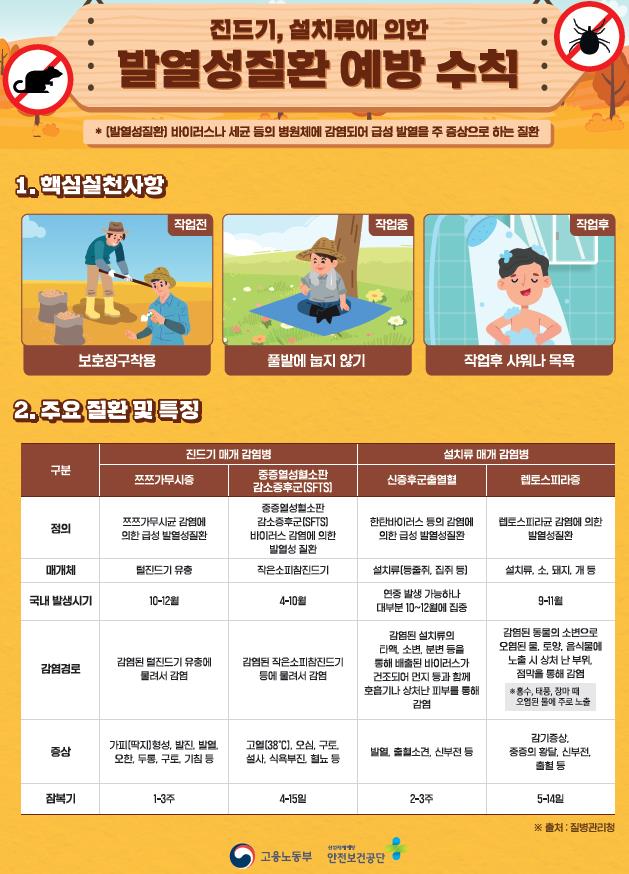
Looking at the industrial accident status related to tick-borne infectious diseases such as Tsutsugamushi disease and Severe Fever with Thrombocytopenia Syndrome (SFTS) over the past five years, 162 out of 187 cases (86.6%) occurred in autumn (September to November).
According to the fever disease prevention guideline materials, workplaces must follow three core practices to prevent tick-borne infectious diseases for outdoor workers.
First, wear clothing that minimizes skin exposure before work. Second, do not lie down on the grass during work. Third, take a shower or bath immediately after work.
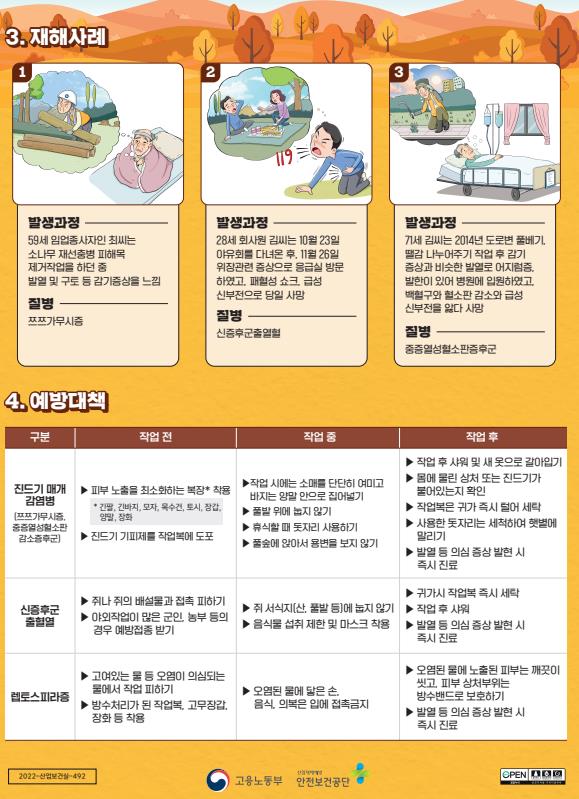
Additionally, educate workers about the infection routes, symptoms, and prevention methods of diseases such as Tsutsugamushi disease; frequently check for tick bites or ticks attached to the skin; and if infection symptoms occur, visit a hospital immediately for treatment.
Director Ahn Jong-joo of the Korea Occupational Safety and Health Agency said, “Infectious diseases such as Tsutsugamushi disease take about 1 to 3 weeks to develop, making it difficult to recognize early symptoms,” and added, “We hope employers and workers strictly comply with the provided prevention guidelines.”
© The Asia Business Daily(www.asiae.co.kr). All rights reserved.
![Clutching a Stolen Dior Bag, Saying "I Hate Being Poor but Real"... The Grotesque Con of a "Human Knockoff" [Slate]](https://cwcontent.asiae.co.kr/asiaresize/183/2026021902243444107_1771435474.jpg)

















