Seong Gi-hyeok's Orthopedic Team at Bundang Seoul National University Hospital
Faster Correction Speed and Higher Recurrence Risk for Children Under 10 Years Old
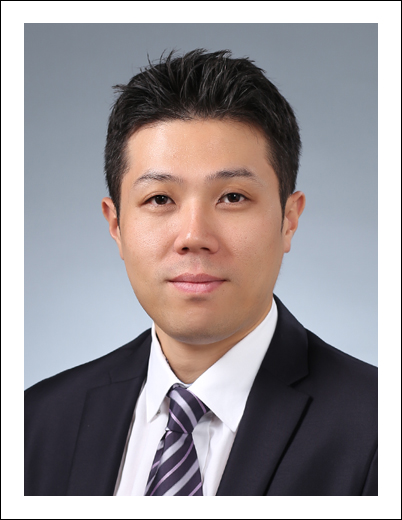 Professor Sung Ki-hyuk, Department of Orthopedic Surgery, Bundang Seoul National University Hospital.
[Asia Economy Reporter Lee Gwan-joo] A study has found that children under the age of 10 who undergo surgery for bowlegs or knock-knees have an increased risk of recurrence.
The orthopedic surgery team led by Professor Seong Gi-hyeok at Bundang Seoul National University Hospital announced on the 31st that they analyzed the rebound phenomenon (recurrence) and risk factors occurring after correction in pediatric patients who underwent hemi-epiphysiodesis using metal plates for the treatment of bowlegs and knock-knees, confirming these findings.
Hemi-epiphysiodesis is a surgical method that temporarily suppresses the function of one side of the growth plate using a figure-eight shaped metal plate in children with pathological deformities of O-shaped (genu varum) or X-shaped (genu valgum) legs, allowing the deformity to be corrected as they grow. Since growth resumes after correction is completed, the surgery can be performed at a relatively younger age, and effective correction can be expected.
However, it was found that performing surgery at too early an age may actually increase the risk of recurrence. The research team conducted a study on 94 growth plates that underwent hemi-epiphysiodesis to identify risk factors for recurrence. The average age of these patients was 11 years, and those who experienced a recurrence of deformity of 5 degrees or more after metal plate removal following correction were classified as the recurrence group, while the others were classified as the non-recurrence group.
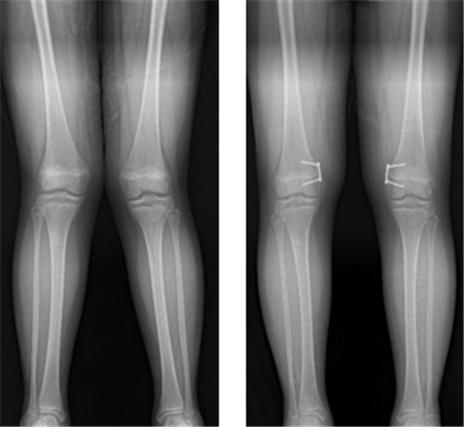 A patient with corrected valgus knee (knock-knee, left) after medial distal femoral hemiepiphysiodesis using an 8-hole metal plate.
As a result, 41 patients belonged to the recurrence group and 53 to the non-recurrence group. The average age at surgery in the recurrence group was 10.2 years, which was significantly younger than the 11.7 years in the non-recurrence group. Additionally, the correction speed in the recurrence group was 10.2 degrees per year, significantly faster than the 6.5 degrees per year in the non-recurrence group.
Regression analysis showed that the speed of deformity correction was a risk factor for postoperative deformity recurrence, with the risk of recurrence increasing 1.2 times for every 1 degree increase in correction speed per year. Furthermore, the cutoff point dividing the recurrence and non-recurrence groups was approximately 7 degrees. Therefore, patients with a correction speed of 7 degrees or more had a higher risk of symptom recurrence after metal plate removal.
Professor Seong said, "Bowlegs or knock-knees in children can be corrected by hemi-epiphysiodesis using metal plates, but pediatric patients with a fast correction speed, especially those with 7 degrees or more per year, have a higher risk of recurrence after metal plate removal, so additional observation is necessary. In particular, surgery performed at too young an age, under 10 years old, increases the risk of recurrence, so it is recommended to consult a specialist and undergo surgery at an appropriate time."
The results of this study were published in the latest issue of the international journal 'BMC Musculoskeletal Disorders.'
© The Asia Business Daily(www.asiae.co.kr). All rights reserved.


















