US Warns North Korea... Russia Threatens South Korea
Russia Disrupts Trilateral Cooperation of US, South Korea, and Japan
"Security Strategy Reset... Pragmatic Diplomacy Urgent"
[Asia Economy Reporters Inho Yoo and Heejun Jang] The situation on the Korean Peninsula is rocking amid turbulence as the United States and Russia simultaneously issue warnings to North Korea and South Korea, respectively.
At the same time, China has inaugurated Xi Jinping's long-term leadership regime. Analysts interpret this as the 'power game' among neighboring major powers ultimately spreading to the Korean Peninsula. As the new Cold War structure on the Korean Peninsula between ‘the US-Japan-South Korea bloc and the North Korea-China-Russia bloc’ becomes clearer in economic, military, and security fields, diplomatic circles point out that it is increasingly urgent for our government to reset its diplomatic and security strategies to avoid being caught up in the ‘new Cold War’ among neighboring major powers.
US Expands Deterrence on the Korean Peninsula with Strong Warning on North Korean Nuclear Issue
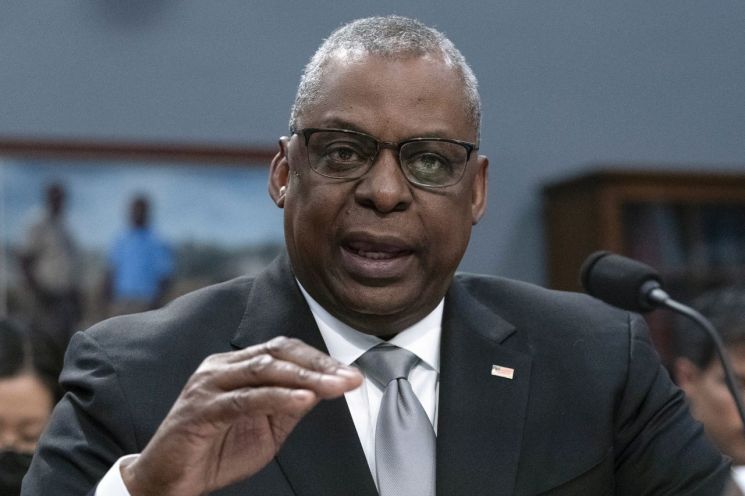
The United States has designated China as the ‘greatest threat’ to national security, Russia as an ‘imminent major threat,’ and North Korea as a ‘persistent threat’ among key allies, announcing a strong posture for countermeasures. Russia, targeting the US, warned that if South Korea supplies weapons to Ukraine, relations between South Korea and Russia would collapse.
On the 27th (local time), the US Department of Defense released the National Defense Strategy, Nuclear Posture Review, and Missile Defense Review, identifying China as the most likely strategic competitor in the future and Russia as an ‘immediate threat.’ North Korea was classified as a persistent threat alongside international terrorist organizations and others.
In particular, the US confirmed that North Korea’s nuclear and missile capabilities are continuously increasing, thereby escalating the associated threat. It assessed that the risk is relatively limited compared to China or Russia and presented a strategic policy to defend the US mainland and its allies through missile defense and extended deterrence. The US warned that North Korea’s use of nuclear weapons would lead to the regime’s end, evaluating that North Korea has completed preparations for its seventh nuclear test.
The US’s repeated strong warning on the nuclear issue appears to consider not only North Korea’s completion of nuclear test preparations but also the increased volatility of the Korean Peninsula situation due to the US-Russia conflict over the Ukraine war and intensified US-China competition. It is also analyzed that the US took into account the rising hardline voices within South Korea calling for the introduction of tactical nuclear weapons or nuclear sharing, citing the North Korean threat amid instability on the Korean Peninsula.
Jung Sung-jang, Director of the North Korea Research Center at the Sejong Institute, said, "The government has not seriously considered an independent nuclear armament option due to concerns about strong opposition and sanctions from the US administration," adding, "The US administration needs to conduct confidential consultations through high-level talks between the two countries regarding South Korea’s independent nuclear possession for mutual benefit."
Russia Issues Warning to South Korea... Expanding Influence on the Korean Peninsula
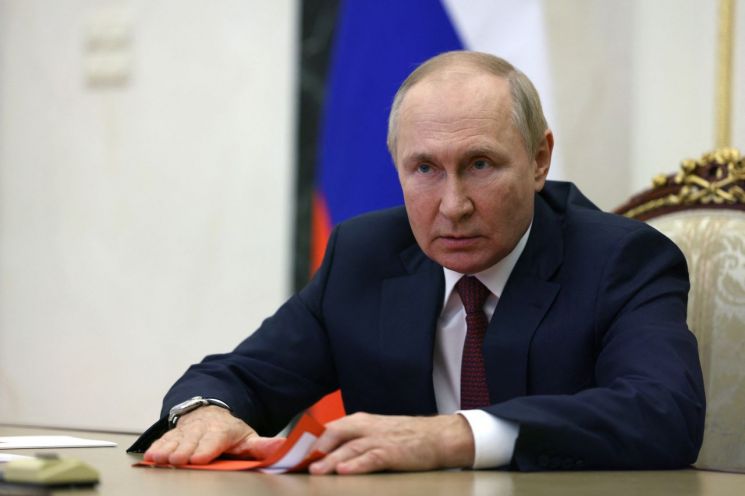
On the same day, Russian President Vladimir Putin issued a high-intensity warning to South Korea, even mentioning a ‘breakdown of relations.’ President Putin criticized the US for changing its stance and imposing sanctions after North Korea had nearly reached an agreement with the US regarding its nuclear program, then mentioned South Korea. Our government has so far provided military supplies excluding weapons, such as ballistic helmets, tents, blankets, medical supplies, and humanitarian aid to Ukraine, but has stated it cannot support lethal weapons.
Analysts suggest that Russia’s preemptive warning to South Korea stems from the judgment that South Korea’s and Japan’s strengthening trilateral cooperation with the US could weaken Russia’s influence on the Korean Peninsula.
Given the escalating US-Russia and US-China conflicts, the general view in diplomatic circles is that our government should pursue pragmatic diplomacy to maintain a stable situation on the Korean Peninsula and protect national interests.
Professor Kim Jun-hyung of Handong University’s Department of International Politics said, "The North Korea-China-Russia relationship solidifies as US involvement in Northeast Asia increases. If we openly export weapons to Ukraine under US pressure, there is a concern that Russia might assist North Korea in strengthening its nuclear capabilities," adding, "The South Korea-Russia relationship is at a significant crossroads, and considering our international standing and practical benefits, we must avoid being sucked into the new Cold War structure."
Some voices call for a firm response. Cha Doo-hyun, Senior Research Fellow at the Asan Institute for Policy Studies, emphasized, "The legitimate export and sale of weapons by a country is an inherent right, and we should not be shaken by Russia’s threats," adding, "It is necessary to officially express opposition to Russia’s internationally isolated invasion of Ukraine and its willingness to use nuclear weapons."
© The Asia Business Daily(www.asiae.co.kr). All rights reserved.


















