[Seoul District News] Dongdaemun-gu Mayor Ilhyung Lee Elected 6th President at Seoul Northeast Fashion Sewing Industry Development Council General Meeting on the 26th Afternoon ... Jungnang-gu Wins Grand Prize in Health Education Program at 21st Health Education Contest & Resident Health Leader Training Demonstration as Part of Senior Customized Health Wellness Project ... Seongdong-gu’s 8th Term Promises Progress with Highest Resident Jury Participation ... Gangnam-gu Creates and Distributes KakaoTalk Emoticons Reflecting New 8th Term Slogan ... Nowon-gu to Hold Recycling Market on the 29th
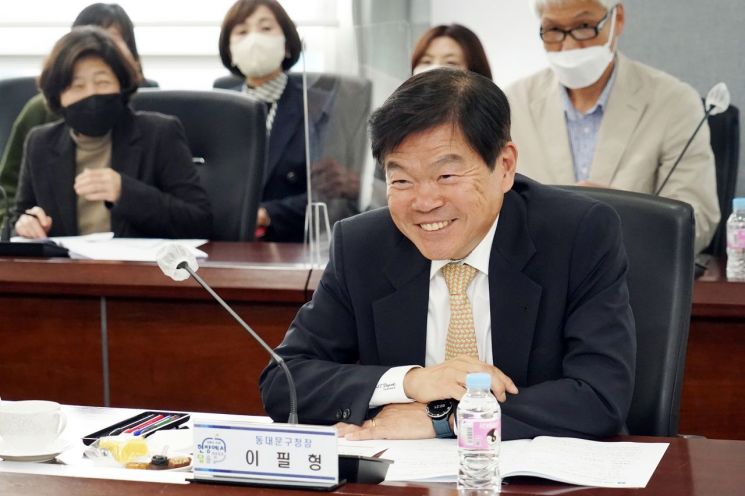
[Asia Economy Reporter Park Jong-il] Lee Pil-hyung, Mayor of Dongdaemun-gu, was elected as the 6th president at the regular general meeting of the Seoul Northeast Fashion Sewing Industry Development Council held on the 26th.
The Seoul Northeast Fashion Sewing Industry Development Council was established in 2017 by nine autonomous districts of Seoul (Jongno-gu, Jung-gu, Seongdong-gu, Gwangjin-gu, Dongdaemun-gu, Jungnang-gu, Seongbuk-gu, Gangbuk-gu, Dobong-gu), where small fashion sewing businesses are concentrated, to discuss and express opinions on laws, policies, and system improvement plans affecting the garment sewing industry.
Mayor Lee was elected as the 6th president at the regular general meeting held on the afternoon of the 26th. The term is one year, with the possibility of one reappointment.
Lee Pil-hyung, newly elected president of the council and Mayor of Dongdaemun-gu, said, “There is a need to modernize the struggling fashion sewing industry. As president, I will faithfully fulfill my role to help the sewing industry maintain its industrial ecosystem and enhance its self-sustainability, and I will request continuous interest and support from the Seoul Metropolitan Government and the central government.”
The Seoul Northeast Fashion Sewing Industry Development Council is working to resolve issues related to the fashion sewing industry, such as securing budgets for improving the working environment of garment manufacturers and solving problems related to fabric waste disposal.
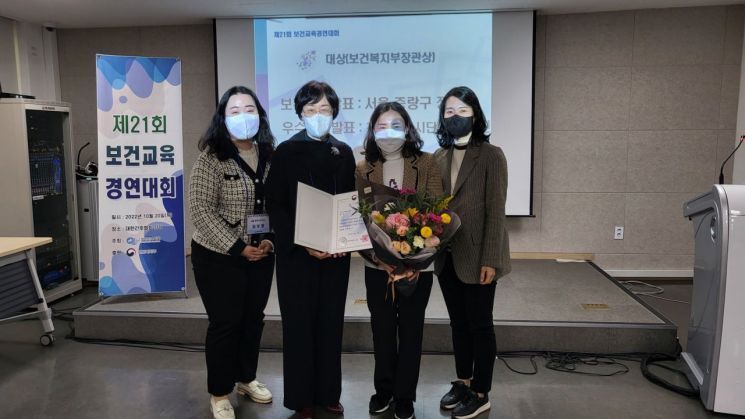
Jungnang-gu (Mayor Ryu Kyung-gi) announced that the Jungnang-gu Public Health Center won the Minister of Health and Welfare Award, the grand prize in the health education program category, at the 21st Health Education Competition.
The Health Education Competition is sponsored by the Ministry of Health and Welfare and organized by the Korean Nurses Association and the Health Nursing Society to strengthen the health education capabilities of public health nurses nationwide and to spread a culture of healthy living among residents. It is held annually.
This year’s competition was held on the 20th, with a first round of document screening for two categories: health education programs and best practices, followed by a second round of on-site presentations for each category.
Representing Seoul, the Jungnang-gu Public Health Center demonstrated its resident health leader education and won the grand prize in the health education program category.
The resident health leaders are senior leaders aged 50 and above who have completed communication training, nutrition, exercise, and safety education as part of the senior-tailored health wellness project promoted by the district since 2020 to reduce health disparities among elderly residents in small areas. They visit the homes of economically vulnerable elderly residents to assist with health management, lifestyle habit formation, and health monitoring.
The senior-tailored health wellness project combines the existing home visit health management program with health promotion initiatives, aiming for “healthy and long living in the community where I live.”
Ryu Kyung-gi, Mayor of Jungnang-gu, said, “It is especially meaningful to receive the grand prize for the senior-tailored health wellness project, which residents participate in and create together. We will continue to practice various health education programs and take the lead in promoting residents’ health improvement.”
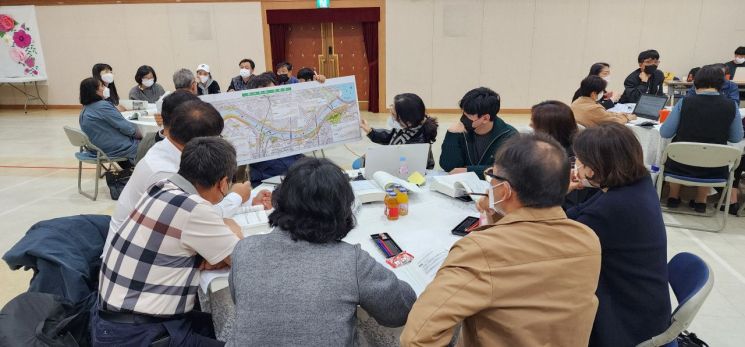
Seongdong-gu (Mayor Jung Won-oh) announced that it held three resident jury meetings from last month until the 22nd of this month to establish the implementation plan for the 8th term of the elected government’s pledges.
The resident jury system is part of the Manifesto movement, a citizen movement for pledge implementation, where residents directly check and evaluate the progress of pledge fulfillment. To ensure fairness and transparency, applicants were recruited via ARS and telephone interviews targeting Seongdong-gu residents aged 19 and over, and 35 people were randomly selected considering age, gender, and region. The selected resident jurors propose improvement plans for pledge adjustments and have voting rights for final approval.
According to officials from the Korea Manifesto Practice Headquarters who participated in the meeting, Seongdong-gu’s pledges were highly complete, and most agenda items involved integrating or separating by department functions or specifying content and titles considering field situations rather than changing the content.
Notably, the Seongdong-gu resident jury showed very high participation and interest in district administration. It was the first time in the 9 years of the Korea Manifesto Practice Headquarters’ operation that 100% attendance was recorded from the first to the third meeting by appointed resident jurors.
The district confirmed 262 pledge projects in seven major areas after a review meeting in July and has achieved the highest grade (SA) in the manifesto pledge implementation evaluation for five consecutive years until 2022.
Seongdong-gu’s 8th term pledge projects are based on the mid- to long-term urban plan, the 4 Major Leaps + 4 Major Centers Project, and cover all administrative fields including ▲ attracting companies and creating jobs for a sustainable city ▲ providing customized welfare services for single-person households as well as children and seniors ▲ expanding safe and convenient transportation infrastructure such as smart shelters and smart crosswalks ▲ improving educational conditions including the establishment of a middle school.
The resident jury held the first meeting on September 27, the second on October 11, and the third main meeting on the 22nd. The first and second meetings included resident juror appointments, role education, and explanations of projects by department officials.
At the final third meeting, subgroup discussions were followed by subgroup and overall voting based on the discussion results.
A total of 16 pledge implementation plan adjustment items were approved, including ▲ five integrated items such as residential environment improvement according to residents’ wishes ▲ five separated items such as expansion of Haenghyeon Elementary School library and improvement of school routes ▲ six change items such as installation of elevated crosswalks around Seongsu Station.
The final recommendations of the resident jury will be actively reflected in the project implementation process after review by the responsible departments, and the pledge progress and results will be disclosed on the district office website.
Jung Won-oh, Mayor of Seongdong-gu, said, “It has been four months since the launch of the 8th term of the elected government, and there have been achievements such as designation as a preliminary cultural city in September. Seongdong-gu, aiming to be an inclusive city where no one is left behind, will do its best to fulfill the pledges made to residents.”
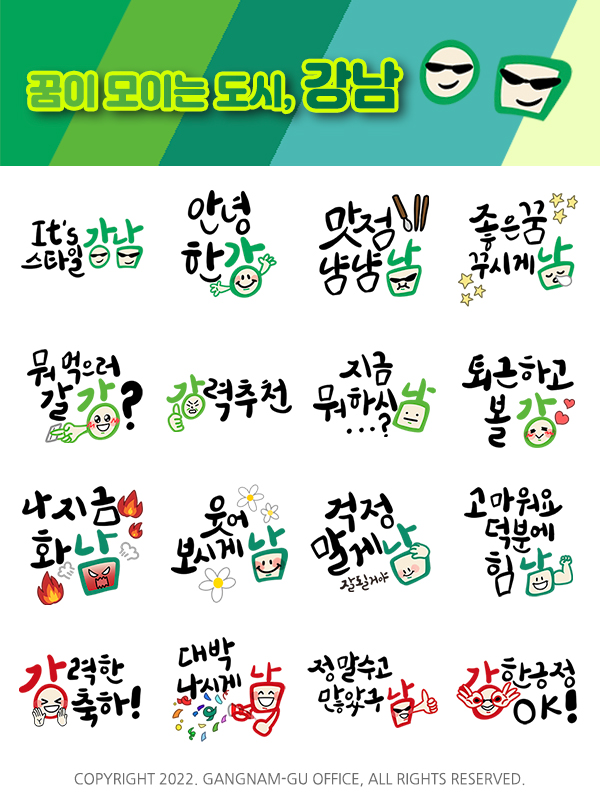
Gangnam-gu (Mayor Jo Sung-myung) will distribute KakaoTalk emoticons titled “A City Where Dreams Gather, Gangnam” on the 31st to widely promote the warm meaning of the official slogan of the 8th term of the elected government.
The new slogan for the 8th term, “A City Where Dreams Gather, Gangnam Drawing the Future,” expresses the meaning of cherishing everyone’s dreams and working together to make those dreams come true in Gangnam. Furthermore, it includes the intention that Gangnam-gu will leap forward with those dreams and draw the future of Korea and the world.
The district produced and will distribute 16 types of handwritten-style emoticons to promote the hopeful vision of the 8th term. The emoticons are animated handwritten forms using the word “Gangnam” with warm and lively phrases such as “What shall we eat?” (Mwo meogeureo galgang?), “Don’t worry” (Geokjeongmalge nam), and “Thank you, thanks to you I’m strong” (Gomawoyo deokbune himnam), with fun facial expressions drawn on the consonants ‘ㅇ’ and ‘ㅁ’ to create lively emoticons.
The emoticons will be distributed first to 100,000 friends who add the “Gangnam-gu Office” KakaoTalk channel starting at 2 p.m. on the 31st. Downloaded emoticons can be used free of charge for one month. Any remaining emoticons after distribution will be given on a first-come, first-served basis to newly added channel friends.
Jo Sung-myung, Mayor of Gangnam-gu, said, “We created emoticons that can be usefully used in daily life to make the new slogan containing the vision of the 8th term more familiar to residents. We hope many people will take interest in the new slogan and promotional emoticons, which mean Gangnam-gu gathering residents’ hopes and dreams and moving toward the future.”
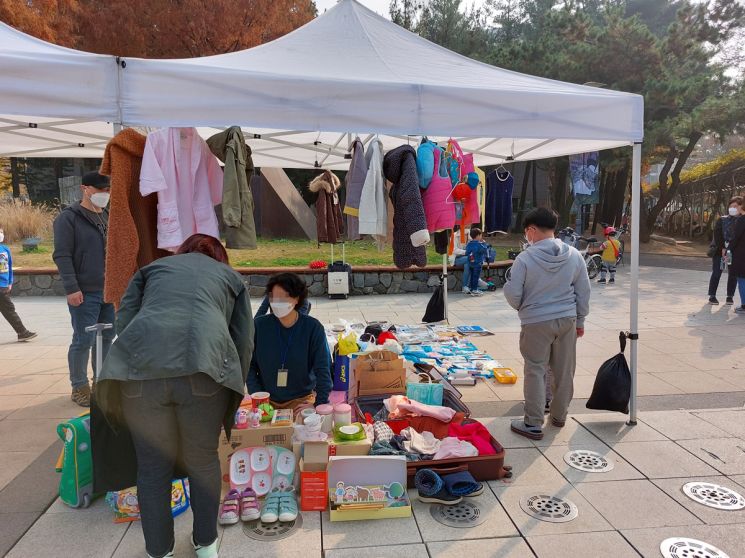
Nowon-gu (Mayor Oh Seung-rok) announced that it will hold the “Nodaji Market” on the 29th to promote resource reuse and the culture of sharing.
The Nodaji Market was prepared through public-private cooperation to spread awareness that “waste is also a valuable resource,” to inform the importance of environmental protection and resource reuse, and to establish a resource-circulating society.
The event will be held at Junggye Deungnamu Cultural Park from 11 a.m. to 2 p.m., featuring themes such as ▲ personal flea market ▲ experience programs ▲ resource circulation exchange events ▲ donation culture promotion.
The personal flea market is open to all Nowon-gu residents, with 100 participants selected by lottery through prior application. It encourages resource reuse by selling reusable secondhand goods such as clothing, books, and household items, and promotes a culture of sharing by allowing people to share items they no longer need with others who do.
The experience programs are themed around making eco-friendly lifestyle items through upcycling (creating new value from discarded products). Participants can make keyrings from old jeans, alternative tissues, pot holders from sock yarn, eco-friendly dishcloths, healing grain packs, and all-purpose nuruk salt, learning resource upcycling naturally through hands-on activities.
EM (effective microorganisms) will be distributed free of charge, and there will be exchange events where 10 used batteries can be exchanged for one new battery, and 1 kg of paper packs can be exchanged for one roll of eco-friendly toilet paper. These waste exchange events teach practical resource circulation in daily life.
Promotion of donation culture through the reuse store will also be conducted. Used goods donations will be accepted from flea market participants to encourage small acts of resource recycling. Additionally, a portion of the proceeds voluntarily donated by personal flea market participants will be contributed to the “Warm Winter with Hope Ondol” campaign, promoting resource recycling and the culture of sharing.
Other activities include introducing eco-friendly unpackaged living products and kitchenware, promoting the use of reusable containers, and operating food booths with rental and collection services.
The district plans to demolish the Nowon Recycling Center Junggye branch within this year and construct a new “Upcycling Center” scheduled for completion in 2024, with basement 1 to 5 floors and a total floor area of 1,346㎡. This center will not only provide recycled home appliances, furniture, and office supplies at reasonable prices but also serve as a hub for upcycling culture promotion, exhibitions, resident experience education programs, and sales of upcycled products.
Oh Seung-rok, Mayor of Nowon-gu, said, “Resource circulation through recycling and reuse is an essential task to solve the climate crisis. We will continue to promote various projects and actively support efforts to preserve the environment and build a sustainable resource circulation society.”
© The Asia Business Daily(www.asiae.co.kr). All rights reserved.



















