In raccoon habitats and major appearance areas such as Bukhansan and Yangjaecheon,
approximately 20 units spaced 50~100m apart over a total of 115km
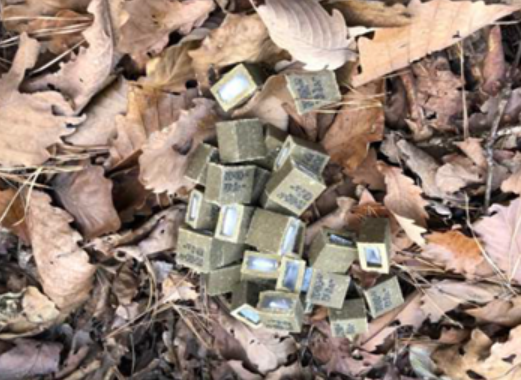
[Asia Economy Reporter Yoon Seul-gi] As wild animals continue to appear in urban areas, causing various incidents and accidents, the Seoul Metropolitan Government is distributing bait vaccines to prevent rabies.
On the 17th, Seoul announced that to prevent rabies, a zoonotic infectious disease transmitted through wild raccoons and other animals, it will distribute about 32,000 "wild animal rabies bait vaccines" in raccoon habitats and major appearance areas such as Bukhansan and Yangjaecheon until the 28th of next month.
Rabies is an infectious disease that affects both humans and animals. Humans become infected when bitten or scratched by an animal with rabies, allowing virus-containing saliva to enter the wound. In Korea, rabies is mainly transmitted through wild animals such as raccoons.
The "wild animal rabies bait vaccine" is a brown rectangular block made of chicken meat and fish meal to attract animals. The vaccine inside is absorbed through the gums when the animal eats it, providing rabies prevention. The bait vaccine has been proven safe through safety tests on over 60 species of animals and is not harmful even if ingested by dogs or cats. However, for pets, rabies vaccination (injection) remains the most effective method of prevention.
The bait vaccine distribution areas include ▲ major raccoon habitats such as Bukhansan, Dobongsan, Suraksan, Bulamsan, Gwanaksan, Yongmasan, Gwanaksan, Umyeonsan, and Daemosan ▲ and places where raccoons frequently appear such as Uicheon, Ujangsan, and Jangji Park. The bait vaccine will be distributed in about 20 units at intervals of 50 to 100 meters along a total of 115 km in the outer boundary areas of the city.
The city urged citizens not to touch the "wild animal rabies bait vaccine" found under trees or in bushes during mountain hikes. If touched by humans, the scent may remain, causing wild animals to avoid eating it. Yoo Young-bong, Director of the Seoul Metropolitan Government's Green City Leisure Bureau, requested, "Please avoid touching the bait during autumn hikes and dog walks, and avoid contact with wild animals."
Meanwhile, as habitats shrink due to urbanization and other factors, wild animal appearances in urban areas are increasing. According to the Seoul Wildlife Center rescue status, the number of species and individuals of rescued wild animals has increased: 78 species and 1,054 individuals in 2019 (70 bird species 897 individuals, 6 mammal species 155 individuals, 2 reptile species 2 individuals), 94 species and 1,166 individuals in 2020 (82 bird species 987 individuals, 8 mammal species 173 individuals, 4 reptile species 6 individuals), and 94 species and 1,491 individuals in 2021 (79 bird species 1,301 individuals, 9 mammal species 181 individuals, 5 reptile species 9 individuals, 1 amphibian species 1 individual).
As wild animals such as raccoons continue to appear in urban areas around Seoul and the metropolitan area, incidents and accidents are also ongoing. In June, a dog on a walk in Uicheon, Gangbuk-gu, Seoul, was attacked by a wild raccoon. There have also been cases where wild animals attacked people. In July, a woman in her 50s walking in a park in Songpa-gu, Seoul, was attacked by three raccoons and suffered serious injuries to her arms and legs.
© The Asia Business Daily(www.asiae.co.kr). All rights reserved.
![Clutching a Stolen Dior Bag, Saying "I Hate Being Poor but Real"... The Grotesque Con of a "Human Knockoff" [Slate]](https://cwcontent.asiae.co.kr/asiaresize/183/2026021902243444107_1771435474.jpg)
















