Over 1600 Won per Liter, Burden Still Increasing Compared to Last Year
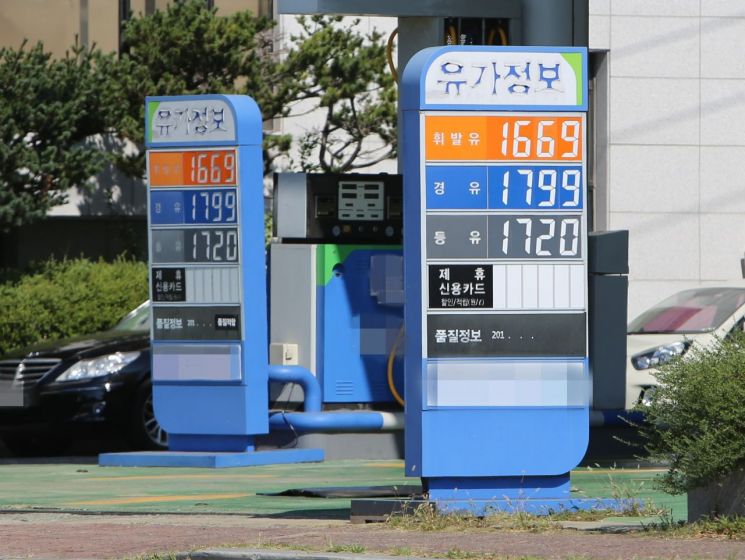 October 14, 2022, fuel price information board at a gas station in Uichang-gu, Changwon-si, Gyeongnam. / Photo by Se-ryeong Lee ryeong@
[Asia Economy Yeongnam Reporting Headquarters Reporter Lee Seryeong] Amid the recent rapid economic downturn, the price of kerosene, used by farmers and low-income households during winter, has skyrocketed, making the winter season expected to be harsh.
Kerosene is mainly used for winter heating in mountainous or rural fishing villages where city gas is not supplied, as well as in old houses.
According to the Korea National Oil Corporation’s price information site OPINET, as of October 16 last year, the average price of kerosene in the Gyeongnam region was 983.11 KRW per liter.
Due to the economic recession and rising oil prices, the price continued to soar daily, reaching four digits at 1,003.43 KRW per liter on October 21, 2021, and rising to 1,690.51 KRW as of July 14, 2022.
As of October 17, the average price of kerosene in the Gyeongnam region is 1,604.50 KRW per liter, showing a slight decline but still 621.39 KRW higher per liter than last year.
On the same date, the average kerosene price in Hamyang-gun was 1,520.42 KRW per liter, the cheapest in the province, while Changwon-si had the highest average price at 1,644.71 KRW per liter among the 18 cities and counties.
The rise in kerosene prices leads to concerns over winter heating costs for energy-vulnerable groups such as grandparent-headed households, elderly living alone, people with disabilities, children from single-parent families, and patients with severe or intractable diseases.
It also causes economic damage to farmers cultivating horticultural and fruit crops who need to maintain above-freezing temperatures inside facilities for crop growth despite freezing cold weather.
Residents agreed that even if government energy voucher programs, local governments, companies’ year-end support, and donations are provided, the increased price per liter has reduced the amount they can purchase and will likely reduce donation amounts due to the financial burden.
An elderly person using an oil boiler lamented, “Even if I wear thermal underwear, it’s useless if the room isn’t warm,” adding, “It’s too late to switch to briquettes now, and it will take several containers of oil, so it’s a big problem.”
A farmer growing tomatoes said, “If the temperature or humidity is off, diseases and pests occur on the leaves, or the fruit softens before ripening,” and added, “Gasoline and diesel prices have dropped a bit, but I hope more attention is paid to kerosene.”
The Gyeongnam Province announced that, regardless of the government’s fuel tax reduction policy, it will implement a support project for purchasing tax-exempt agricultural fuel to reduce production cost burdens on local farms.
From March to December this year, they plan to support 185 KRW per liter for 50% of the usage amount of gasoline, diesel, and kerosene, regardless of fuel type.
A provincial official said, “We will actively promote the government’s energy voucher support project to reduce heating cost worries for energy-vulnerable groups and identify eligible households, while also implementing support projects for farms so that residents can ease their concerns about oil prices this winter.”
© The Asia Business Daily(www.asiae.co.kr). All rights reserved.

















