[Seoul District News] Seongdong-gu Completes Ecological Stream and Resident-Friendly Space Project in Jeonnongcheon Area After 4 Years of Effort ... 'Guro Smart Farm Future Talent Training' ... Gangbuk-gu Operates 'Small Business Startup Academy' ... Gwanak-gu Exchanges 1 Volume-Based Waste Bag for 10 Transparent PET Bottles ... Gangseo-gu Runs Pilot Project of Apartment-Style Mobile Recycling Bins in 5 Residential Areas Including Woljeong Children's Park and Pilma Children's Park in Hwagok 1-dong
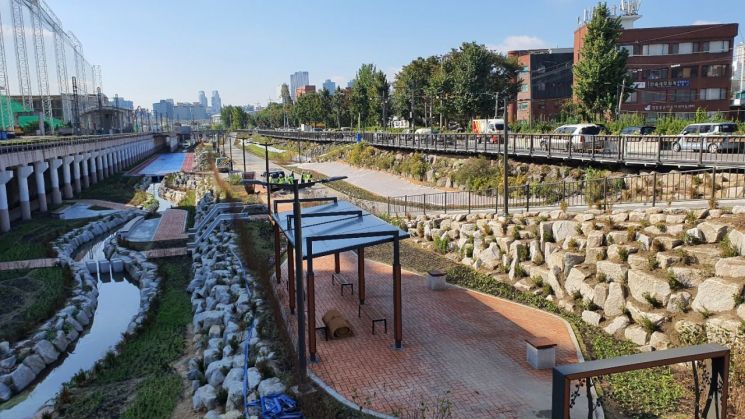
[Asia Economy Reporter Park Jong-il] Seongdong-gu (Mayor Jung Won-oh) announced that Jeonnongcheon in Yongdap-dong, once shunned due to foul odors, has been transformed into a nature-friendly ecological stream after four years of effort.
Seongdong-gu, bordering Jungnangcheon, Cheonggyecheon, and the Han River, is a "City of Water" boasting Seoul's largest waterfront space, stretching a total of 14.2 km.
However, Jeonnongcheon in the Yongdap-dong area had been neglected due to poor pedestrian conditions and foul odors. Especially in summer, the severe smell and insects made it a place avoided by nearby residents.
In response, Seongdong-gu launched the "Jeonnongcheon Odor Reduction and Resident-Friendly Space Creation Project" in 2019 to resolve residential environment inconveniences, restore the lost river functions of Jeonnongcheon, and create a space convenient for residents to use.
To this end, the district conducted feasibility studies and held dozens of on-site inspections and meetings with members of the National Assembly, city and district council members, and Seoul city officials to build consensus on the project's necessity. Residents also supported the effort by submitting 1,003 petitions. As a result, Seongdong-gu secured 10.2 billion KRW in city funds, signaling the green light for full-scale project implementation.
Starting in March 2021, the project proceeded in three phases: constructing a separate sewer pipeline to block odor sources, improving the embankment walking trail environment and river water quality, ecological restoration works, and creating resident convenience facilities such as sports facilities. Additionally, to alleviate parking difficulties in nearby residential areas, the embankment road's resident-priority parking spaces were expanded from 36 to 64 spaces.
After long-term construction, the renewed Jeonnongcheon waterfront space now spans 600 meters in length and up to 42 meters in width. Seongdong-gu expects Jeonnongcheon to be reborn as a nature-friendly ecological stream loved by residents through this project.
Jung Won-oh, Mayor of Seongdong-gu, said, "I am pleased to complete the long-awaited Jeonnongcheon odor reduction and resident-friendly space projects and to return Jeonnongcheon to the residents. We will do our best to maintain and manage the transformed nature-friendly ecological stream so that residents can enjoy the riverside space pleasantly and comfortably."
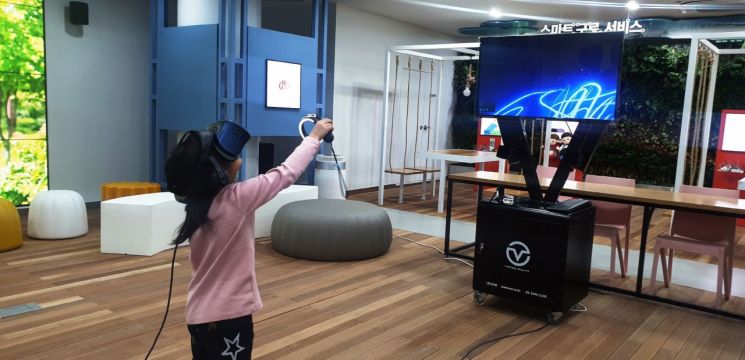
Guro-gu (Mayor Moon Heon-il) is operating a smart farm future talent training program for local residents.
On the 17th, Guro-gu announced, "In the era of the 4th Industrial Revolution, this education was prepared to provide residents with learning opportunities about urban agriculture and to help them become smart farm experts."
The training will be held every Wednesday from November 2 to December 14 at the Guro Smart Farm Center (Hang-dong) and the Smart Guro Promotion Hall (Sindorim-dong). Participants will learn both theory and practice on topics such as complex environment control systems, hydroponics, nutrient management, physiological disorders, and pest management.
Residents of Guro-gu who wish to apply should submit the application form via email to the person in charge by the 28th. The course is free, and detailed information including the syllabus and application form can be found on the district office website.
The district plans to recruit 10 participants on a first-come, first-served basis.
Guro-gu is conducting various educational programs centered around the Smart Guro Promotion Hall and the Guro Smart Farm Center to advance as a cutting-edge industrial city leading the 4th Industrial Revolution.
The "Smart Guro Promotion Hall" was established in September 2019 at the underground plaza near Exit 1 of Sindorim Station, and the "Guro Smart Farm Center" was created in November last year in the Hang-dong 145-1 area. Equipped with advanced technology infrastructure such as Information and Communication Technology (ICT) and the Internet of Things (IoT), these spaces are used to enhance residents' digital capabilities.
Since the opening of the Smart Guro Promotion Hall, the district has developed and operated virtual reality (VR) experience programs and augmented reality (AR) services. In April this year, a "Digital Learning Center" was established where residents can learn and experience digital devices. The Guro Smart Farm Center cultivates crops such as European vegetables, strawberries, and tomatoes and offers various experiential programs using these crops.
Furthermore, the district plans to develop the currently operating permanent experience space into a hub center. Educational courses will be segmented by age, skill level, and course type to provide customized programs suitable for each participant.
A Guro-gu official said, "We expect this training to spark interest in urban agriculture using ICT and prepare residents for the 4th Industrial Revolution era. We will do our best to prepare various educational programs so that Guro-gu can take a step forward as a cutting-edge industrial city."
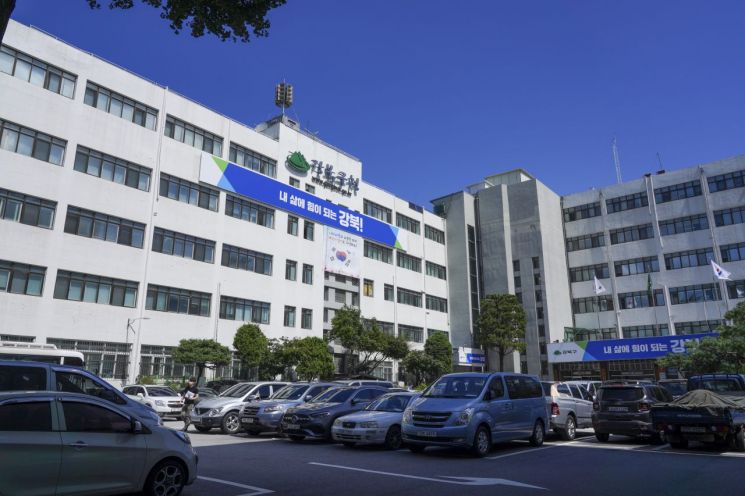
Gangbuk-gu (Mayor Lee Soon-hee) is operating a startup academy for local small business owners preparing for entrepreneurship or business conversion.
Hosted by Gangbuk-gu, the Gangbuk Chamber of Commerce, and the Seoul Credit Guarantee Foundation, this startup academy will provide education on startup preparation methods and practical training. The training will be held over two days, from the 25th to the 26th, in the community room at the Gangbuk Food Bank Market Center, and the course is free of charge.
The lectures cover topics such as ▲startup preparation procedures ▲commercial area location analysis and utilization ▲business plan writing ▲startup funding and guarantee support systems ▲startup taxation, encompassing all aspects of entrepreneurship.
Residents wishing to enroll can apply through the Seoul Small Business Academy, and for more details, they can contact the Job Economy Division.
Those who attend all lectures and complete the course will receive a certificate of completion, qualifying them to apply for Seoul city startup funds.
Lee Soon-hee, Mayor of Gangbuk-gu, said, "I hope this startup academy helps entrepreneurs learn know-how and facilitates smooth business operations. We will continue to actively support entrepreneurs going through difficult times with practical assistance."
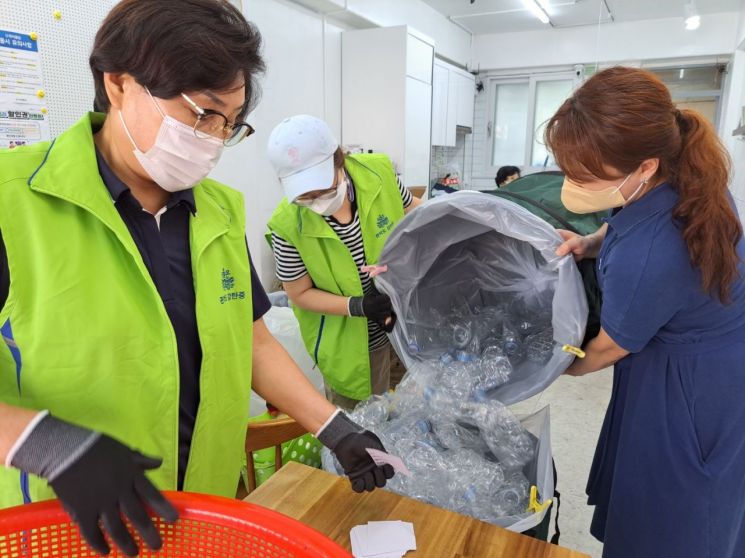
Gwanak-gu (Mayor Park Jun-hee) is conducting the "Eco Tomorrow" project, a transparent PET bottle deposit system aimed at improving the culture of separated waste disposal, together with resident-led 'Resource Circulation Clubs.'
The Gwanak-gu Resource Circulation Clubs are resident-led groups interested in recycling. Starting with three neighborhoods last year, they expanded to all 21 neighborhoods by October this year, reflecting strong resident support.
The "Eco Tomorrow" project exchanges clean recyclable transparent PET bottles for volume-based waste bags, aiming not only to increase the collection rate of transparent PET bottles but also to establish a separated waste disposal day system.
Transparent PET bottle exchanges are held every Thursday from 2 PM to 4 PM between October 20 and November 24 at Euncheon-dong Community Center, Kkachi Children's Park in Haengun-dong, Nangok-dong Nangok Community Center, and 18 other neighborhood community centers. The compensation standard is one 10-liter volume-based waste bag per 10 transparent PET bottles of 2 liters each, with a maximum of 5 bags per day.
The district set the operation day of "Eco Tomorrow" as every Thursday, inspired by Seoul city's separated waste disposal day for transparent PET bottles and waste vinyl being every Thursday.
Additionally, the district has installed and operates "Transparent PET Bottle Smart Collection Boxes" in all 21 neighborhoods, where residents can scan the barcode on transparent PET bottles and deposit them to earn points via a smartphone app, promoting various resource circulation initiatives.
Park Jun-hee, Mayor of Gwanak-gu, said, "Through this project, we hope to raise awareness of the necessity of separated recycling and create a culture of resource circulation with voluntary resident participation. We will continue to communicate with residents through diverse projects and do our best to build Gwanak as a resource circulation city."
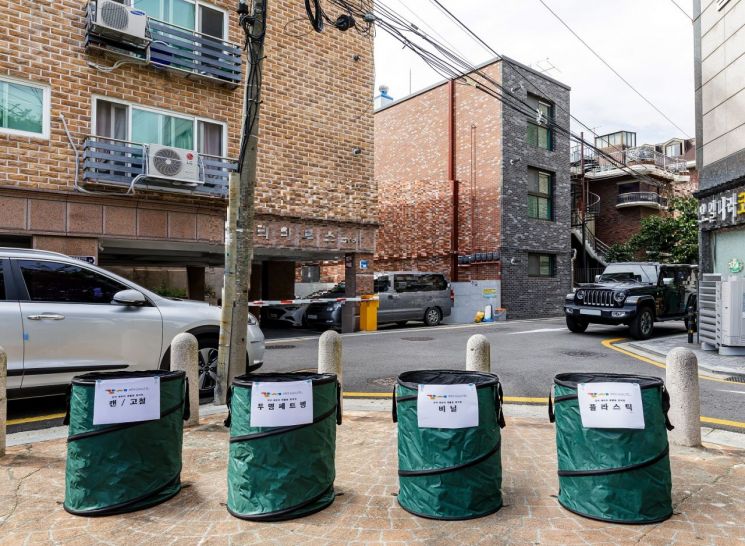
Gangseo-gu, Seoul (Mayor Kim Tae-woo) is launching a "Mobile Apartment-Type Recycling Collection Bin Project" to create a clean residential environment.
Starting next month, the district will pilot the "Mobile Recycling Station (Gangseo-gu Saeromi Recycling Station)" targeting residential areas in Hwagok 1-dong.
This project, one of the five major district goals aimed at creating a safe environment city in harmony with nature, involves installing mobile recycling bins at key locations in residential areas, allowing residents to separate recyclables by type as in apartments, with resource managers assisting residents in proper recycling.
The target locations include Woljeong Children's Park, Pilma Children's Park, Chorong Children's Park, the parking lot of the Hwagok Health Center branch, and Kkachi Park, all within Hwagok 1-dong.
Every Tuesday and Thursday from 6 PM to 9 PM, residents can bring six types of recyclables?glass bottles, cans/scrap metal, paper, transparent PET bottles, plastics, and vinyl?to these stations, where resource managers will assist with separation and provide incentives in the form of general volume-based waste bags.
The district will promote the separate disposal day system for transparent PET bottles and waste vinyl on-site, and after operating hours, will clean the surroundings and promptly remove the facilities to minimize resident inconvenience.
By sorting and processing recyclables on-site before they reach the recycling sorting center, the project is expected to improve recycling sorting rates and reduce costs.
Additionally, hiring and operating resource managers responsible for resident guidance and material management at the Gangseo Recycling Stations is expected to create public jobs.
After a two-month pilot operation starting next month, the district plans to complete resource manager recruitment by March next year and officially launch the project at 80 locations within Gangseo-gu from April.
For more details, please visit the Gangseo-gu Office website (homepage) under Gangseo News - Notices/News.
Mayor Kim Tae-woo said, "We will carefully prepare a developed local management system that enhances residents' convenience through the spread of proper separated disposal culture and improvement of alleyway environments, and pilot operate it. We will strive to stabilize and operate the Gangseo Saeromi Recycling Stations to create a safe environment city in harmony with nature."
© The Asia Business Daily(www.asiae.co.kr). All rights reserved.



















