Digital Therapeutics Developer 'Rowan'
Famous for Dementia Prevention Program 'Superbrain'
"Digital Therapeutics Concept Still Unfamiliar... Will Permeate Our Society"
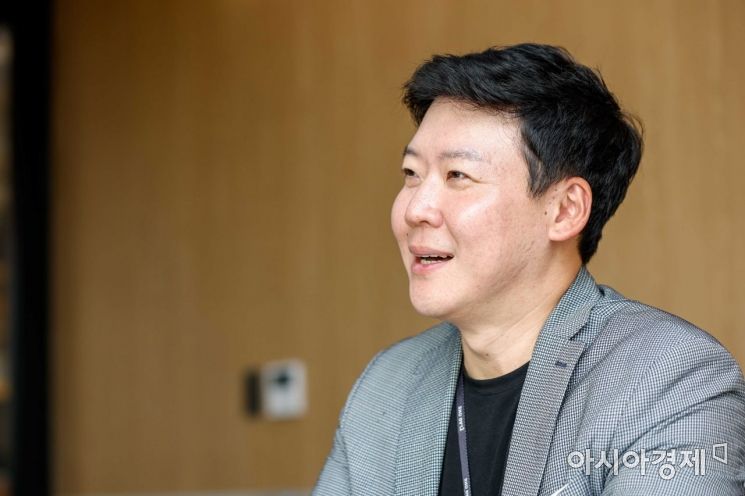 CEO Han Seung-hyun of Rowan is being interviewed on the 5th at Flag One in Jung-gu, Seoul. Photo by Kang Jin-hyung aymsdream@
[Asia Economy Reporter Heo Midam] Dementia approaches those nearing old age with fear. This is because not only the individuals suffering from dementia but also their families and those around them must endure unspeakable pain. The most common symptom is memory loss, and in severe cases, even recent events are forgotten. Sudden anger or verbal abuse, showing aggression, also occurs frequently. However, the real reason dementia is frightening is that treatment itself is difficult. Dementia is hard to cure completely, so early detection and consistent management are more important than anything else. If early symptoms are not missed and treatment is started quickly, the progression of the disease can be somewhat slowed, so prevention must ultimately be prioritized.
ROWAN, a digital therapeutics development company, also aims for dementia 'prevention' rather than 'treatment.' Founded in 2015 by CEO Han Seunghyun, ROWAN gained fame by developing the dementia prevention program 'SuperBrain.' SuperBrain is a program targeting high-risk groups for dementia, aiming to prevent dementia through cognitive training as well as lifestyle improvements such as diet and exercise. CEO Han said, "We considered ways to solve dementia using IT technology," adding, "Currently, SuperBrain is being utilized in several places including university hospitals." Previously, SuperBrain demonstrated its efficacy through a clinical trial conducted over about three years with 152 participants aged 60 and above.
Digital therapeutics (DTx) like SuperBrain are classified as third-generation therapeutics. Unlike first-generation (pills and capsules) and second-generation (antibodies, proteins, cells) therapeutics, digital therapeutics are known as 'medicine you take with your mind.' Instead of taking medicine orally or by injection, diseases are treated using software technologies such as games, applications, and virtual reality (VR). Also, digital therapeutics differ from digital healthcare aimed at health management; since digital therapeutics are treatments, they must have the purpose of preventing or treating diseases. Moreover, because their therapeutic effects must be proven, they are more specialized and medically oriented than digital healthcare.
CEO Han said, "The term digital therapeutics has only recently emerged in earnest over the past few years, so it is still unfamiliar to many," adding, "Patients sometimes find it unfamiliar how to take digital therapeutics when first prescribed. However, just as the word 'therapeutics' has already become familiar in our society, digital therapeutics will also become familiar."
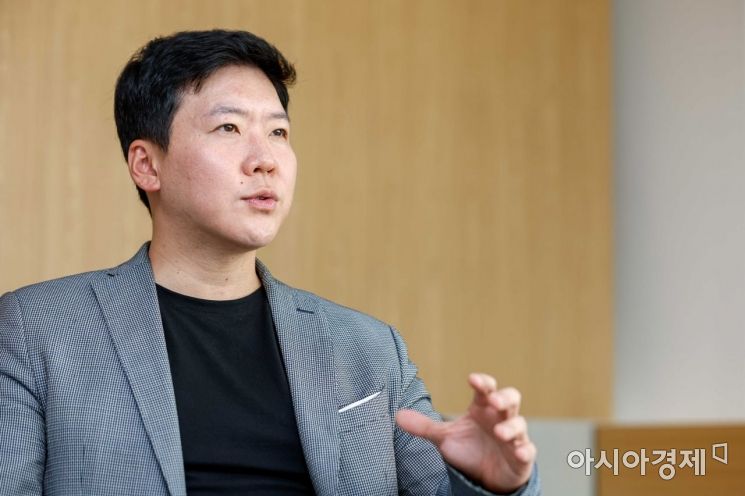 CEO Han Seung-hyun of Rowan is being interviewed on the 5th at Flag One in Jung-gu, Seoul. Photo by Kang Jin-hyung aymsdream@
CEO Han identified South Korea as a country that can rapidly advance the digital therapeutics and digital healthcare fields. He said, "South Korea is an IT powerhouse. There are few countries that develop both hardware and software well and have well-established infrastructure, and medical accessibility is also very good," adding, "Also, there is a culture where patients actively follow doctors' recommendations."
He continued, "South Korean consumers are very demanding, so health-conscious consumers use medical services with their own standards," adding, "From the perspective of companies that must meet these demanding needs, they inevitably develop good medical services that keep pace with them."
ROWAN's outlook is expected to be bright. Earlier this year, ROWAN successfully raised about 6 billion KRW in Series A funding, and in June, it was selected as a 'CORE 100' promising company for overseas investment attraction organized by the Seoul Investment Agency. CEO Han said, "We wanted to incorporate the collective intelligence of various medical professionals working with us into ROWAN," adding, "Because we judged that only then could the services we create represent Korea."
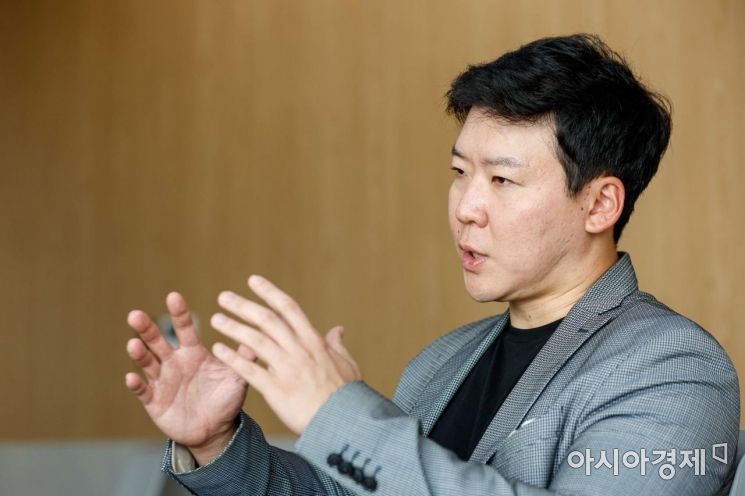 Han Seung-hyun, CEO of Rowan, is being interviewed on the 5th at Flag One in Jung-gu, Seoul. Photo by Kang Jin-hyung aymsdream@
Below is a Q&A.
- What made you interested in the disease dementia?
▲ Several relatives who suffered from dementia passed away. Although I was not their direct caregiver, I saw many cases where caregivers of dementia patients suffered economic damage and mental distress. Also, when someone suffers from dementia and passes away, the remaining family members also have anxiety about developing dementia. However, there are few alternatives currently to prevent dementia, and even when dementia-related drugs are prescribed, many patients forget to take them. Therefore, I thought it would be good to have an alternative that can continuously monitor dementia patients without side effects.
- Why does SuperBrain focus on dementia 'prevention' rather than 'treatment'?
▲ Degenerative brain diseases like dementia gradually reduce cognitive levels as people age. It is actually difficult to restore them to past levels. Therefore, prevention and early intervention are important for dementia. Early intervention can slow the decline in cognitive levels and help maintain a humane life. In this process, digital therapeutics can be helpful. When we conducted clinical trials, we tested before and after on participants who engaged with SuperBrain for six months. There was actual cognitive improvement, and there were differences in biomarkers as well.
- How does the SuperBrain program proceed? Also, voluntary participation by patients seems very important.
▲ The SuperBrain program consists of five stages: cognition, vascular, exercise, nutrition, and motivation, and this process is repeated. In short, it changes lifestyle. Changing lifestyle habits is not easy. However, when a health warning is heard from medical staff, the desire to change lifestyle increases. Also, the more incurable a disease is, the greater the fear, right? Even in South Korea, dementia has long been considered the most feared disease. Ultimately, when patients receive a diagnosis from a doctor that their current health condition is not good, even passive patients can become active.
- Does maximizing the effect of digital therapeutics require medical staff intervention?
▲ Medical staff must intervene at the appropriate time for more complete treatment. Doing the same thing with someone's monitoring and doing it entirely alone produce completely different results. Especially for seniors, since they are changing lifestyle habits formed over a lifetime, medical staff intervention is necessary.
- Do seniors have difficulties using SuperBrain?
▲ Of course, guidance must be provided at first. However, seniors and South Korean citizens generally have high digital acceptance, so if their interest is captured, there is not much difficulty.
- Are you developing digital therapeutics for diseases other than dementia?
▲ We are developing digital therapeutics in various areas such as tinnitus and depression. For tinnitus, we created an app using cognitive behavioral therapy (CBT) and are testing it in clinical settings. For depression, we are planning and developing digital therapeutics using behavioral activation therapy techniques. To be officially used as digital therapeutics in clinical settings, several procedures must be completed with regulatory bodies like the Ministry of Food and Drug Safety, but we have at least set sail. We are especially proud that we have already created a digital therapeutic for tinnitus. For digital therapeutics to be used in practice, they must optimize doctors' time and hospital space. Without meeting these conditions, no matter how good the digital therapeutics are, they will not be utilized. We are also considering these factors in development.
- What are your future goals?
▲ I hope to provide medical services that know me better than I know myself without having to go to the hospital. There have been many gaps in medical services so far. Even at hospitals, doctors often find it difficult to fully understand patients. Especially with dementia, it is hard to know patients' daily lives in detail. Therefore, I believe a 'primary care physician in my hand' will emerge in the future. Also, South Korea will enter a super-aged society by 2025, the fastest pace in the world. Super-aging is continuing not only in South Korea but also in developed countries. Ultimately, if the challenge of dementia is not solved, the economic and mental damage that developed countries' populations will face will be enormous, so I hope our service contributes to preventing this.
© The Asia Business Daily(www.asiae.co.kr). All rights reserved.



















