BMW Europe's Largest German Dingolfing Plant
New 7 Series Applies Remote Autonomous Driving
Advanced IT Technology Introduced Throughout the Plant
Increased Production Process Efficiency...Enhanced Quality Competitiveness
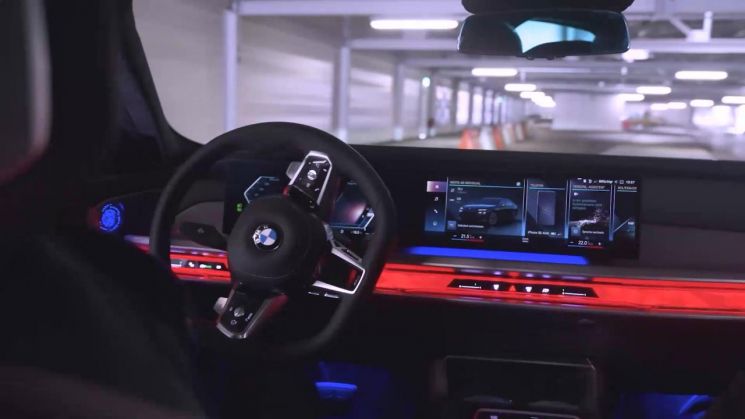 After just completing the final assembly and initial inspection at the factory, the new 7 Series is undergoing autonomous driving.
 [Asia Economy Reporter Choi Dae-yeol] BMW's largest production base in Europe, the Dingolfing plant, began pilot operation of AFW in July this year. AFW stands for Automatisiertes Fahren im Werk, or autonomous driving within the factory, a project where newly assembled and initially tested cars move autonomously to designated locations within the plant.
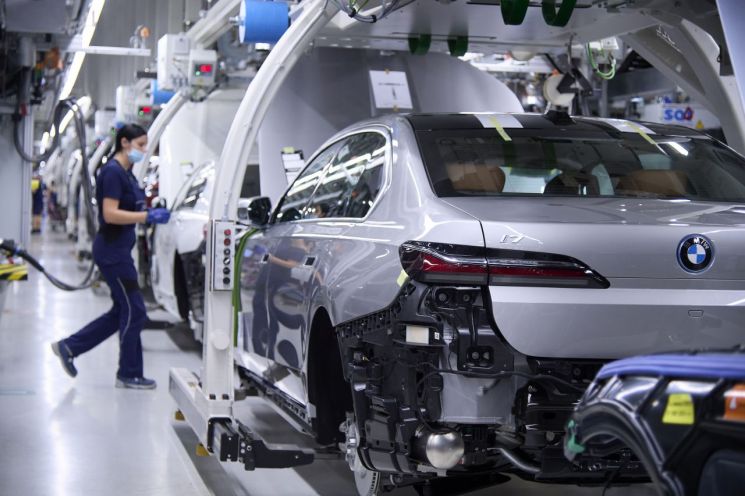
The first vehicle to apply this is the new flagship sedan, the 7 Series, recently started production at the local plant. After completing the basic inspection, the new car moves autonomously for about 170 meters without a driver. The same method is used from the end of the completion zone to the new car delivery area. Previously, a person had to get into the vehicle and drive it out.
According to BMW, this project utilizes software and technology jointly developed by the Korean startup Seoul Robotics and the Swiss company Embotech. Sensors using software developed by Seoul Robotics are installed along the routes passing through the logistics area inside the factory. This software tracks the real-time location of the vehicle and generates data to recognize the surrounding environment.
Additionally, Embotech's driving planning software sends related commands to the vehicle, controlling steering, braking, acceleration, and parking. Strictly speaking, the vehicle does not move 100% autonomously but is closer to remote driving. Josef Broom, who guided us during a recent visit to BMW's Dingolfing plant, explained, "It is more efficient than having an employee drive the car directly. Although we have secured a significant portion of remote driving technology that moves the car without a driver, it is only applied in specific areas within the factory due to legal restrictions preventing its use outside."
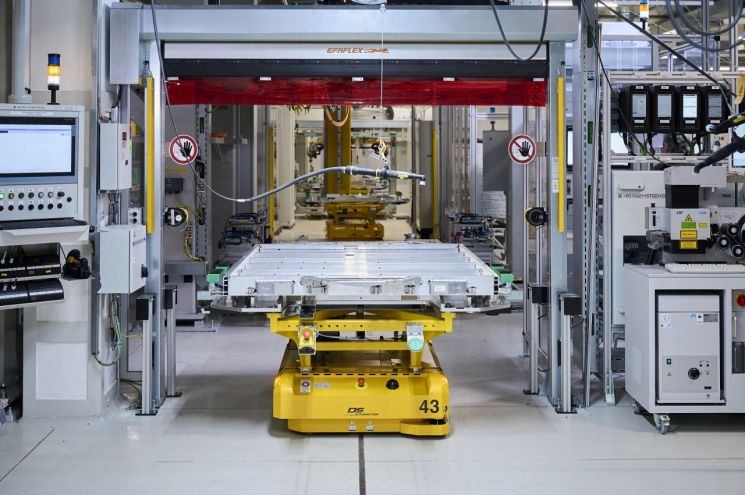 Transport robots carrying parts inside the BMW Dingolfing plant. Equipped with sensors and RFID technology installed throughout the factory, they deliver the necessary parts to the right place at the right time.
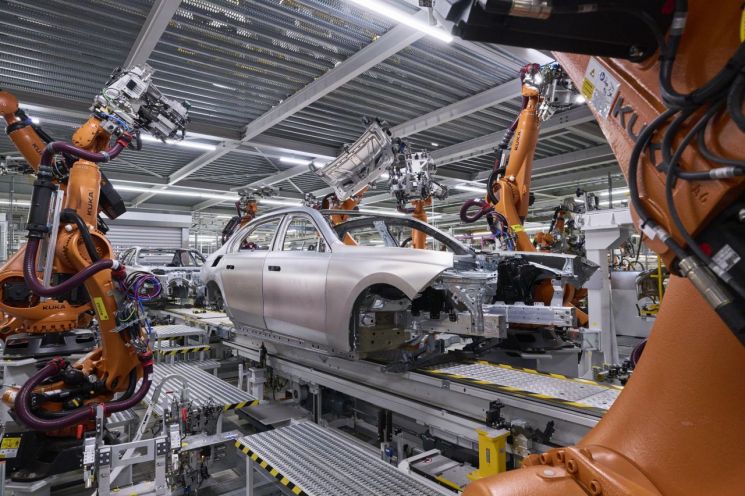
 BMW has introduced numerous automation facilities throughout the factory years or even decades ago. Many parts, including bulky or heavy components like battery modules, are transported by autonomous robots to where they are needed. Considering that the complete vehicle assembly process involves integrating about 20,000 parts supplied by hundreds of partner companies, precisely and meticulously managing the logistics system during production is directly linked to the company's competitiveness.
Advanced technology is also applied to quality inspection. This project is called AI Quality Next (AIQX). It collects data on various parts being manufactured using smart camera systems and sensors installed on the production line, combined with algorithms and artificial intelligence (AI) technology.
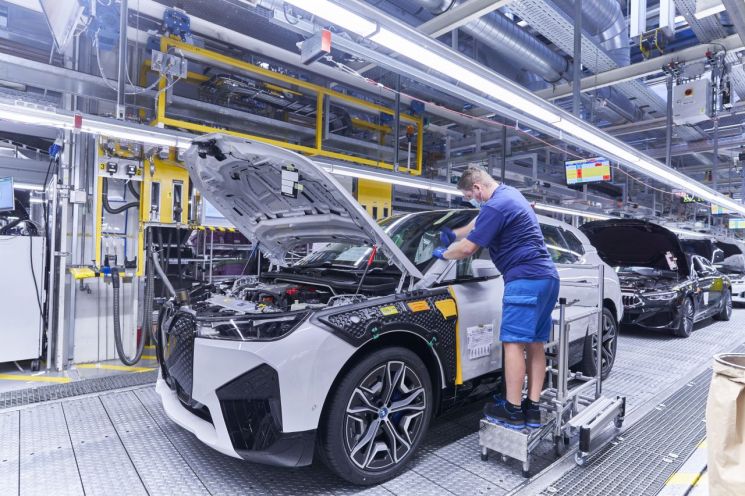
It is used to identify different models, verify completeness, and detect abnormalities that may occur during assembly. Employees on the production line receive real-time feedback through smart devices. The digital twin technology, which uses scanners and RFID technology to replicate the actual factory environment online in real time, has recently expanded its application while producing the new 7 Series.
Actively utilizing such digital technologies aligns with BMW's core value of enhancing quality competitiveness. Broom said, "Although additional costs for developing advanced technology and labor may be incurred, quality is paramount to maintaining market competitiveness."
Dingolfing, Germany = Reporter Choi Dae-yeol dychoi@asiae.co.kr
© The Asia Business Daily(www.asiae.co.kr). All rights reserved.



















