Ministry of Science and ICT to Hold Space Development Promotion Working Committee Meeting on 7th Afternoon
Plan Confirmed for 4 Additional Launches to Ensure Nuri-ho Reliability
Toyosat, Delayed Due to Russia-Ukraine War, to Be Carried on 3rd Launch Next Year
Plan for Developing Next-Generation Launch Vehicle Upgraded from Nuri-ho Also Approved
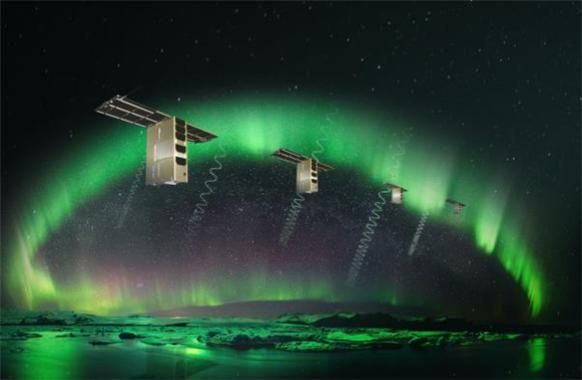
[Asia Economy Reporter Kim Bong-su] The government has decided to launch the Korea Astronomy and Space Science Institute's (KASI) space observation satellite "Doyosat," which had been grounded due to the Russia-Ukraine war, during the third Nuri rocket launch next year. Plans for four additional launches to verify the reliability of the Nuri rocket and the development of a next-generation launch vehicle to directly launch a lunar lander have also been finalized.
On the afternoon of the 7th, the Ministry of Science and ICT held the Space Development Promotion Working Committee meeting and confirmed the "Korean Launch Vehicle Repeated Launch Plan and Next-Generation Launch Vehicle Development Plan (draft)."
Accordingly, the government plans to launch the Nuri rocket four more times in total: the 3rd launch in 2023, the 4th in 2025, the 5th in 2026, and the 6th in 2027, together with Hanwha Aerospace, which was selected as the system integrator for the Korean launch vehicle.
The third launch, scheduled for the first half of next year, will carry not only the previously planned second next-generation small satellite but also four domestic public and private satellites selected through a public contest. To this end, the Ministry of Science and ICT held a public contest for companies and research institutes in July. First, the ultra-small cluster satellite Doyosat (four units), developed by KASI for space observation, became impossible to launch due to international sanctions resulting from the Russia-Ukraine war, so it will be carried on the third Nuri rocket launch next year. KASI had originally planned to launch Doyosat on a Russian Soyuz rocket in the first half of this year and had already paid a contract amount of 7.8 billion KRW. However, after the outbreak of the Russia-Ukraine war and South Korea's participation in international sanctions, export to Russia became impossible. In addition, three satellites made by private companies Lumir, Justek, and Kairospace will also be carried.
The fourth Nuri rocket launch will carry the third next-generation medium satellite, CubeSats for domestic industry component verification, and satellites selected from the CubeSat competition. In particular, the Ministry of Science and ICT plans to develop and provide platform satellites capable of carrying devices and sensors independently developed by domestic companies to support the enhancement of technological competitiveness in the domestic industry. After the Nuri rocket, a next-generation launch vehicle with significantly expanded performance will be developed, and the lunar lander, currently planned at 1.5 tons, will be launched from 2031 using the next-generation launch vehicle. The preliminary feasibility study for the next-generation launch vehicle development project is currently underway.
The Ministry of Science and ICT stated, "Unlike the existing launch vehicle development process, the next-generation launch vehicle development aims to nurture companies with launch vehicle design capabilities by having the system integrator jointly participate from the initial design stage," adding, "The developed next-generation launch vehicle is expected to replace national launch demands that relied on foreign launch vehicles with domestic launch vehicles, responding to space exploration demands such as lunar landers that cannot be launched by the Nuri rocket and large satellite launch demands in the future."
© The Asia Business Daily(www.asiae.co.kr). All rights reserved.

















